Karnataka flags fertiliser shortage risk for 2026 monsoon amid global supply disruptions
Synopsis
Karnataka's urea opening stock has fallen to a four-year low of 2.80 lakh metric tonnes — nearly half of last year's level — and the Centre has supplied less than half the fertiliser demanded since April. With Middle East disruptions choking global raw material flows, the state is racing to plug a 4.25 lakh metric tonne pending supply gap before kharif sowing begins.
Key Takeaways
Karnataka's urea opening stock for 2026 stands at 2.80 lakh metric tonnes — the lowest in four years, down from 5.41 lakh MT in 2024.
The Centre has supplied only 4.31 lakh metric tonnes of the 8.57 lakh metric tonnes demanded since April; 4.25 lakh MT remains pending.
The pending shortfall includes 0.79 lakh MT of urea and 1.17 lakh MT of diammonium phosphate (DAP).
Global supply disruptions — ammonia, LNG, phosphoric acid, sulphuric acid — linked to the Middle East crisis are compounding the crunch.
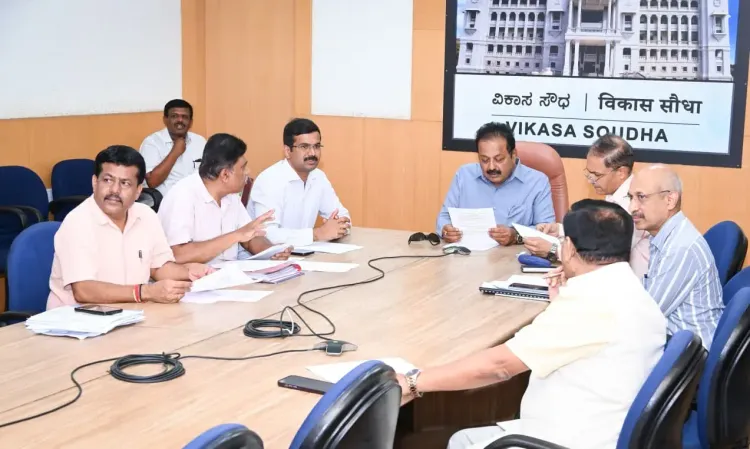
A high-level meeting chaired by the Chief Minister on 16 April directed district officials to step up fertiliser management.
The state is promoting nano urea , bio-fertilisers , and organic alternatives to reduce dependence on conventional inputs.
Karnataka's Agriculture Ministry on Monday, 18 May warned of a likely fertiliser shortage during the 2026 monsoon cropping season, citing a sharp drop in urea opening stocks and global supply disruptions linked to the Middle East crisis. The state's current urea opening stock stands at just 2.80 lakh metric tonnes — the lowest in four years and well below the 5.41 lakh metric tonnes recorded in 2024.
Opening Stock at Four-Year Low
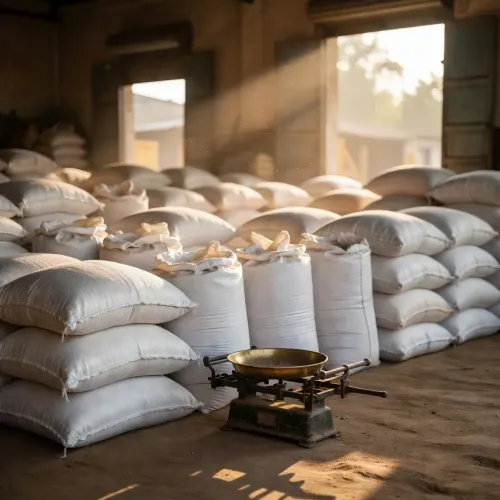
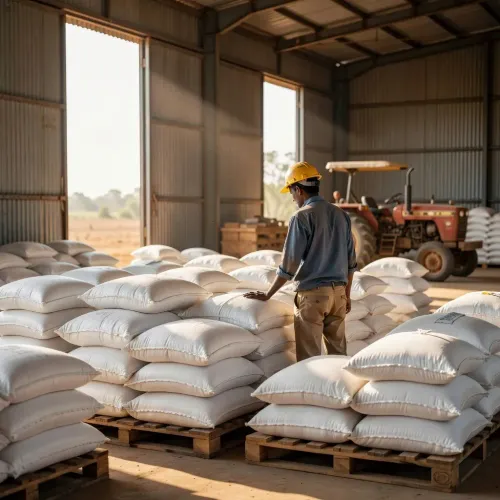
The year-on-year decline in Karnataka's urea reserves is stark. Opening stocks were 3.91 lakh metric tonnes in 2023, 5.41 lakh metric tonnes in 2024, and 3.46 lakh metric tonnes in 2025. The current figure of 2.80 lakh metric tonnes represents a near-halving compared to last year's peak, leaving the state with a thinner buffer heading into the critical kharif sowing window.
Global Instability and Central Allocation Gaps
The Karnataka Agriculture Minister stated that instability at the global level has disrupted imports of fertilisers and key raw materials — including ammonia, liquefied natural gas, phosphoric acid, and sulphuric acid — due to the ongoing Middle East crisis. 'As a result, the supply of fertilisers during the 2026 monsoon season in the state is likely to be affected, leading to disruptions in fertiliser availability across Karnataka,' the Minister said.
Compounding the global supply crunch, the Minister pointed to a significant shortfall in Central government allocations. For the current monsoon season, the Centre has allocated a total of 30.05 lakh metric tonnes of various fertiliser grades — comprising 11.10 lakh metric tonnes of urea, 4.00 lakh metric tonnes of diammonium phosphate (DAP), 2.12 lakh metric tonnes of muriate of potash, 11.88 lakh metric tonnes of complex fertilisers, and 0.95 lakh metric tonnes of single super phosphate.
April and May Supply Shortfalls in Detail
The ground reality reveals a widening gap between demand and supply. In April, Karnataka demanded 4.02 lakh metric tonnes of various fertiliser grades but received only 2.54 lakh metric tonnes — a shortfall of 1.48 lakh metric tonnes. The deficit included 0.38 lakh metric tonnes of DAP and 0.14 lakh metric tonnes of urea.
In May so far, against a demand of 4.54 lakh metric tonnes, only 1.77 lakh metric tonnes have been supplied, leaving 2.77 lakh metric tonnes pending — including 0.65 lakh metric tonnes of urea and 0.78 lakh metric tonnes of DAP. Cumulatively, from April through mid-May, total demand stood at 8.57 lakh metric tonnes, of which only 4.31 lakh metric tonnes have been supplied, with 4.25 lakh metric tonnes still pending. The pending quantity includes 0.79 lakh metric tonnes of urea and 1.17 lakh metric tonnes of DAP.
State Response and Mitigation Measures
On 16 April, a high-level meeting chaired by the Chief Minister was convened with Deputy Commissioners and Chief Executive Officers, at which instructions were issued for effective fertiliser management across districts. The Minister clarified that, as of now, there is no immediate shortage of any fertiliser type in the state — the warning pertains to the approaching monsoon season.
Longer-term, the state is pushing farmers toward alternative inputs: bio-fertilisers, organic fertilisers, green manure, crop residue utilisation, nano urea, nano DAP, 100% water-soluble fertilisers, and micronutrients. Awareness campaigns are being rolled out to reduce dependence on conventional urea and DAP ahead of the kharif season. How quickly farmers adopt these alternatives — and whether Central supplies catch up — will determine whether Karnataka's monsoon agriculture faces a genuine crisis.
Point of View
Not a sudden shock. The shift to nano urea and bio-fertilisers is sensible long-term policy, but these alternatives require agronomic adaptation that cannot be rushed across millions of smallholders before the June sowing window. If the Centre does not expedite pending supplies, the burden of adjustment will fall disproportionately on marginal farmers in rain-dependent districts — the constituency least equipped to absorb input shocks.
NationPress
1 Oct 2026
Frequently Asked Questions
Why is Karnataka warning of a fertiliser shortage for the 2026 monsoon?
Karnataka's urea opening stock has fallen to 2.80 lakh metric tonnes — a four-year low — and the Central government has supplied less than half the fertiliser demanded since April. Global supply disruptions linked to the Middle East crisis have also tightened availability of key raw materials such as ammonia and phosphoric acid, raising the risk of shortages during the kharif sowing season.
How much fertiliser is still pending supply to Karnataka?
As of mid-May 2026, a total of 4.25 lakh metric tonnes of various fertiliser grades remain pending from the Centre, against a cumulative April-May demand of 8.57 lakh metric tonnes. The pending quantity includes 0.79 lakh MT of urea and 1.17 lakh MT of diammonium phosphate (DAP).
Is there a fertiliser shortage in Karnataka right now?
The Agriculture Minister clarified that there is no immediate shortage of any fertiliser type in the state as of mid-May. The warning is forward-looking, focused on the risk of disruption during the upcoming 2026 monsoon cropping season if pending Central supplies are not released in time.
What steps is Karnataka taking to address the potential shortage?
The state held a high-level meeting chaired by the Chief Minister on 16 April, directing district officials to strengthen fertiliser management. It is also running awareness campaigns to encourage farmers to use alternative inputs — including nano urea, nano DAP, bio-fertilisers, organic fertilisers, and 100% water-soluble fertilisers — to reduce dependence on conventional urea and DAP.
How does this year's urea stock compare to previous years?
Karnataka's urea opening stock for 2026 stands at 2.80 lakh metric tonnes, compared to 3.46 lakh MT in 2025, 5.41 lakh MT in 2024, and 3.91 lakh MT in 2023 — making it the lowest opening stock in at least four years.