Nvidia, DeepMind Open AI Protein Data for 2,800+ Viruses
Synopsis
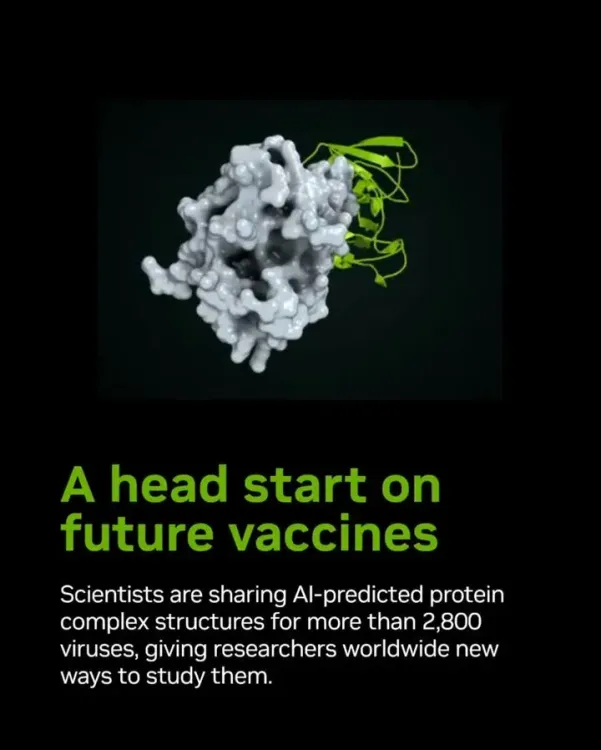
Nvidia, Google DeepMind, and EMBL-EBI have made AI-predicted protein complex structures for more than 2,800 viruses openly available to researchers. The dataset builds on the AlphaFold legacy and is designed to give scientists a structural head start in preparing for potential disease outbreaks.
Key Takeaways
Nvidia , Google DeepMind , and EMBL-EBI announced the open release of AI-predicted protein complex structures on 24 September 2026 .
The dataset covers complex structures — interacting protein assemblies — across more than 2,800 viruses .
The release builds directly on the AlphaFold Protein Structure Database , launched in July 2021 , which catalogued predictions for over 200 million proteins .
Open access removes licensing barriers, allowing researchers globally to use the data in drug discovery, vaccine design, and outbreak surveillance.
Nvidia's GPU infrastructure underpins the AI compute required to generate and serve predictions at this scale.
Potential next steps include integration into pathogen databases and follow-on releases covering host-pathogen interaction complexes.
Before the next pandemic knocks on the door, scientists may already have a molecular blueprint waiting. Chip giant Nvidia, alongside Google DeepMind and the European Molecular Biology Laboratory's European Bioinformatics Institute (EMBL-EBI), announced on Thursday, 24 September 2026 that AI-predicted protein complex structures for more than 2,800 viruses are now openly available to researchers worldwide — giving virologists and drug-discovery teams a structural head start against potential outbreaks.
What is actually being released — and why it matters
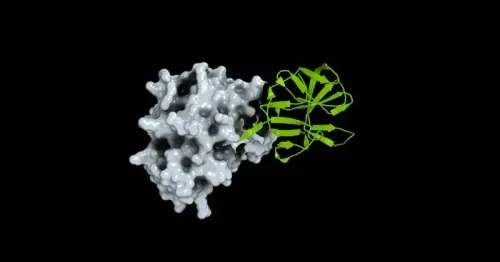
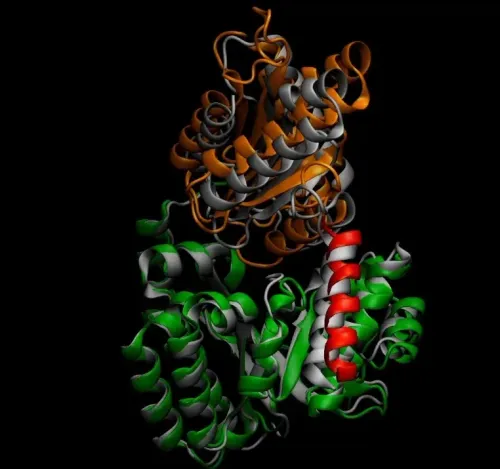
Protein complex structures reveal how a virus's proteins interact — with each other and, critically, with host cells. Knowing that geometry is the first step toward designing drugs, vaccines, or diagnostics. Historically, resolving these structures required expensive, time-consuming laboratory techniques like cryo-electron microscopy. AI prediction collapses that timeline from years to hours.
The new dataset covers predicted complex structures — proteins working together, not just individual chains — across viruses, a significantly harder modelling problem than single-protein prediction. Making them openly available means a researcher in Pune, Nairobi, or São Paulo can access the same starting point as a team at a well-funded Western university.
Standing on AlphaFold's shoulders
This release is a direct descendant of the AlphaFold Protein Structure Database, jointly launched by Google DeepMind and EMBL-EBI in July 2021. That database eventually covered predictions for more than 200 million proteins and is widely credited with accelerating structural biology research globally. The new viral-complex dataset pushes the frontier further: from cataloguing individual proteins to modelling how they assemble and interact inside a pathogen.
Nvidia's role here is as AI-infrastructure backbone — the GPU computing power that makes running protein-folding models at scale feasible. The collaboration underlines a broader pattern: hardware companies, AI labs, and bioinformatics institutes converging on open biological data as a shared public good, particularly after COVID-era urgency demonstrated how slow preparedness can cost lives.
Open access as pandemic preparedness strategy
The phrase 'openly available' carries real weight. Proprietary databases lock structural data behind institutional agreements; open ones let any scientist integrate the structures into existing pathogen databases, test drug candidates computationally, or publish peer-reviewed findings without a licensing barrier. Public health researchers tracking emerging zoonotic viruses — the category most likely to seed the next outbreak — now have a dramatically expanded structural library to search.
What to watch next: whether the dataset gets integrated into major pathogen surveillance platforms, how quickly peer-reviewed studies cite the structures, and whether follow-on releases extend coverage to host-pathogen interaction complexes — the molecular handshakes where viruses actually invade cells.
The blueprint exists. The next race is to use it before an outbreak forces the world to build one under pressure.
Point of View
And the open-access model is a direct lesson learned from COVID-era bottlenecks. It also signals Nvidia's strategic positioning beyond hardware sales — by embedding GPU compute inside high-visibility public-health collaborations, the company ties its infrastructure narrative to humanitarian outcomes. For drug-discovery and pandemic-preparedness ecosystems, the real value will be measured in how quickly these structures surface in peer-reviewed studies and computational screening pipelines, not in the announcement itself.
NationPress
24 Sept 2026
Frequently Asked Questions
What has Nvidia released with Google DeepMind and EMBL-EBI?
The three organisations have made AI-predicted protein complex structures for more than 2,800 viruses openly available, so researchers worldwide can use them to prepare for potential disease outbreaks.
What is AlphaFold and how does it relate to this release?
AlphaFold is Google DeepMind's AI system for predicting protein structures. Its public database, launched with EMBL-EBI in July 2021, covers over 200 million proteins. The new viral complex dataset extends that work to multi-protein assemblies across thousands of viruses.
Why are protein complex structures useful for fighting viruses?
Protein complex structures show how viral proteins interact with each other and with host cells. This geometric information is essential for designing drugs, vaccines, and diagnostics — and AI prediction delivers it far faster than traditional laboratory methods.
What is Nvidia's role in this collaboration?
Nvidia provides the GPU-based AI infrastructure needed to run large-scale protein-folding models. The company is a computing partner rather than a structural biology lab, but its hardware makes generating predictions at this scale feasible.
Who can access these viral protein structures?
The data is openly available, meaning any scientist or research institution globally — including those in lower-income countries without proprietary database subscriptions — can access and use the structures without a licensing barrier.