Supreme Court flags child abuse content on social media, seeks Centre's reply
Synopsis
The Supreme Court has put the Centre and two ministries on notice over alleged failures by social media platforms to report child sexual exploitation material directly to Indian police — as POCSO requires. With petitioners alleging paid ads promoting abuse content and a critical hearing set for 24 September, the case could redefine how global platforms handle child safety compliance in India.
Key Takeaways
The Supreme Court on 17 August sought replies from the Ministry of Electronics and Information Technology and the Ministry of Law and Justice over CSEAM reporting lapses by social media intermediaries.
Petitions filed by Just Rights for Children Alliance (JRCA) and Bachpan Bachao Andolan allege platforms report to the US-based NCMEC but bypass Indian juvenile and local police as required under POCSO, 2012 .
Petitioners also alleged the presence of paid advertisements on platforms promoting child sexual exploitation material.
The court has been asked to mandate a centralised online reporting mechanism and a uniform SOP for detection, evidence preservation, and IP-detail sharing.
The apex court previously ruled in 2024 that intermediaries cannot claim IT Act safe-harbour protection if they fail POCSO reporting obligations.
Next hearing is scheduled for 24 September .
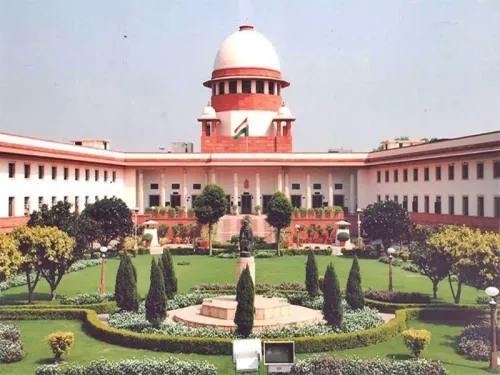
The Supreme Court of India on 17 August expressed serious concern over the alleged availability of child sexual exploitation and abuse material (CSEAM) on social media platforms, and sought a formal response from the Centre over alleged failures by intermediaries to comply with mandatory reporting obligations under Indian law. The bench has directed both the Ministry of Electronics and Information Technology and the Ministry of Law and Justice to file replies.
What the Court Was Hearing
A bench comprising Justice J.B. Pardiwala and Justice K.V. Chandran was hearing petitions filed by the Just Rights for Children Alliance (JRCA) and the Bachpan Bachao Andolan, seeking criminal action against social media platforms that allegedly fail to meet mandatory reporting requirements under the Protection of Children from Sexual Offences (POCSO) Act, 2012.
The petitions also alleged that paid advertisements promoting child sexual exploitation and abuse material were being allowed to run on social media platforms — a claim that the court took note of with concern.
The Reporting Gap at the Centre of the Case
A key allegation before the court is that social media intermediaries currently route CSEAM reports to the US-based National Centre for Missing and Exploited Children (NCMEC), but do not directly notify juvenile police units or local police in India — as required under POCSO. This gap, petitioners argue, allows perpetrators to evade swift domestic law-enforcement action.
The petitioners have proposed the creation of a centralised online reporting mechanism through which intermediaries could report CSEAM directly and share digital evidence — including IP details — with Indian law enforcement agencies. The apex court sought the Centre's position on this proposal.
Key Directions Sought
Beyond the reporting mechanism, the petitions also sought a uniform Standard Operating Procedure (SOP) for intermediaries covering detection, reporting, evidence preservation, and sharing of IP details in child abuse cases. The court allowed the petitioners to implead the intermediaries directly in the matter and to press for implementation of its earlier directions dated 23 September 2024.
The matter has been listed for the next hearing on 24 September.
Background: The Court's 2024 Warnings
This development follows a series of firm observations by the Supreme Court in 2024, when it held that intermediaries cannot rely on the safe-harbour protections under the Information Technology (IT) Act if they fail to meet their mandatory POCSO reporting obligations. The court had further clarified that POCSO would prevail over the IT Act in cases of inconsistency.
Notably, the court had also observed that the mere storage of child pornographic material — without deleting or reporting it — could indicate an intention to transmit and would constitute an offence under POCSO. This framing significantly raises the legal exposure of platforms that take a passive approach to such content.
What Comes Next
With the Centre, the two ministries, and potentially the intermediaries now drawn into the proceedings, the 24 September hearing is expected to be a critical date. The outcome could set binding obligations on global social media platforms operating in India regarding child safety compliance — and test whether India's domestic child protection law can compel action that US-centric reporting frameworks have so far absorbed.
Point of View
Sidestepping the direct police-reporting mandate that POCSO explicitly requires. The 2024 safe-harbour warning was a shot across the bow; this notice to two ministries suggests the court is moving toward enforceable obligations. What mainstream coverage underplays is the paid-advertising allegation — if platforms are monetising CSEAM traffic, that is not a passive compliance failure but an active revenue decision, and the legal and reputational stakes are categorically different. The 24 September hearing will reveal whether the Centre is prepared to legislate a domestic reporting pipeline or continue to rely on voluntary industry frameworks that have demonstrably not worked.
NationPress
1 Oct 2026
Frequently Asked Questions
What is the Supreme Court's concern about child abuse content on social media?
The Supreme Court has flagged the alleged availability of child sexual exploitation and abuse material (CSEAM) on social media platforms and the failure of intermediaries to report such content directly to Indian police as mandated by the POCSO Act, 2012. The court has sought formal replies from the Ministry of Electronics and Information Technology and the Ministry of Law and Justice.
What is the POCSO reporting requirement for social media platforms?
Under the Protection of Children from Sexual Offences (POCSO) Act, 2012, intermediaries are required to report child sexual abuse material directly to juvenile police units or local police in India. Petitioners allege that platforms currently report only to the US-based National Centre for Missing and Exploited Children (NCMEC), bypassing this domestic obligation.
Who filed the petitions before the Supreme Court?
The petitions were filed by the Just Rights for Children Alliance (JRCA) and the Bachpan Bachao Andolan. They seek criminal action against platforms that fail to comply with POCSO reporting requirements and have proposed a centralised online mechanism for reporting CSEAM to Indian law enforcement.
What is the safe-harbour issue for social media platforms under Indian law?
The Supreme Court ruled in 2024 that intermediaries cannot claim safe-harbour protection under the Information Technology (IT) Act if they fail to meet their mandatory POCSO reporting obligations. The court also held that POCSO prevails over the IT Act in cases of inconsistency, significantly raising the legal exposure of non-compliant platforms.
When is the next Supreme Court hearing on this matter?
The Supreme Court has listed the matter for its next hearing on 24 September. By then, the Ministry of Electronics and Information Technology and the Ministry of Law and Justice are expected to file their responses, and intermediaries may also be impleaded as parties.