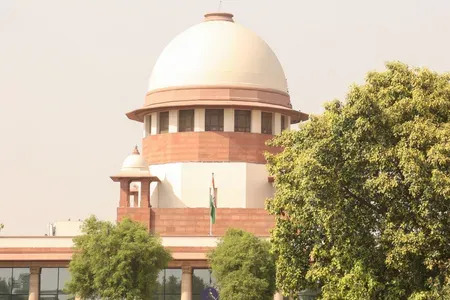
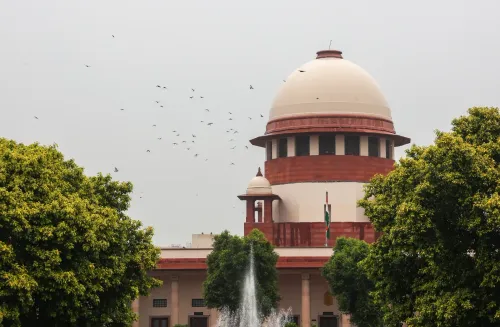
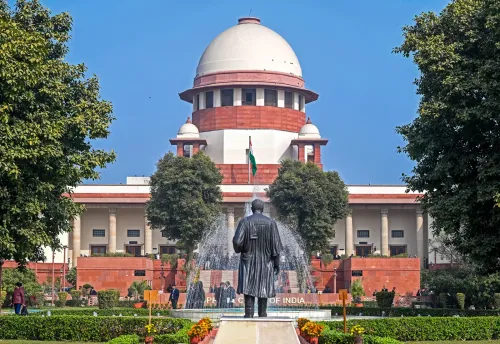
SC seeks replies on plea to stop police sharing accused photos online
Synopsis
The Supreme Court has stepped into a practice that has long gone unchecked — police posting photos and videos of accused persons online before any conviction. With the Centre, states, and social media platforms now put on notice, the case could produce India's first binding national standard on police use of social media in criminal matters.
Key Takeaways
The Supreme Court on 18 August issued notices to the Centre , states, and social media intermediaries on a petition challenging police uploads of accused persons' photos and videos.
The bench was led by Chief Justice Surya Kant alongside Justice Joymala Bagchi and Justice V Mohana .
Petitioner Hemendra Patel , represented by Senior Advocate Gopal Sankaranarayanan , argued the practice violates the fundamental right to a fair trial.
The petition names MeitY and major social media platforms as respondents and seeks a formal content-removal mechanism.
Rajasthan Police issued an SOP curbing such uploads after a Rajasthan High Court order in January — cited as a state-level precedent for a national framework.
Chief Justice Kant flagged the challenge of containing digital content even if police uploads are restricted.
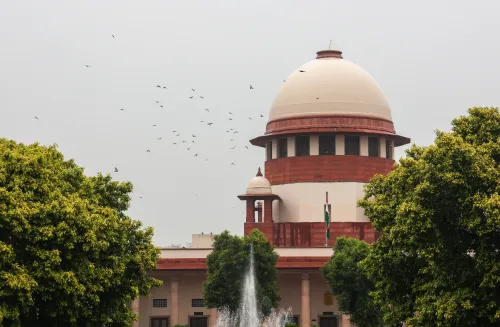
The Supreme Court on Tuesday, 18 August issued notices to the Centre, states, and social media intermediaries on a petition seeking to bar police from uploading photos and videos of accused persons on social media, citing violations of the fundamental right to a fair trial. A bench comprising Chief Justice Surya Kant, Justice Joymala Bagchi, and Justice V Mohana took up the matter and called for responses from all named parties.
What the Petition Argues
The petition, filed by Hemendra Patel and argued by Senior Advocate Gopal Sankaranarayanan, contends that police-generated content — including images of accused persons in handcuffs or being made to kneel — prejudices their right to a fair trial before guilt is established. Sankaranarayanan presented images and videos of such incidents during the hearing to illustrate the scale of the practice.
He stressed the need for a uniform national framework, noting that while some High Courts have addressed similar concerns individually, no consistent operational mechanism exists to prevent police organisations across states from circulating such content.
What the Court Said
Chief Justice Surya Kant acknowledged the concern but raised a practical question: even if police are barred from uploading such content, how can its spread across the digital ecosystem be contained? 'This is not a border that you can just close down,' the CJI observed, while agreeing in principle with the need to prevent disclosure of accused persons' faces and identities online.
Key Legal and Procedural Demands
The petition has named the Union Ministry of Electronics and Information Technology (MeitY) and major social media platforms as respondents. Beyond restricting police uploads, it also seeks a formal, transparent, and structured mechanism for the prompt removal of such content when objected to — effectively calling for a dedicated takedown protocol.
During the hearing, reference was made to a Rajasthan High Court order from January in which judges directed the removal of social media content related to an arrested person. Following that ruling, Rajasthan Police issued a standard operating procedure (SOP) restricting the sharing of photos and videos of arrested persons with media or on social platforms. The petitioner argued this state-level precedent underscores the feasibility — and necessity — of a national equivalent.
Broader Context and What Comes Next
The case touches on a long-standing tension in Indian criminal justice: the presumption of innocence versus the tendency of law enforcement agencies to conduct what critics call 'media trials' before courts deliver verdicts. This is not the first time such practices have drawn judicial scrutiny, but a Supreme Court ruling could set a binding national standard where High Court orders have so far produced only patchwork compliance.
The matter is expected to come up for hearing again once the Centre, states, and intermediaries file their replies. How the court ultimately balances free flow of information against an accused's constitutional protections will be closely watched by legal experts, civil liberties advocates, and law enforcement agencies alike.
Point of View
But the CJI's own observation — that the internet is 'not a border you can just close down' — signals how difficult enforcement will be even if guidelines are issued. India has no unified law governing police conduct on social media, and High Court orders have produced only state-level SOPs with uneven implementation. The real test is whether the court moves beyond guidelines to mandate a binding takedown mechanism with teeth — because without one, a ruling risks being symbolic. The inclusion of MeitY and social media platforms as respondents suggests the court is at least thinking about the full chain of distribution, not just the point of upload.
NationPress
2 Oct 2026
Frequently Asked Questions
What is the Supreme Court case about police sharing accused photos on social media?
The Supreme Court is hearing a petition that seeks to bar police from uploading photos and videos of accused persons on social media before they are convicted, arguing the practice violates the constitutional right to a fair trial. The court has issued notices to the Centre, states, and social media platforms to file their replies.
Who filed the petition and what does it demand?
The petition was filed by Hemendra Patel and argued by Senior Advocate Gopal Sankaranarayanan. It demands uniform national guidelines restricting police from sharing accused persons' images online and a formal, transparent mechanism for prompt removal of such content when objected to.
What did Chief Justice Surya Kant say during the hearing?
Chief Justice Surya Kant agreed with the need to prevent police from disclosing the faces and identities of accused persons online, but raised a practical concern about controlling the spread of such content once it enters the digital ecosystem, remarking: 'This is not a border that you can just close down.'
Is there any existing precedent for restricting police from sharing such content?
Yes. The Rajasthan High Court in January ordered the takedown of social media content related to an arrested person, after which Rajasthan Police issued a standard operating procedure (SOP) restricting the sharing of photos and videos of arrested persons on social media or with mediapersons. The petitioner cited this as a model for a national framework.
Who are the respondents in this Supreme Court petition?
The respondents include the Union Ministry of Electronics and Information Technology (MeitY), the Centre, individual states, and major social media intermediaries. The petition seeks their responses on both the restriction of police uploads and the creation of a structured content-removal mechanism.