Delhi HC Rejects Bail in Rs 22.92 Crore Digital Arrest Fraud Case
Synopsis
The Delhi High Court has rejected bail for four accused in a Rs 22.92 crore digital arrest fraud case, where a 70+ year-old man was psychologically coerced into transferring crores over one month. Justice Manoj Jain called the accused 'important cogs of the conspirational wheel' in a chilling organised cybercrime targeting India's elderly.
Key Takeaways
Delhi High Court Justice Manoj Jain rejected all four bail applications — regular bail for Ashok Kumar and Mohit , and anticipatory bail for Vipul Rana and Himanshu Singh .
The victim, a man in his late seventies , was defrauded of Rs 22.92 crore over one month through psychological coercion under a fabricated "digital arrest." Rs 1.90 crore was routed through an IndusInd Bank account linked to a company where accused Mohit was a director, and was withdrawn on the same day.
The court declared the accused "important cogs of the conspirational wheel," rejecting defence claims that they played only peripheral roles.
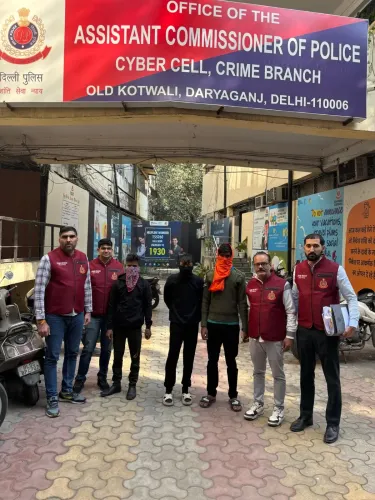
The Special Cell of Delhi Police registered the FIR under multiple provisions of the Bharatiya Nyaya Sanhita (BNS) ; several accused remain absconding .
The court flagged the growing menace of digital arrest scams targeting senior citizens as "organised crime with massive societal impact."
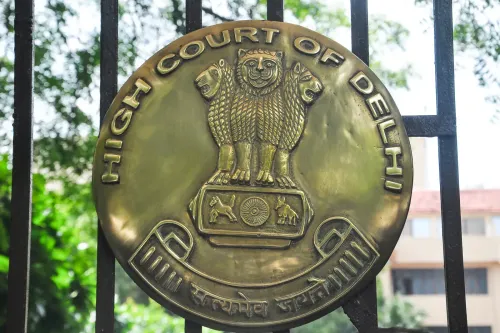
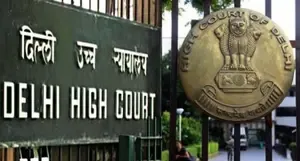
The Delhi High Court has rejected all four bail applications filed by accused persons in a major digital arrest cyber fraud case worth Rs 22.92 crore, in which a senior citizen in his late seventies was systematically defrauded over a one-month period. Justice Manoj Jain of the High Court ruled that the accused were "important cogs of the conspirational wheel" in what the court described as organised crime with a massive societal impact.
Four Bail Pleas Dismissed by Delhi High Court
Justice Manoj Jain denied regular bail to accused Ashok Kumar and Mohit, while also rejecting anticipatory bail applications filed by Vipul Rana and Himanshu Singh. The case is registered under multiple provisions of the Bharatiya Nyaya Sanhita (BNS) by the Special Cell of Delhi Police.
The court's order is a significant judicial signal against the rising tide of digital arrest scams that have increasingly preyed upon elderly and vulnerable citizens across India. The ruling underscores that even peripheral participants in such organised fraud networks cannot claim leniency at the pre-trial stage.
How the Rs 22.92 Crore Digital Arrest Fraud Was Executed
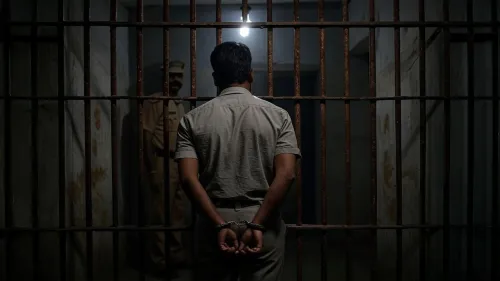
According to the prosecution, the victim — a man aged over 70 years — was targeted by fraudsters who impersonated telecom officials, police personnel, and investigators. Using psychological coercion under the guise of a fabricated legal threat, they placed him under a so-called "digital arrest" — a tactic where victims are kept under continuous video surveillance and threatened until they transfer money.
Over the course of one month, the victim was manipulated into transferring Rs 22.92 crore across multiple bank accounts. Investigators found that Rs 1.90 crore was routed through an IndusInd Bank account linked to a company in which accused Mohit served as a director. The funds were withdrawn on the same day of transfer, pointing to a well-coordinated money-laundering operation using mule accounts.
The prosecution told the court that the conspiracy spans multiple states and jurisdictions, with several accused still absconding and the cheated amount yet to be recovered.
Court's Observations on the Accused's Role
Defence counsel argued that the accused played only peripheral roles, were neither the main perpetrators nor financial beneficiaries, and that prolonged custody without conviction amounts to pre-trial punishment. They also pointed out that chargesheets had already been filed against some of the accused.
The Delhi High Court firmly rejected these arguments. Justice Jain held that roles cannot be evaluated in isolation at this stage of investigation. "The wheel would not have moved without their involvement," the court stated, emphasising the interconnected nature of the conspiracy.
On the anticipatory bail pleas of Vipul Rana and Himanshu Singh, the court noted that digital evidence is fragile and susceptible to tampering, and that their custody appears indispensable for effective investigation. "Any compassion to the applicants, at this stage, may hamper the ongoing investigation," the order read.
Rising Menace of Digital Arrest Scams Targeting Senior Citizens
Justice Manoj Jain used the ruling as an opportunity to highlight the alarming proliferation of digital arrest scams across India. "Such type of incidents, where taking undue advantage of the susceptible nature of senior citizens, they are coerced and duped through digital arrest, are on the rise," the judge observed.
This case is far from isolated. The Indian Cyber Crime Coordination Centre (I4C) has flagged digital arrest fraud as one of the fastest-growing cybercrime categories in India, with victims losing thousands of crores annually. In many reported cases, fraudsters pose as officials from the CBI, Narcotics Control Bureau, ED, or TRAI, exploiting the fear of legal consequences to extract money from unsuspecting individuals — particularly the elderly who may be less digitally literate.
Notably, Prime Minister Narendra Modi himself addressed the digital arrest scam menace during his Mann Ki Baat broadcast in October 2024, warning citizens that no government agency conducts arrests via video call — a public awareness push that reflects how widespread the problem has become.
Legal Implications and What Happens Next
The Delhi High Court clarified that all observations made in the bail order are tentative in nature and will not influence the final merits of the trial. This is a standard judicial safeguard to ensure that pre-trial rulings do not prejudice the accused during proceedings.
With the investigation still ongoing, authorities are expected to pursue recovery of the Rs 22.92 crore and trace the remaining absconding accused. The use of mule accounts — a hallmark of organised cybercrime — suggests the involvement of a larger financial network that investigators will need to dismantle.
As India's judiciary continues to take a harder line on digital fraud, this ruling may set a precedent for how courts weigh bail applications in cases involving organised cybercrime, senior citizen victims, and large-scale financial conspiracy. Legal experts suggest that the ruling reflects a broader judicial awareness of the psychological and financial devastation such crimes cause — and a willingness to prioritise investigative integrity over pre-trial liberty for accused in serious fraud cases.
Point of View
Psychological imprisonment of a senior citizen, and a sophisticated mule account network spanning multiple states. The mainstream narrative often treats digital arrest scams as isolated incidents of gullibility, but the court's observation that 'the wheel would not move without their involvement' reveals a chilling truth — these are not opportunistic crimes but coordinated criminal enterprises. India's law enforcement and judiciary must now treat digital arrest fraud with the same urgency as terrorism financing, because the societal damage — financial ruin and psychological trauma inflicted on the elderly — is no less devastating.
NationPress
26 Sept 2026
Frequently Asked Questions
What is a digital arrest scam and how does it work?
A digital arrest scam is a cybercrime where fraudsters impersonate government officials — such as police, CBI, or telecom regulators — and falsely claim that the victim is under investigation. They keep the victim under continuous video surveillance and psychologically coerce them into transferring large sums of money to avoid fabricated legal consequences.
Why did the Delhi High Court deny bail in the Rs 22.92 crore digital arrest fraud case?
The Delhi High Court, led by Justice Manoj Jain, denied bail because the accused were found to be integral parts of the fraud conspiracy, the investigation was still ongoing, and the cheated amount had not been recovered. The court also noted that digital evidence is fragile and granting bail could hamper the probe.
Who are the accused in the Delhi digital arrest fraud case?
The four accused are Ashok Kumar and Mohit (denied regular bail) and Vipul Rana and Himanshu Singh (denied anticipatory bail). Accused Mohit was a director in a company through which Rs 1.90 crore of the fraud proceeds was routed via an IndusInd Bank account.
How much money was stolen in the Delhi digital arrest fraud case?
A total of Rs 22.92 crore was fraudulently extracted from the victim, a man in his late seventies, over a period of one month. The money was transferred across multiple bank accounts, and as of the court hearing, the full amount had not been recovered.
Are digital arrest scams increasing in India?
Yes, digital arrest scams are on the rise in India, particularly targeting senior citizens. The Indian Cyber Crime Coordination Centre (I4C) has flagged it as one of the fastest-growing cybercrime categories, and Prime Minister Modi specifically warned citizens about it during his Mann Ki Baat broadcast in October 2024.