Delhi HC denies bail in ₹1.26 crore DMAT share fraud case

Synopsis
A Delhi High Court judge has refused bail to a finance firm computer operator accused of forging client signatures on DMAT transaction slips to siphon shares worth ₹1.26 crore from 18 accounts — and WhatsApp chats allegedly show him admitting to the fraud. The ruling draws a sharp line: professional access does not shield an employee who allegedly turns it against the very clients he served.
Key Takeaways
Delhi High Court dismissed the bail plea of Varun Arora , a computer operator accused of DMAT share fraud.
Arora allegedly forged signatures on Delivery Instruction Slips (DIS) to transfer shares worth over ₹1.26 crore from 18 clients into his own account.
WhatsApp chats recovered during investigation reportedly show Arora admitting to swindling ₹1.26 crore , according to the prosecution.
Justice Girish Kathpalia held that professional services cannot extend to benefiting the employee himself or forging client signatures.
Charges are yet to be framed; the court cited the scale of the alleged fraud and the stage of trial in denying bail.
An FIR was registered at Rajouri Garden police station under the Bharatiya Nyaya Sanhita (BNS) .
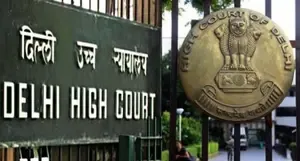
The Delhi High Court has dismissed the regular bail application of Varun Arora, a computer operator accused of fraudulently transferring shares worth over ₹1.26 crore belonging to 18 clients of a finance company into his own DMAT account through forged transaction slips. The order was passed by a single-judge Bench of Justice Girish Kathpalia in connection with an FIR registered at Rajouri Garden police station under provisions of the Bharatiya Nyaya Sanhita (BNS).
What the Accused Allegedly Did
According to the prosecution, Arora, while employed as a computer operator at a finance company, allegedly transferred shares belonging to 18 clients into his personal DMAT account by forging their signatures on Delivery Instruction Slips (DIS). Investigators further alleged that he falsely listed the victims as his relatives in official company records to conceal the transfers.
Notably, WhatsApp chats recovered during the investigation reportedly showed Arora admitting to having swindled away ₹1.26 crore, according to the prosecution's submissions before the court.
Arguments Advanced by the Defence
Counsel for Arora contended that there was no allegation of inducement or dishonest intention, and argued that the dispute was civil rather than criminal in nature. The defence further submitted that Arora had acted solely in his professional capacity as a company employee and that no forgery had been committed. It was also argued that since no incriminating material was recovered from his possession, bail ought not to be denied.
Why the Court Rejected the Bail Plea
Justice Kathpalia squarely rejected these submissions, observing: 'The professional services cannot extend to granting any benefit to the concerned professional himself.' The court further noted that 'professional services do not extend to forging signatures of the client on the transaction slips, which is the allegation in the present case.'
The bench acknowledged that charges in the matter were yet to be framed, and said it would not be appropriate to comment further on the investigation material at this stage. However, it concluded: 'Going by the expanse of the alleged fraud involving 18 persons and stage of trial, this is not a fit case to grant bail.'
Significance and Broader Context
The case highlights a growing category of insider financial fraud in which employees with privileged system access allegedly exploit client accounts. DMAT-related forgery cases have drawn increasing scrutiny from regulators and courts, particularly where digital paper trails — including messaging app records — form a central part of the prosecution's evidence. This ruling underscores the judiciary's reluctance to grant bail in cases involving multiple alleged victims, significant sums, and documentary evidence of admission. The trial is expected to proceed to the charge-framing stage, which will be the next critical milestone in the case.
Point of View
Which increasingly serve as the decisive thread in financial fraud prosecutions. Defence arguments framing the matter as a civil dispute are becoming harder to sustain when digital evidence suggests deliberate concealment — including falsely listing victims as relatives. With charges yet to be framed, the trial will test whether the forensic and documentary evidence holds up under scrutiny, but the court's early posture leaves little room for leniency.
NationPress
26 Sept 2026
Frequently Asked Questions
What is the Delhi HC DMAT share fraud case about?
The case involves Varun Arora , a computer operator at a finance company, who allegedly forged the signatures of 18 clients on Delivery Instruction Slips to transfer their shares — worth over ₹1.26 crore — into his own DMAT account. The Delhi High Court denied him regular bail on these charges.
Why did the Delhi High Court deny bail to Varun Arora?
Justice Girish Kathpalia held that the scale of the alleged fraud involving 18 persons, combined with the stage of the trial, made it an unfit case for bail. The court rejected the defence argument that Arora acted in a professional capacity, noting that professional services cannot extend to forging client signatures or benefiting the employee personally.
What evidence did the prosecution present against the accused?
The prosecution cited forged signatures on Delivery Instruction Slips, official records in which victims were falsely listed as the accused's relatives, and WhatsApp chats allegedly showing Arora admitting to having swindled ₹1.26 crore.
Under which law was the FIR registered in this case?
The FIR was registered at Rajouri Garden police station in Delhi under various provisions of the Bharatiya Nyaya Sanhita (BNS).
What happens next in this case?
Charges are yet to be framed, which will be the next critical stage of the trial. The Delhi High Court noted it would not comment further on the investigation material until that stage is reached.