CM Bhajan Lal Sharma Vows Roads, Water, Schools for Tribal Rajasthan
Synopsis
Rajasthan Chief Minister Bhajan Lal Sharma reaffirmed his BJP government's drive to deliver roads, drinking water, education, and healthcare to the state's tribal districts, invoking central schemes like PMGSY and Jal Jeevan Mission as the delivery vehicles.
Key Takeaways
CM Bhajan Lal Sharma posted on 26 September 2026 pledging basic services and infrastructure to every citizen, with special emphasis on tribal areas.
Key sectors named: roads, drinking water, education, health, and foundational infrastructure in Rajasthan's tribal regions.
Tribal districts including Banswara, Dungarpur , and Udaipur are the primary target zones, home to communities such as the Bhils .
National programmes — PMGSY for roads and Jal Jeevan Mission for piped water — underpin the state's delivery framework in these areas.
The Vanbandhu Kalyan Yojana , launched in 2014 , provides the overarching federal policy structure for tribal development in which Rajasthan participates.
No specific targets or statistics were cited in the post; progress metrics are expected at the next assembly session or annual review.
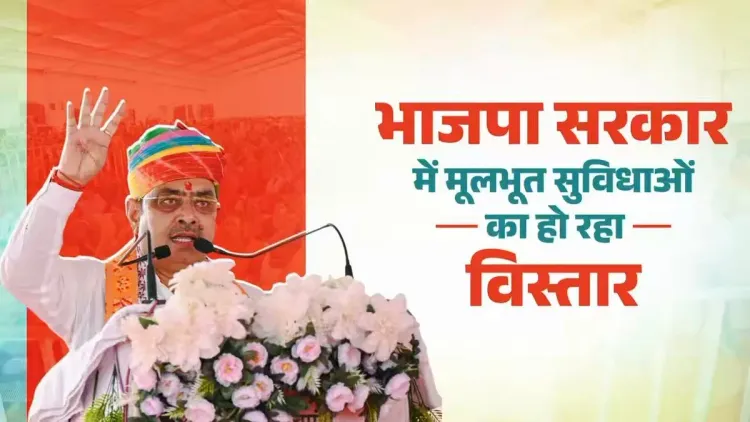
From the sand-blown southern hills of Banswara to the forested stretches of Udaipur, Rajasthan Chief Minister Bhajan Lal Sharma has renewed his government's commitment to carrying roads, clean water, education, and healthcare into the state's tribal heartland — posting the pledge on X on Saturday, 26 September 2026.
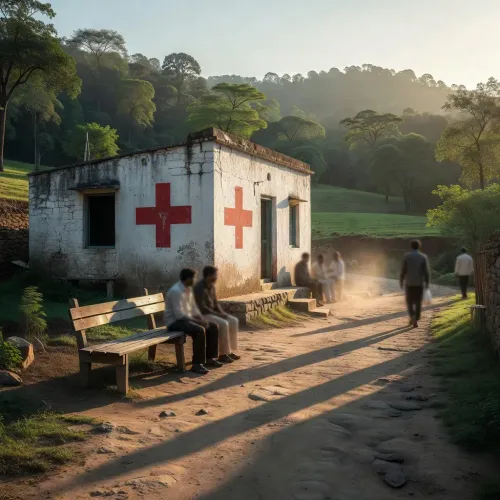
In the post, written in Hindi, CM Sharma stated: 'BJP sarkar pradesh ke pratyek nagrik tak moolbhoot suvidhayen aur behtar sevayen pahunchane ke liye nirantar karya kar rahi hai' — 'The BJP government is continuously working to deliver basic facilities and better services to every citizen of the state.' He added that roads, drinking water, education, health, and infrastructure were being expanded at speed in tribal areas.
Rajasthan's Tribal Belt and the Service-Delivery Gap
Rajasthan's tribal-majority districts — principally Banswara, Dungarpur, and parts of Udaipur — are home to Scheduled Tribe communities including the Bhils, who have historically faced steeper deficits in road connectivity and piped water than the state average. The terrain is difficult; the policy challenge is chronic.
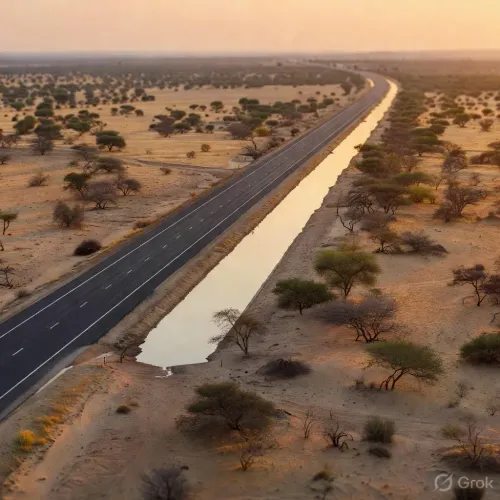
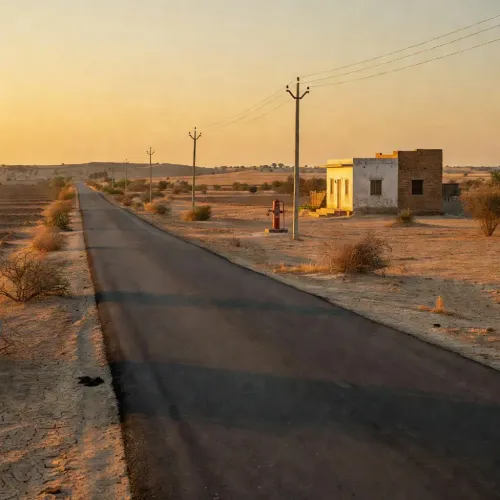
Two central programmes form the practical backbone of delivery here. The Pradhan Mantri Gram Sadak Yojana (PMGSY) targets all-weather road access to remote habitations, including Scheduled Tribe villages. The Jal Jeevan Mission, launched in 2019, aims to connect every rural household — prioritising tribal and aspirational districts — to a functional tap-water connection. Rajasthan has been among the states running both programmes simultaneously.
Vanbandhu Kalyan Yojana: The Central Tribal Framework
The broader policy architecture for tribal welfare sits within the Vanbandhu Kalyan Yojana, launched by the Government of India in 2014, which coordinates holistic development — livelihoods, health, education, and infrastructure — across tribal blocks nationwide. Rajasthan's tribal districts fall within its ambit, making state-level announcements part of a larger, multi-layered federal effort.
CM Sharma's BJP returned to power in Rajasthan in December 2023 after defeating the Congress-led government. Accelerating welfare delivery to remote communities — and being seen to do so — has been a consistent messaging pillar for BJP-governed states operating under the 'Sabka Saath, Sabka Vikas' ('Together with all, development for all') framework.
What the Post Does Not Tell Us — Yet
The statement carries no specific figures: no kilometre targets for new roads, no number of tap connections added, no school construction tallies. That absence matters. The next assembly session's budget presentation or the state government's annual review of tribal district projects will be the real test — whether the commitment on X translates into auditable, on-ground progress in Banswara and Dungarpur.
For now, Rajasthan's tribal communities are watching — and counting.
Point of View
Whose government is still in its first full term after the December 2023 election win, visible momentum in tribal districts is both a welfare imperative and a political necessity — these communities have historically swung between parties. The absence of measurable targets in the post, however, leaves the commitment open-ended; real credibility will hinge on project completion data, not declarations. The broader pattern — BJP chief ministers regularly amplifying tribal outreach under the 'Sabka Saath' umbrella — suggests this is as much about national narrative management as state-level delivery.
NationPress
26 Sept 2026
Frequently Asked Questions
What did Rajasthan CM Bhajan Lal Sharma say about tribal areas?
CM Bhajan Lal Sharma said the BJP government is continuously working to deliver basic facilities and better services to every citizen, and that roads, drinking water, education, health, and infrastructure are being rapidly expanded in tribal areas of Rajasthan.
Which tribal districts in Rajasthan are targeted for development?
Rajasthan's primary tribal-majority districts are Banswara, Dungarpur, and parts of Udaipur in the state's southern belt, home to Scheduled Tribe communities including the Bhils.
What central government schemes cover tribal infrastructure in Rajasthan?
The Pradhan Mantri Gram Sadak Yojana (PMGSY) for all-weather roads and the Jal Jeevan Mission for tap-water connections are the main central programmes operating in Rajasthan's tribal habitations, alongside the Vanbandhu Kalyan Yojana launched in 2014.
When did Bhajan Lal Sharma become Chief Minister of Rajasthan?
Bhajan Lal Sharma assumed office as Chief Minister of Rajasthan in December 2023, following the BJP's victory in the state assembly elections.
What is the Vanbandhu Kalyan Yojana?
The Vanbandhu Kalyan Yojana is a Government of India scheme launched in 2014 aimed at holistic development of tribal areas, covering livelihoods, health, education, and infrastructure across tribal blocks in states including Rajasthan.