Delhi HC rejects Athar Khan's bail in 2020 riots conspiracy case
Synopsis
The Delhi High Court has denied bail to Athar Khan in the 2020 northeast Delhi riots conspiracy case, citing WhatsApp chats as prima facie proof of his involvement and flagging risks of flight and witness tampering. The ruling deepens a fractured legal landscape where some co-accused have secured bail from the Supreme Court while others remain behind bars — with a larger bench yet to settle the UAPA bail threshold question.
Key Takeaways
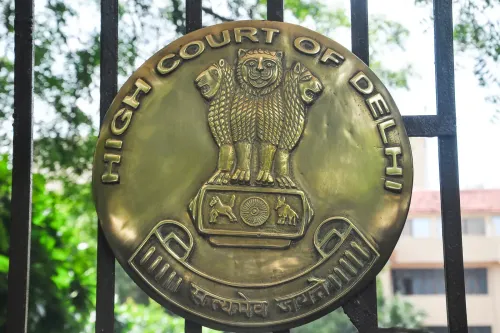
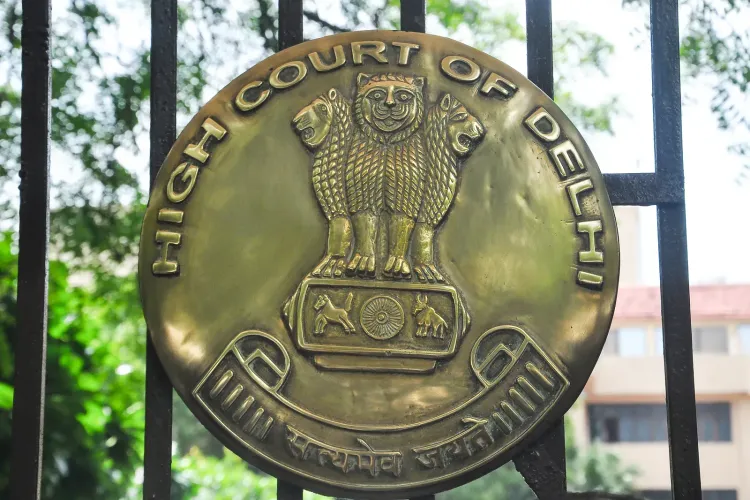
The Delhi High Court on 7 July rejected bail for Athar Khan in the 2020 northeast Delhi riots larger conspiracy case under UAPA .
A Division Bench of Justice Prathiba M.
Singh and Justice Madhu Jain held Khan posed a flight risk and could influence witnesses.
WhatsApp chats were cited as prima facie evidence of Khan's active participation in the alleged conspiracy.
The court rejected parity arguments: ASG S.V.
Raju compared Khan's role to Umar Khalid and Sharjeel Imam , not co-accused who secured bail.
The Supreme Court has referred to a larger bench the question of whether prolonged incarceration can override Section 43D(5) UAPA bail restrictions.
The Delhi High Court on Tuesday, 7 July refused bail to Athar Khan, an accused in the larger conspiracy case linked to the 2020 northeast Delhi riots, holding that a prima facie case against him was established and that he posed a flight risk who could potentially influence prosecution witnesses. The ruling comes under the stringent provisions of the Unlawful Activities (Prevention) Act (UAPA).
The Court's Ruling
A Division Bench of Justice Prathiba M. Singh and Justice Madhu Jain dismissed Khan's appeal challenging a trial court order that had earlier rejected his bail plea. The bench held that Khan's role in the alleged conspiracy — which the prosecution links to the loss of lives during the riots — was prima facie established on the basis of material placed before the court.
The court further flagged the possibility of Khan absconding if released, and noted the risk of witness tampering. The judgment was delivered weeks after the bench had reserved its order on Khan's plea.
WhatsApp Chats at the Heart of the Case
During hearings, the bench had orally observed that WhatsApp chats placed on record prima facie indicated Khan's active involvement in the alleged conspiracy. The court had remarked: 'To be honest, as third-party people these messages actually prove the conspiracy. They prove that all these people were together. When you conspire like this, things can go out of hand and we all are witness to what happened in 2020. These messages prove you were an active participant. It's shocking.'
Khan's counsel, advocate Arjun Dewan, had argued that the WhatsApp messages merely reflected plans to organise peaceful protests and carried no intention to incite violence. 'My messages clearly indicate we don't want any road block,' Dewan submitted, also contending that a deleted message relied upon by the prosecution was being misconstrued.
Arguments on Both Sides
The defence further contended that no weapons, money, or incriminating material were recovered from Khan, and that there was no direct evidence linking him to any act of violence. It was also argued that Khan was a local-level facilitator with no decision-making role, and sought parity with co-accused Shadab Ahmed and Gulfisha Fatima, who had been granted bail by the Supreme Court.
Opposing the plea, Additional Solicitor General S.V. Raju, appearing for the Delhi Police, argued that Khan's role was comparable to that of co-accused Umar Khalid and Sharjeel Imam — not the accused who had secured bail. 'He wasn't a sidekick. His role can be compared with Umar Khalid and Sharjeel Imam. There was a call to kill 100-200 people. His case stands on a different footing,' ASG Raju submitted.
The Broader UAPA Bail Landscape
The ruling fits into a complex and evolving legal landscape around bail under Section 43D(5) of the UAPA in the Delhi riots conspiracy case. Earlier this year, the Supreme Court dismissed bail pleas of Umar Khalid and Sharjeel Imam, finding that prosecution material disclosed prima facie grounds attracting the statutory embargo on bail under the UAPA. At the same time, the apex court granted bail to five co-accused — Gulfisha Fatima, Meeran Haider, Shifa Ur Rehman, Mohd Saleem Khan, and Shadab Ahmed.
More recently, the Supreme Court granted six months' interim bail to co-accused Tasleem Ahmed and Khalid Saifi, while referring to a larger bench the question of whether prolonged incarceration and trial delays could justify bail despite UAPA's restrictions. A bench of Justice Aravind Kumar and Justice Prasanna B. Varale noted divergence in the interpretation of the three-judge bench decision in Union of India vs K.A. Najeeb, including subsequent observations in Syed Iftikhar Andrabi vs National Investigation Agency. The apex court directed that the issue be placed before the Chief Justice of India for constitution of an appropriate larger bench.
Earlier this month, a Delhi court also dismissed fresh regular bail pleas of Umar Khalid and Sharjeel Imam, with Additional Sessions Judge Sameer Bajpai of the Karkardooma Court holding that the trial court was bound by the Supreme Court's 5 January order, which permitted renewal of bail pleas only after examination of protected witnesses or after one year from that order, whichever came earlier.
What Happens Next
With the larger bench question on UAPA bail and prolonged incarceration still pending before the Supreme Court, the legal trajectory of the Delhi riots conspiracy case remains unsettled. Khan's continued detention will now hinge on developments at the trial level and any future Supreme Court direction on the UAPA bail threshold.
Point of View
The risk is that pre-trial detention itself becomes the de facto punishment — a concern the Supreme Court has acknowledged but not yet resolved.
NationPress
6 Oct 2026
Frequently Asked Questions
Why did the Delhi High Court reject Athar Khan's bail?
The Delhi High Court rejected Athar Khan's bail on 7 July, holding that a prima facie case under UAPA was established against him, that he posed a flight risk, and that he could influence prosecution witnesses. The bench also cited WhatsApp chats as evidence of his alleged active participation in the 2020 northeast Delhi riots conspiracy.
What is the larger conspiracy case linked to the 2020 Delhi riots?
The larger conspiracy case alleges that a group of individuals conspired to incite and organise the violence that killed several people during the northeast Delhi riots of February 2020. Accused persons face charges under the Unlawful Activities (Prevention) Act (UAPA), which sets a high statutory bar for bail under Section 43D(5).
How does Athar Khan's case compare with other accused in the same case?
The legal outcomes have been split. The Supreme Court denied bail to Umar Khalid and Sharjeel Imam but granted it to five co-accused including Gulfisha Fatima and Shadab Ahmed. Two more accused — Tasleem Ahmed and Khalid Saifi — received six months' interim bail while a larger bench examines whether prolonged incarceration can justify bail despite UAPA restrictions.
What is the significance of the Supreme Court's larger bench reference?
The Supreme Court has referred to a larger bench the question of whether prolonged incarceration and delays in trial can justify granting bail despite the statutory embargo in Section 43D(5) of UAPA. This reference arose from divergent interpretations of the apex court's own precedents, including Union of India vs K.A. Najeeb and Syed Iftikhar Andrabi vs National Investigation Agency, and its outcome could affect all UAPA detainees awaiting trial.
What did Athar Khan's defence argue before the Delhi High Court?
Khan's counsel, advocate Arjun Dewan, argued that the WhatsApp messages reflected plans for peaceful protests and showed no intent to incite violence. The defence also contended that no weapons or incriminating material were recovered from Khan, that he was a local-level facilitator with no decision-making role, and sought parity with co-accused who had been granted bail by the Supreme Court.