Delhi riots case: HC reserves order on Athar Khan bail, cites WhatsApp chats
Synopsis
The Delhi High Court's oral remark that WhatsApp chats 'prove the conspiracy' and are 'shocking' signals serious headwinds for Athar Khan's bail bid in the 2020 North-East Delhi riots case — even as the same bench recently freed a co-accused as a mere 'local-level facilitator.' The divergence in how the court is treating different accused underscores how granular the UAPA bail calculus has become.
Key Takeaways
The Delhi High Court reserved its verdict on Athar Khan's bail plea in the 2020 North-East Delhi riots conspiracy case on Tuesday .
The bench orally observed that WhatsApp chats prima facie indicated Khan's active involvement in the alleged conspiracy, calling the messages 'shocking.' Defence argued no weapons or incriminating material were recovered from Khan, and sought parity with co-accused Shadab Ahmad and Gulfisha Fatima , both granted bail by the Supreme Court.
Raju countered that Khan's role was comparable to Umar Khalid and Sharjeel Imam , whose bail pleas the Supreme Court dismissed earlier this year.
Last week, the same bench granted bail to co-accused Saleem Malik , classifying him as a 'local-level facilitator.' The case is registered under the Unlawful Activities (Prevention) Act (UAPA) , which sets a high statutory bar against bail under Section 43D(5) .
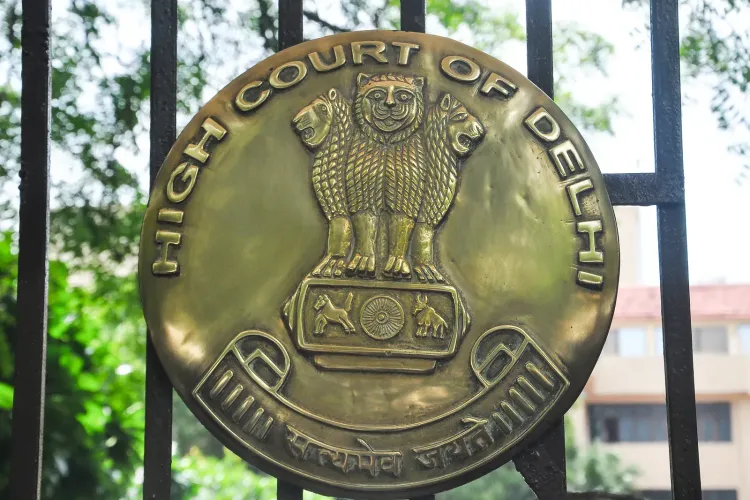
The Delhi High Court on Tuesday reserved its verdict on the bail plea of Athar Khan, an accused in the larger conspiracy case tied to the 2020 North-East Delhi riots, after orally observing that WhatsApp chats placed on record prima facie indicated his active involvement in the alleged plot. Khan is being tried under the Unlawful Activities (Prevention) Act (UAPA).
Court's Oral Observations
A Division Bench of Justice Prathiba M. Singh and Justice Madhu Jain made the remarks while hearing arguments on Khan's challenge to a trial court order that had denied him bail. The bench stated: 'To be honest, as third-party people these messages actually prove the conspiracy. They prove that all these people were together. When you conspire like this, things can go out of hand and we all are witness to what happened in 2020. These messages prove you were an active participant. It's shocking.'
Arguments by the Defence
Khan's counsel Arjun Dewan contended that the WhatsApp chats demonstrated the accused group's intent to organise non-violent protests, not incite violence. 'My messages clearly indicate we don't want any road block,' Dewan submitted. He further argued that no weapons, money, or incriminating material were recovered from Khan, and that his client was, at best, a 'local-level facilitator' with no decision-making authority in the alleged conspiracy. Dewan also noted that Khan was absent from several key meetings.
Notably, the defence sought parity with co-accused Shadab Ahmad, who was granted bail by the Supreme Court earlier this year, arguing that the allegations against Khan were comparable in nature. Dewan also pointed out that Gulfisha Fatima — whose alleged role was described as 'much graver' since she had reportedly mobilised people actively — had also been enlarged on bail by the apex court.
Prosecution's Stand
Additional Solicitor General (ASG) S.V. Raju, appearing for the Delhi Police, firmly opposed the plea, arguing that Khan's role could not be equated with those who had already received bail. 'He wasn't a sidekick. His role can be compared with Umar Khalid and Sharjeel Imam. There was a call to kill 100-200 people. His case stands on a different footing,' ASG Raju submitted. The prosecution maintained that Khan fell within the category of accused alleged to have played a serious role in the conspiracy and was therefore not entitled to bail under the parameters laid down in the Gulfisha Fatima judgment.
Recent Bail Developments in the Case
Last week, the Delhi High Court granted bail to co-accused Saleem Malik, characterising him as a 'local-level facilitator' rather than a key conspirator. Earlier this year, the Supreme Court dismissed bail pleas of Umar Khalid and Sharjeel Imam, holding that prosecution material disclosed prima facie grounds attracting the statutory embargo under Section 43D(5) of the UAPA. However, the apex court granted bail to five other accused — Gulfisha Fatima, Meeran Haider, Shifa Ur Rehman, Mohd Saleem Khan, and Shadab Ahmed.
Background
According to the Delhi Police, several student activists who had organised protests against the Citizenship Amendment Act (CAA) during 2019–2020 allegedly conspired to engineer the riots that erupted in North-East Delhi in February 2020. The violence left dozens dead and hundreds injured, and remains one of the most significant communal incidents in the capital in recent decades. The Delhi High Court is expected to pronounce its verdict on Khan's bail plea in due course.
Point of View
And it sets a difficult threshold for Khan to clear. Yet the same bench freed Saleem Malik just days earlier as a 'local-level facilitator,' suggesting the court is drawing fine gradations of culpability within the same case. The prosecution's direct comparison of Khan to Umar Khalid and Sharjeel Imam — whose bail the Supreme Court denied — is a deliberate framing, and the court's apparent receptiveness to that framing makes this a closely watched order. More broadly, the case continues to test where UAPA's near-absolute bail embargo ends and the constitutional right to liberty begins.
NationPress
15 Oct 2026
Frequently Asked Questions
What is the Athar Khan bail case about?
Athar Khan is one of the accused in the larger conspiracy case linked to the February 2020 North-East Delhi riots, tried under the Unlawful Activities (Prevention) Act (UAPA). The Delhi High Court reserved its verdict on his bail plea on Tuesday after hearing arguments from both sides.
What did the Delhi High Court say about the WhatsApp chats?
The Division Bench of Justice Prathiba M. Singh and Justice Madhu Jain orally observed that the WhatsApp chats placed on record prima facie proved the conspiracy and demonstrated that the accused were acting together, calling the messages 'shocking.' These observations were made during the hearing and do not constitute the final verdict.
Why is the defence seeking parity with Shadab Ahmad and Gulfisha Fatima?
Khan's counsel argued that the allegations against him are similar in nature to those against Shadab Ahmad and Gulfisha Fatima, both of whom were granted bail by the Supreme Court earlier this year. The defence contended that Fatima's alleged role was in fact graver, as she had reportedly mobilised people actively.
What is the prosecution's argument against granting bail to Athar Khan?
Additional Solicitor General S.V. Raju argued that Khan's role was more serious than those who received bail, comparing him to Umar Khalid and Sharjeel Imam, whose bail pleas the Supreme Court dismissed. The prosecution maintained that Khan falls within the category of accused alleged to have played a central role in the conspiracy.
What is the UAPA provision that makes bail difficult in this case?
Section 43D(5) of the Unlawful Activities (Prevention) Act sets a high statutory bar, prohibiting bail if the court finds prima facie grounds to believe the accusations are true. The Supreme Court cited this provision when it dismissed the bail pleas of Umar Khalid and Sharjeel Imam earlier this year.