Will the Supreme Court Hear Bail Pleas in the Delhi Riots 'Larger Conspiracy' Case Today?
Synopsis
The Supreme Court's hearing on bail pleas for student leaders Umar Khalid and Sharjeel Imam highlights critical questions about justice and accountability in the 2020 Delhi riots case. As arguments unfold, with claims of delayed trials and lack of evidence, the stakes are high for activists still facing charges under UAPA.
Key Takeaways
Supreme Court hearings are pivotal for activists' future.
Claims of delayed trials raise concerns.
Defense argues lack of incriminating evidence.
The case tests the boundaries of UAPA .
Public interest and civil rights are at stake.
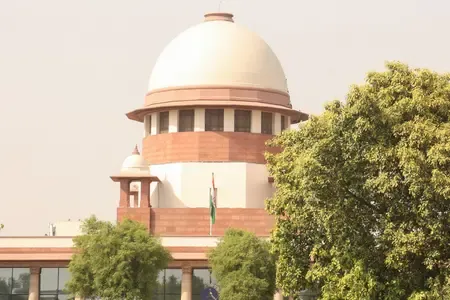
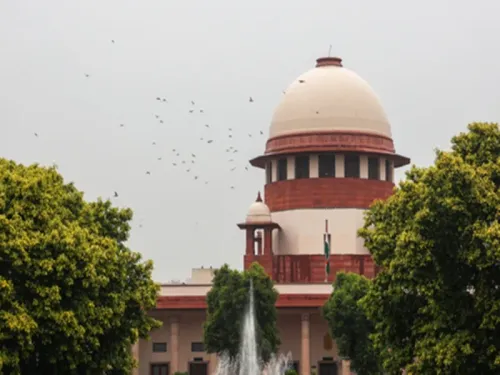
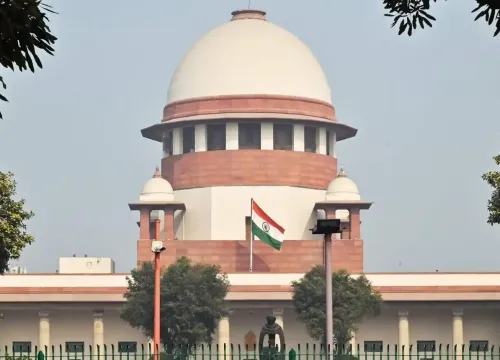
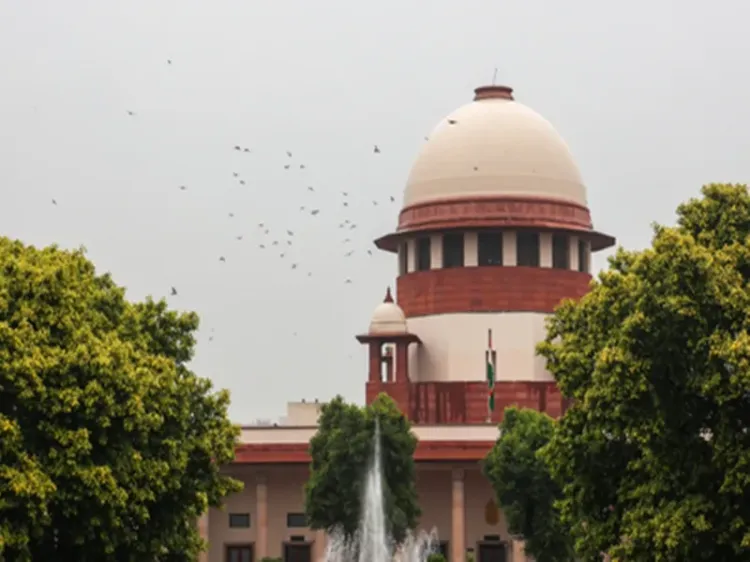
New Delhi, Nov 3 (NationPress) The Supreme Court is set to continue its hearing on the bail requests from student leaders Umar Khalid, Sharjeel Imam, Gulfisha Fatima, and other activists implicated in the alleged "larger conspiracy" linked to the 2020 North East Delhi riots. They remain incarcerated under the strict Unlawful Activities (Prevention) Act (UAPA).
According to the causelist available on the Supreme Court's website, a Bench comprising Justices Aravind Kumar and N.V. Anjaria will carry on with the hearing on the submissions from co-accused Meeran Haider, Mohd Saleem Khan, and Shifa Ur Rehman, along with the Delhi Police on November 3.
During a prior hearing, senior advocate Kapil Sibal, representing Umar Khalid, contended that the prosecution has persistently postponed the trial and is now attempting to shift the blame onto the accused. “They claim it is I who is delaying the case, while the reality suggests otherwise,” Sibal asserted.
“Out of 751 FIRs associated with the riots, Khalid was mentioned in only one. He was not even in Delhi when the riots occurred,” Sibal emphasized, pointing out that there was no recovery of any incriminating evidence from him.
He maintained that none of the actions attributed to Khalid qualify as a “terrorist act” under UAPA, referencing the bail orders granted to co-accused Asif Iqbal Tanha, Devangana Kalita, and Natasha Narwal.
“They received bail. Umar Khalid wasn’t even present in Delhi. The evidence and witnesses are identical,” Sibal argued.
Senior advocate Siddharth Dave, representing Sharjeel Imam, asserted that the prosecution took over three years to finalize the investigation and continued to submit supplementary chargesheets until September 2024.
“The trial couldn’t advance as the investigation was claimed to be ongoing. Thus, out of five years, three were spent in the investigation,” Dave explained to the Bench led by Justice Kumar.
He noted that Imam has been in custody since January 25, 2020, nearly a month prior to the riots that erupted in late February. “If I’ve been in custody since January, what role could I possibly have in orchestrating riots that happened in February? My speeches occurred in December 2019—two months ahead of the riots,” Dave contended.
In response to the Supreme Court’s inquiry regarding the nature of the speech, Dave stated: “I called for chakka jams (blockades) as part of protests against the Citizenship Amendment Act (CAA). There was absolutely no call for violence.”
Representing Gulfisha Fatima, senior advocate Abhishek Manu Singhvi claimed that the sole accusation against her involved establishing a protest site.
“No violent acts took place at those locations. There is no oral or documentary proof indicating that any violent materials were present where I was,” Singhvi added.
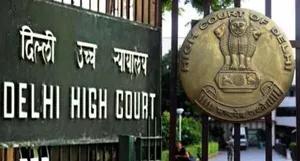
Previously, the Delhi High Court had rejected the bail pleas of Sharjeel Imam, Umar Khalid, and several others implicated in the 2020 city riots "larger conspiracy" case.
Point of View
My stance remains grounded in the principles of justice and fairness. The ongoing hearings reflect the complexity of the legal system and the importance of upholding rights while navigating high-profile cases. It’s essential to prioritize transparency and ensure that all accused receive a fair trial, in alignment with the national interest.
NationPress
14 Oct 2026
Frequently Asked Questions
What is the significance of the Supreme Court's hearing?
The Supreme Court's hearing is crucial as it pertains to the bail pleas of prominent activists linked to the 2020 Delhi riots, raising questions about the legal processes and the implications for civil liberties.
Who are the key figures involved in the case?
Key figures include Umar Khalid, Sharjeel Imam, and Gulfisha Fatima, all accused of being part of a larger conspiracy related to the riots.
What laws are the accused facing?
The accused are facing charges under the Unlawful Activities (Prevention) Act (UAPA), which is often applied in cases involving terrorism and unlawful activities.
What arguments are being presented for bail?
The defense argues that the prosecution has delayed the trial and that the evidence does not substantiate claims of involvement in violent activities.
What was the outcome of earlier hearings?
Earlier hearings saw the Delhi High Court dismissing bail pleas for several activists, which has heightened tensions surrounding the ongoing legal proceedings.