NHRC's Kanoongo flags social media firms defying SC order on POCSO reporting
Synopsis
Despite a Supreme Court order passed in 2024, social media platforms have still not complied with mandatory POCSO reporting requirements to local police — a gap that NHRC member Priyank Kanoongo says is leaving lakhs of child abuse victims without justice. With the apex court hearing the matter again and the NHRC having already issued notices to Meta and MeitY, India's child-safety framework is heading for a decisive legal reckoning with Big Tech.
Key Takeaways
NHRC member Priyank Kanoongo flagged on 15 October 2026 that social media firms have not complied with a 2024 Supreme Court order on POCSO reporting.
The order requires intermediaries to report suspected child sexual abuse to the Special Juvenile Police Unit (SJPU) or local police, not just to NCMEC .
The Supreme Court ruling in Just Rights for Children Alliance vs.
Harish held that the IT Act does not override POCSO obligations, citing Section 20 and Rule 11 .
The NHRC had taken suo motu cognisance of BBC reports alleging paid ads on Instagram linked users to CSAM on Telegram .
Notices have been issued to Meta , MeitY , the Delhi Police Commissioner , and police authorities in several states.
Kanoongo questioned whether platforms were monetising traffic generated by the circulation of child sexual abuse material.
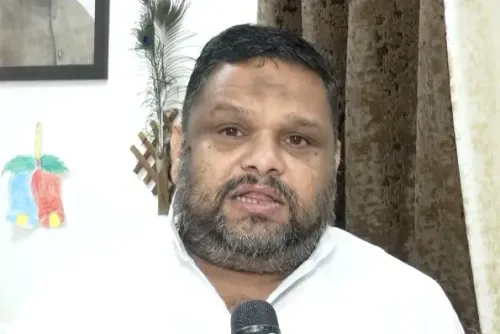
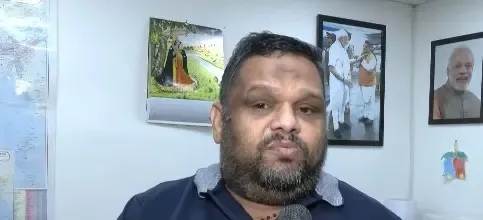
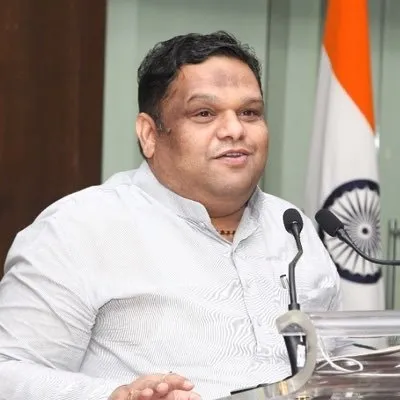
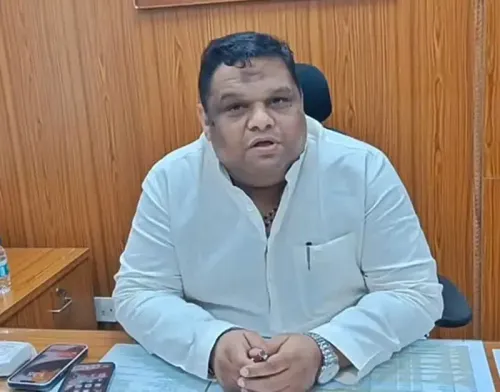
National Human Rights Commission (NHRC) member Priyank Kanoongo on Thursday, 15 October 2026, publicly flagged persistent non-compliance by social media intermediaries with a Supreme Court order mandating the reporting of suspected child sexual abuse offences under the Protection of Children from Sexual Offences (POCSO) Act to local police. Kanoongo stated that the matter was being heard again by the apex court even as compliance with a 2024 direction remained outstanding.
What Kanoongo Said
In a post on social media platform X, Kanoongo noted that the Supreme Court's order had been passed in 2024, yet adherence from social media companies was still awaited. 'This Hon'ble Supreme Court order was passed in 2024, yet compliance is still awaited. The matter is being heard again today,' he wrote.
He further questioned the legal representation being extended to social media companies in these proceedings, arguing that children who are victims of abuse are neither able to approach the court themselves nor afford expensive legal representation. Kanoongo also raised the issue of potential monetisation, asking whether platforms were profiting — through traffic and advertising revenue — from the circulation of child sexual abuse material (CSAM) on their services.
'For years, the law has been caught in a cycle of delays while lakhs of children continue to wait for justice,' Kanoongo said, adding: 'Why are these companies resisting the reporting of child sexual abuse to the local police? Why is a clear legal mandate still awaiting implementation while children continue to suffer?'
The Supreme Court's Binding Direction
The NHRC member's remarks reference the Supreme Court's ruling in Just Rights for Children Alliance & Another vs. S. Harish & Others, which clarified that compliance with the Information Technology Act, 2000 does not absolve intermediaries of their separate obligations under the POCSO Act. Paragraph 258 of that judgment explicitly requires social media intermediaries to report the commission or likely commission of a POCSO offence not only to the National Center for Missing & Exploited Children (NCMEC), but also to the Special Juvenile Police Unit (SJPU) or local police. The apex court held that the POCSO Act and rules framed under it carry an overriding effect, and that intermediaries must comply with Section 20 of the Act and Rule 11 of the POCSO Rules.
NHRC's Ongoing Interventions
Kanoongo's remarks come amid broader NHRC action over allegations that CSAM was being circulated and promoted via paid advertisements on Meta-owned platforms, including Instagram. The NHRC took suo motu cognisance of media reports — originally published by BBC World Service — alleging that paid advertisements on Instagram used phrases such as 'rape video' and 'child video' and redirected users to Telegram channels where such material was allegedly being offered for sale.
On 8 July, a Bench presided over by Kanoongo issued a notice to the Delhi Police Commissioner, directing a comprehensive investigation into the allegations, preservation of electronic evidence, and examination of compliance with mandatory POCSO reporting obligations. The NHRC has also issued notices to the Ministry of Electronics and Information Technology (MeitY), police authorities in several states, and Meta in connection with related complaints.
The Wider Stakes
Critics argue that the continued resistance by social media companies reflects a broader pattern in which global platforms invoke IT Act safe-harbour protections to sidestep child-protection laws that predate the digital era. Notably, this is not the first time Indian courts and commissions have flagged the gap between what platforms report internationally — primarily to NCMEC — and what they report to domestic law enforcement under Indian statute. This tension sits at the centre of India's ongoing effort to hold Big Tech accountable under domestic child-safety frameworks. With the Supreme Court hearing the matter afresh, the next few weeks could prove consequential for how India enforces POCSO obligations on digital intermediaries at scale.
Point of View
Effectively treating a statutory child-protection mandate as optional. The NHRC's suo motu action and Kanoongo's public pressure are unusual escalation tools, but they underscore how conventional enforcement channels have failed. What is missing is a credible contempt or penalty mechanism that makes non-compliance more costly than compliance — without that lever, platforms have little structural incentive to change behaviour. India's POCSO framework is robust on paper; the test is whether the courts will now move from direction to enforcement.
NationPress
15 Oct 2026
Frequently Asked Questions
What is the Supreme Court order that social media firms are allegedly not complying with?
The Supreme Court, in its ruling in Just Rights for Children Alliance & Another vs. S. Harish & Others, directed social media intermediaries to report suspected POCSO offences to the Special Juvenile Police Unit or local police — not merely to international bodies like NCMEC. The order, passed in 2024, also clarified that IT Act compliance does not substitute for POCSO obligations under Section 20 of the Act and Rule 11 of the POCSO Rules.
Who is Priyank Kanoongo and why did he speak out?
Priyank Kanoongo is a member of the National Human Rights Commission (NHRC) and has been presiding over a Bench examining allegations of child sexual abuse material on Meta-owned platforms including Instagram. He flagged the non-compliance publicly via a post on X on 15 October 2026, stating that the matter was being heard again by the Supreme Court.
What allegations prompted the NHRC's intervention against Meta?
The NHRC took suo motu cognisance of BBC World Service reports alleging that paid advertisements on Instagram used phrases like 'rape video' and 'child video' and redirected users to Telegram channels where child sexual abuse material was allegedly being sold. The NHRC has since issued notices to Meta, MeitY, and police authorities in several states.
Why does reporting to NCMEC not satisfy India's POCSO requirements?
Under Section 20 of the POCSO Act and Rule 11 of the POCSO Rules, intermediaries must report suspected offences to the SJPU or local Indian police. The Supreme Court has held that these domestic obligations have an overriding effect and cannot be discharged merely by reporting to NCMEC, an international body with no Indian enforcement jurisdiction.
What happens next in this legal process?
The Supreme Court is hearing the compliance matter afresh as of 15 October 2026. The NHRC's Bench, led by Kanoongo, has already directed the Delhi Police Commissioner to investigate and preserve electronic evidence. Further orders from the apex court are expected to determine whether platforms face stronger enforcement action for continued non-compliance.