NHRC flags 50+ CSEAM cases on Instagram, summons Delhi Police chief
Synopsis
India's apex human rights body has flagged over 50 child sexual exploitation complaints on Instagram in a single week — and it isn't stopping at notices. The NHRC has summoned the Delhi Police Commissioner in person, given Meta a compliance ultimatum, and looped in MeitY, marking one of the most aggressive regulatory pushes yet against online child abuse material in India.
Key Takeaways
The NHRC received complaints in over 50 CSEAM cases on Instagram within a single week.
Notices issued to police chiefs of Punjab, Delhi, Telangana, Maharashtra, Odisha, West Bengal, Haryana , and Bihar directing FIR registration.
Meta has been formally notified to review its practices and comply with Indian child safety laws; MeitY has also been alerted.
Delhi Police Commissioner summoned to appear before the NHRC on 7 September for failing to file a court-mandated Action Taken Report; appearance waived if report is received by 31 August .
The NHRC has invoked the POCSO Act , IT Act , and Digital Personal Data Protection Act, 2023 as applicable legal frameworks.
Meta CEO Mark Zuckerberg reportedly apologised for child abuse material and platform failures after meeting senior Indian government officials.
The National Human Rights Commission (NHRC) has received complaints linked to more than 50 cases of Child Sexual Exploitation and Abuse Material (CSEAM) on Instagram in a single week, triggering notices to police chiefs across eight states and a formal notice to Meta. The Commission has also summoned the Delhi Police Commissioner for failing to submit a court-mandated report on a related case involving paid Instagram advertisements that allegedly promoted child sexual abuse content.
Notices Issued to Eight States and Meta
NHRC member Priyank Kanoongo disclosed on social media platform X that the Commission had received a surge of complaints about CSEAM circulating on Instagram. Based on those complaints, notices were dispatched to the police chiefs of Punjab, Delhi, Telangana, Maharashtra, Odisha, West Bengal, Haryana, and Bihar, directing them to register FIRs and initiate appropriate legal action.
Simultaneously, the NHRC issued a notice to Meta — Instagram's parent company — asking it to review its content moderation practices and ensure compliance with Indian laws on child safety and online content regulation. The matter has also been brought to the attention of the Ministry of Electronics and Information Technology (MeitY).
Delhi Police Commissioner Summoned for September 7 Hearing
The NHRC's action against the Delhi Police Commissioner stems from a separate but related matter. A Bench presided over by Kanoongo had earlier taken suo motu cognisance of BBC World Service reports alleging that paid advertisements on Instagram used phrases such as 'rape video' and 'child video' to redirect users to Telegram channels where child sexual abuse material was purportedly being sold.
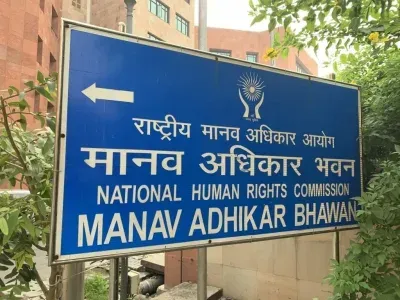
On 8 July, the NHRC issued a notice under Section 12 of the Protection of Human Rights Act, 1993, directing Delhi Police to file an Action Taken Report (ATR) within 15 days. When no report arrived, a reminder was sent on 29 July, granting an additional seven days and warning that coercive powers could be invoked. With the report still absent, the Commission on Wednesday took a 'very serious view' and directed that summons be issued to the Commissioner to appear in person on 7 September at 11.30 am at Manav Adhikar Bhawan, New Delhi. The personal appearance will be waived if the requisite report is received on or before 31 August.
What the NHRC Has Asked Investigators to Examine
The Commission has sought a comprehensive ATR covering: preservation of electronic evidence; identification of victims and perpetrators; compliance by Meta and other intermediaries with mandatory reporting obligations under Sections 19 and 20 of the POCSO Act; registration of criminal cases wherever warranted; tracing of the financial trail behind the advertisements; and measures to rescue, rehabilitate, and protect child victims.
The NHRC has also directed Delhi Police to examine whether Meta Platforms Inc. and its responsible officers failed in their statutory duty to report offences to the Special Juvenile Police Unit, local police, or the National Center for Missing and Exploited Children (NCMEC) — an obligation the Commission noted was affirmed by a Supreme Court ruling.
Meta's Response and Government Pressure
Separately, Meta chief Mark Zuckerberg reportedly apologised for child sexual abuse material, deepfake content, and operational failures on the company's platforms after senior Meta executives met IT Minister Ashwini Vaishnaw, IT Secretary S. Krishnan, and other senior government officials, according to sources. The meeting signals mounting regulatory pressure on the platform from the Indian government.
Kanoongo also urged citizens to report such content immediately and requested that individuals contact him directly at priyank.kanoongo@gov.in if police authorities fail to act on their complaints. The NHRC has framed preventing the circulation of child sexual abuse material as a collective societal responsibility.
Legal Framework Invoked
The NHRC has indicated that the allegations, if substantiated, would warrant examination under the Protection of Children from Sexual Offences (POCSO) Act, the Information Technology Act, and the Digital Personal Data Protection Act, 2023. The Commission described the matter as one of 'exceptional gravity', citing concerns about online child exploitation, monetisation of abuse material, facilitation of organised criminal activity through digital platforms, and failures in algorithmic moderation and child safety mechanisms.
With the Delhi Police Commissioner's deadline set for 31 August and a formal hearing on 7 September, the case is expected to intensify scrutiny of both law enforcement responsiveness and social media platforms' compliance with India's child protection laws.
Point of View
Not just a moderation lapse, and that distinction matters for legal liability under POCSO. Meta's reported apology to the government, while notable, arrives under obvious regulatory duress and does not substitute for the compliance audit the NHRC has demanded. The real test will be whether Delhi Police's eventual ATR contains verifiable enforcement action or another round of procedural assurances.
NationPress
21 Sept 2026
Frequently Asked Questions
What action has the NHRC taken on CSEAM cases on Instagram?
The NHRC has issued notices to police chiefs of eight states — Punjab, Delhi, Telangana, Maharashtra, Odisha, West Bengal, Haryana, and Bihar — directing them to register FIRs in over 50 reported CSEAM cases on Instagram. It has also issued a formal notice to Meta and alerted MeitY.
Why has the NHRC summoned the Delhi Police Commissioner?
The Delhi Police Commissioner was summoned for failing to submit an Action Taken Report (ATR) despite two deadlines — set on 8 July and extended on 29 July — in a case involving paid Instagram advertisements that allegedly promoted child sexual abuse material. The Commissioner must appear on 7 September or file the report by 31 August.
What was the BBC report that triggered the NHRC's suo motu action?
BBC World Service reported that paid advertisements on Instagram used terms such as 'rape video' and 'child video' to redirect users to Telegram channels where child sexual abuse material was allegedly being sold. The NHRC took suo motu cognisance of these reports and directed Delhi Police to investigate.
What laws apply to this case?
The NHRC has identified the Protection of Children from Sexual Offences (POCSO) Act, the Information Technology Act, and the Digital Personal Data Protection Act, 2023 as the primary legal frameworks. Under POCSO, social media intermediaries are mandatorily required to report offences to local police or the Special Juvenile Police Unit.
How has Meta responded to the NHRC notice and government pressure?
Meta CEO Mark Zuckerberg reportedly apologised for child sexual abuse material and operational failures on the company's platforms after senior Meta executives met IT Minister Ashwini Vaishnaw and IT Secretary S. Krishnan. The NHRC's formal notice to Meta demands a review of its content moderation practices and compliance with Indian child safety laws.