Have Fraudulent Challans and Fake Payment Gateways Become the New Scam Method?

Synopsis
Rajasthan Police has uncovered a new online scam where cybercriminals are sending fake traffic challan messages to trick vehicle owners into making payments. This alarming trend highlights the importance of cyber awareness and vigilance. Read on to learn how to protect yourself from these scams and what actions to take if you receive such messages.
Key Takeaways
Cybercriminals are sending fake traffic challan messages.
Always verify the authenticity of messages before making payments.
Do not click on links from unknown sources.
Report suspicious messages to the authorities immediately.
Maintain strong cyber awareness to protect yourself.
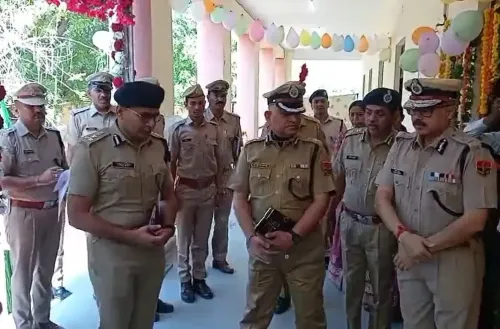
Jaipur, Dec 10 (NationPress) The Rajasthan Police informed the public on Wednesday that a new scheme of online deception has emerged, wherein cybercriminals are dispatching fraudulent traffic challan notifications to vehicle owners.
Vijay Kumar Singh, the Additional Director General of Police (Cyber Crime), revealed that these con artists are sending misleading messages from unofficial numbers, falsely asserting that recipients owe fines for traffic violations.
ADG Singh elaborated that these texts coerce recipients into making immediate payments, warning them with phrases like: “Reminder: Outstanding traffic violation fine. Pay immediately to avoid extra penalties or legal action.”
He pointed out that the SMS contains a counterfeit link, and if the user clicks on it and attempts to make a payment, their bank account could be at significant risk of being compromised.
He also mentioned that the Cyber Crime Branch has issued recommendations aimed at equipping citizens to identify deceptive websites.
“Scammers frequently create domains that closely mimic official government sites—for instance, using govt.in instead of gov.in, or inc.in instead of nic.in. Legitimate government platforms generally use .gov.in, .nic.in, or .org.in domains. Sudden pop-up alerts encouraging users to click for payments or special offers are also strong indicators of fraud,”
he stated.
He further urged the public to refrain from clicking on links received via SMS from unknown sources.
“Citizens should never disclose banking passwords, OTPs, or personal information to anyone, nor should they contact the numbers provided in such dubious messages,”
he cautioned.
He emphasized that maintaining cyber awareness is the most effective defense against such frauds.
“If you encounter any fraudulent activity or receive a suspicious message, it is critical to act swiftly,”
he advised.
He mentioned that reports of such incidents can be made by calling the cyber helpline at 1930, or by contacting the cyber help desk at 9256001930 / 9257510100.
“Complaints can also be lodged through the national cybercrime reporting portal https://cybercrime.gov.in or at the nearest police station/cyber police station,”
he concluded.
Point of View
The rise of cyber fraud in India, especially through deceptive traffic challans, underlines the pressing need for increased public awareness and education on cyber safety. The nation stands firmly against such scams, and the role of law enforcement, like the Rajasthan Police, is crucial in combating these threats. It's a collective responsibility to safeguard our digital spaces.
NationPress
25 Sept 2026
Frequently Asked Questions
What should I do if I receive a fake traffic challan message?
Do not click on any links in the message. Report the incident to the cyber helpline at 1930 or your nearest police station.
How can I identify a fraudulent website?
Look for domain names that closely resemble authentic government sites. Legitimate sites use .gov.in, .nic.in, or .org.in. Be cautious of pop-up messages urging immediate action.
Is it safe to share my personal information over SMS?
No, you should never share banking passwords, OTPs, or personal details with anyone through SMS or phone calls, especially from unknown numbers.
What measures are being taken to combat cyber fraud?
The Cyber Crime Branch is actively educating citizens about recognizing fraudulent activities and has issued guidelines for reporting scams.
How can I enhance my cyber awareness?
Stay informed about the latest scams, educate yourself on identifying suspicious messages, and always verify the authenticity of communications before taking action.