Rajasthan Sets Healthcare Standards with Gehlot’s Initiatives: A Model for India
Synopsis
Ashok Gehlot showcases Rajasthan's healthcare advancements and the transformative 'Rajasthan Model', emphasizing initiatives like the 'Right to Health' and 'Chiranjeevi' schemes. This comprehensive approach aims to redefine healthcare accessibility and quality in India.
Key Takeaways
Rajasthan's healthcare system has achieved a 93% health insurance coverage.
The Chiranjeevi Scheme offers substantial financial protections for families.
Emergency treatment is guaranteed for all individuals under the Right to Health law.
Significant infrastructure has been developed for healthcare services.
Rajasthan's healthcare model is being studied as a national benchmark.
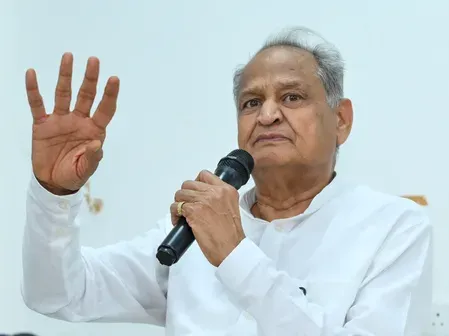
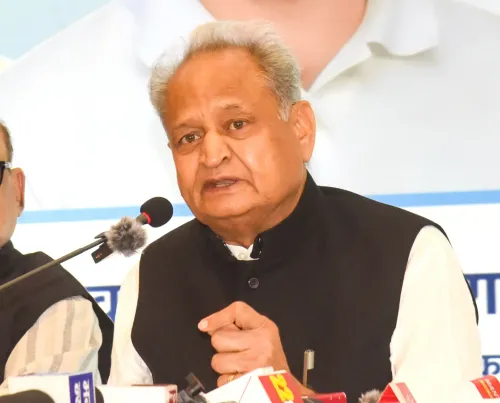
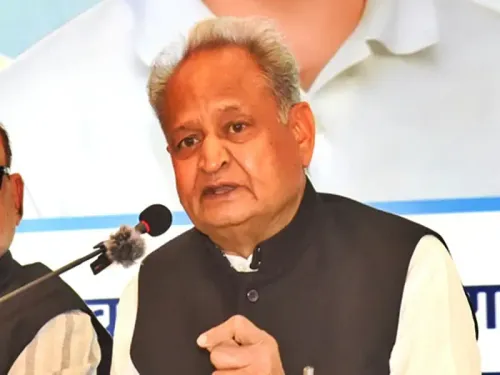
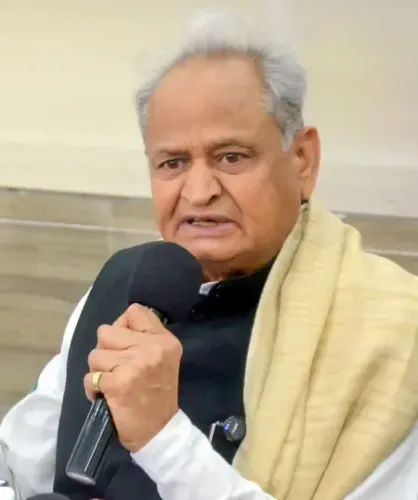
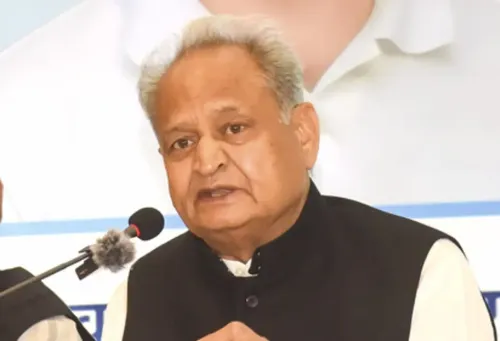
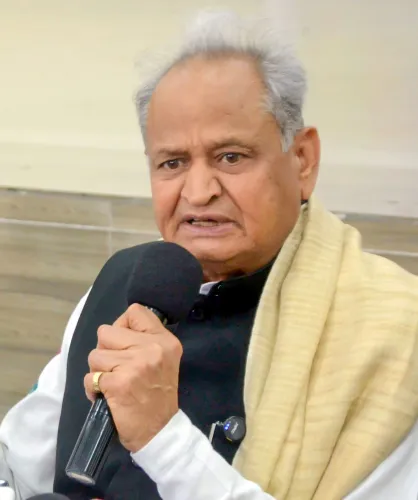
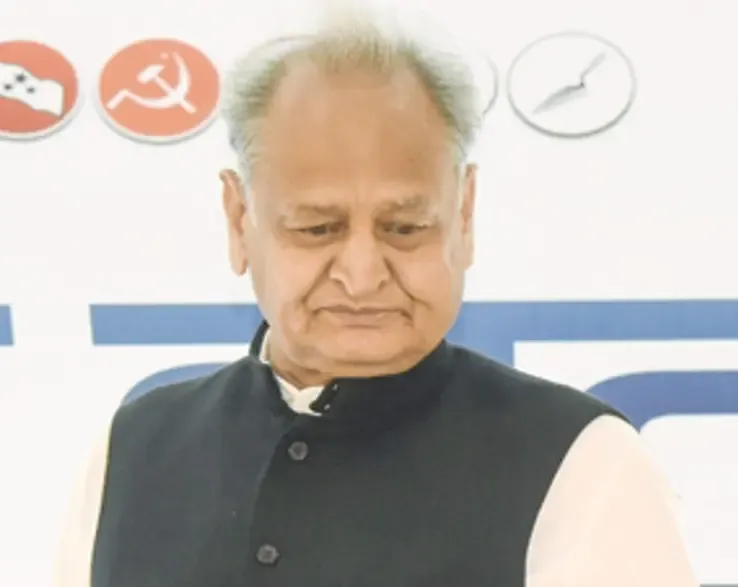
Jaipur, April 2 (NationPress) Ashok Gehlot, the former Chief Minister of Rajasthan, held a press briefing at the Kerala Pradesh Congress Committee, where he emphasized the remarkable progress of Rajasthan's healthcare system and introduced the “Rajasthan Model” as a standard for the entire nation.
Using data and policy results, he claimed that the Congress-led administration has turned Rajasthan into a frontrunner in the health sector through groundbreaking initiatives such as the ‘Right to Health’ and the Mukhyamantri Chiranjeevi Swasthya Bima Yojana.
He drew a comparison with the current healthcare scenario in Kerala, suggesting a deterioration in standards due to the Left government's governance.
Gehlot elaborated on the Chiranjeevi Scheme, which offers families in Rajasthan cashless treatments up to Rs 25 lakh, along with Rs 10 lakh in accidental insurance, thereby alleviating the financial pressures caused by severe illnesses.
He highlighted that high-cost treatments, including cancer therapy, cardiac surgeries, neurosurgeries, organ transplants, and other advanced procedures, are provided at no cost in both government and private hospitals.
According to Gehlot, nearly 50 lakh patients have benefited from free treatments totaling around Rs 5,000 crore. The scheme also guarantees free medications for five days before hospitalization and up to 15 days after discharge, in addition to reimbursement for treatments availed outside the state under package norms.
Moreover, essential diagnostic services such as MRI, CT scans, and X-rays are offered free of charge, significantly easing the burden on economically disadvantaged groups.
Gehlot remarked that Rajasthan has achieved approximately 93 percent health insurance coverage, greatly surpassing the national average of 42 percent and outpacing states like Gujarat, Maharashtra, and Uttar Pradesh.
He insisted that this all-encompassing strategy embodies the genuine essence of the Right to Health and can act as an example for other states.
He further pointed out that Rajasthan has enacted a Right to Health law that provides free emergency treatment for everyone, including residents from other states, for up to 24 hours, even in private hospitals.
Through the expanded Nirogi Rajasthan Scheme, the state has made medicines, diagnostics, and complete treatment free in government hospitals, becoming the first state to offer such extensive free healthcare services across both public and private sectors.
Discussing infrastructural advancements, Gehlot indicated that over the last five years, Rajasthan has significantly broadened its healthcare network by establishing 1,674 sub-centres, 710 Primary Health Centres (PHCs), and 325 Community Health Centres (CHCs).
Currently, the state boasts 36 PHCs and 11 CHCs per lakh population, in contrast to Kerala's 17 and 6.5, respectively. He noted that the capacity of government hospital beds has increased by 60 percent, while ICU bed availability has nearly tripled, enhancing critical care services.
Gehlot also underscored improvements in essential health indicators, stating that institutional deliveries in Rajasthan have reached 95 percent, surpassing the national average.
Vaccination rates have surged from 54.8 percent in 2015-16 to 81 percent, while there has been a significant reduction in maternal and infant mortality rates, with the Infant Mortality Rate dropping to 30.3, below the national average of 35.2.
He mentioned that the initiative to establish medical colleges in every district stemmed from the UPA government. During his term, Rajasthan opened 12 new medical colleges and 29 nursing colleges, increased MBBS seats by 1,980, added 558 postgraduate seats, and initiated the establishment of Marwar Medical University to foster coordination and research in the health sector.
In conclusion, Gehlot stated that the ultimate aim of these reforms is to render Rajasthan self-sufficient in healthcare, ensuring that no individual needs to sell assets for medical treatment. He asserted that the Rajasthan Model is now being analyzed as a successful case study for healthcare reform throughout the country.
Point of View
The advancements in Rajasthan's healthcare system, as articulated by Ashok Gehlot, reflect a significant shift towards better health accessibility and insurance coverage. The 'Rajasthan Model' appears to serve as a potential blueprint for other states aiming to enhance their healthcare frameworks.
NationPress
7 Oct 2026
Frequently Asked Questions
What is the Chiranjeevi Scheme?
The Chiranjeevi Scheme provides cashless treatment up to Rs 25 lakh and Rs 10 lakh accidental insurance coverage to families in Rajasthan, significantly reducing financial burdens associated with serious illnesses.
How has Rajasthan improved healthcare access?
Rajasthan has improved healthcare access by establishing numerous healthcare facilities, providing free treatments, and achieving high health insurance coverage rates.
What does the Right to Health law entail?
The Right to Health law in Rajasthan ensures free emergency treatment for all individuals, including those from other states, for up to 24 hours in private hospitals.
What health indicators have improved in Rajasthan?
Rajasthan has seen improvements in institutional deliveries, vaccination rates, and a reduction in maternal and infant mortality rates.
How many medical colleges are there in Rajasthan?
Rajasthan has opened 12 new medical colleges and 29 nursing colleges to enhance medical education and training.