How Can Rajasthan Become a Model for Good Governance?
Synopsis
In a recent address, Rajasthan's CM Bhajan Lal Sharma called for a commitment to public service and innovation among all stakeholders to align with PM Modi’s governance vision. This initiative aims to position Rajasthan as a leader in good governance, following the legacy of former PM Atal Bihari Vajpayee.
Key Takeaways
Rajasthan aims to be a benchmark for good governance.
Commitment to public service is essential for effective governance.
Technology plays a crucial role in connecting citizens with the government.
Initiatives like Mission Karmayogi are transforming public service.
Rajasthan aspires to reach a $4.3 trillion economy by 2047.
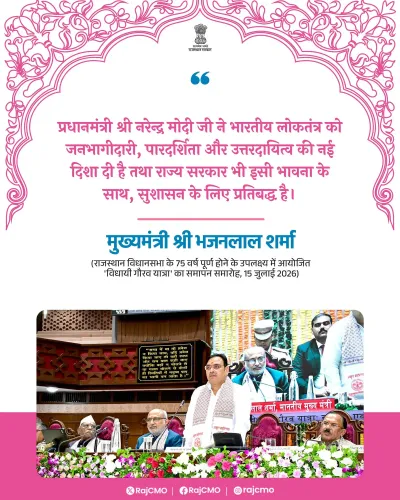
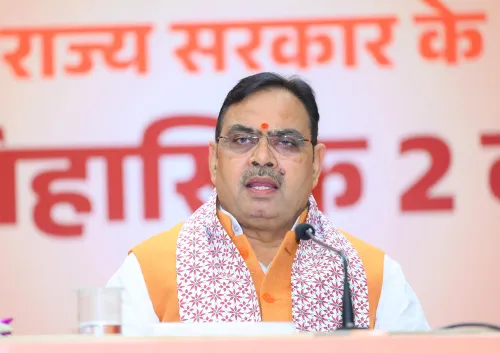
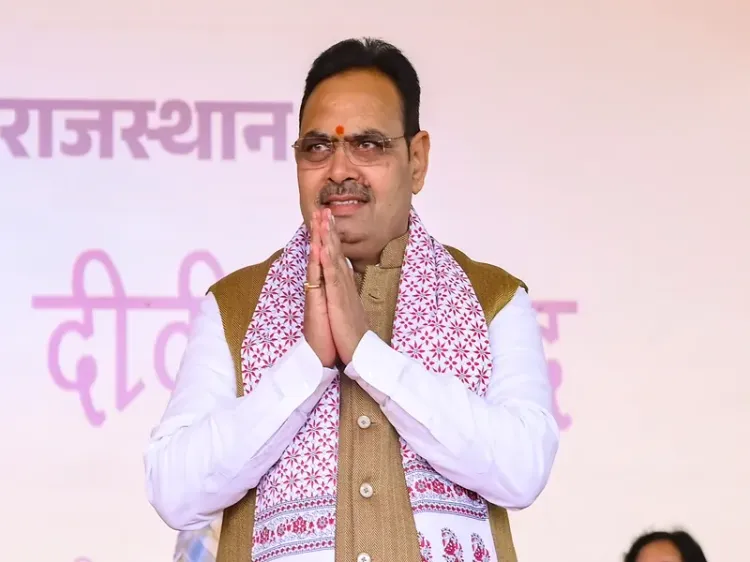
Jaipur, Dec 25 (NationPress) Rajasthan Chief Minister Bhajan Lal Sharma emphasized on Thursday that all stakeholders should align with Prime Minister Narendra Modi’s vision of "Minimum Government, Maximum Governance" through commitment and hard work. He called upon officials and staff to foster a work ethic grounded in public service, innovation, and accountability to establish Rajasthan as a benchmark for good governance.
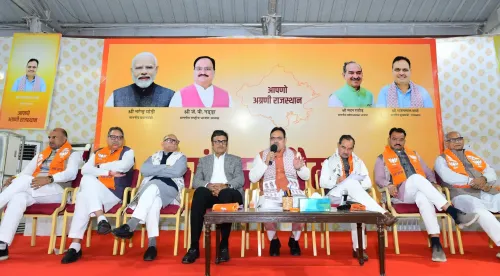
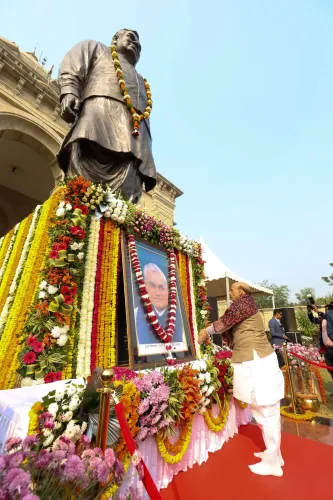
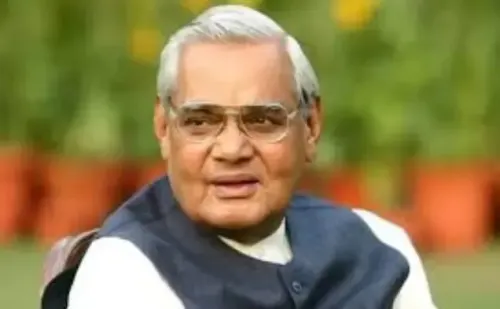
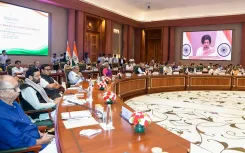
During a state-level event at HCM RIPA in honor of Good Governance Day, the Chief Minister paid homage to the late former Prime Minister Atal Bihari Vajpayee, asserting that good governance has always been a core aspect of Indian ethos, often referred to as Ram Rajya.
He remarked that Vajpayee’s principles transformed governance into effective governance and self-rule into efficient administration. Initiatives like the Pradhan Mantri Gram Sadak Yojana and the Golden Quadrilateral project propelled rural development and economic advancement in the nation. CM Sharma pointed out that Vajpayee also introduced the ambitious river-linking project to mitigate droughts and floods.
Focusing on Vajpayee's patriotism, the Chief Minister noted that his leadership during Operation Vijay in the Kargil conflict and during nuclear tests, despite external pressures, laid the groundwork for a self-reliant and dignified India.
By coining the phrase "Jai Jawan, Jai Kisan, Jai Vigyan", former PM Vajpayee highlighted science as a crucial factor in national growth.
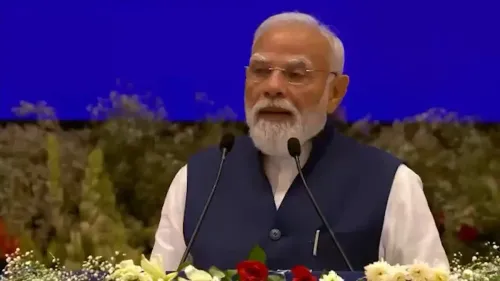
CM Sharma remarked that PM Modi has upheld Vajpayee’s legacy of good governance, positioning India as a global exemplar. With a focus on a citizen-first approach, technology has been utilized to create direct connections between citizens and the government, empowering them as vital participants in governance. Policies driven by the vision of "Sabka Saath, Sabka Vikas" ensure that benefits reach every individual, he stated.
Additionally, PM Modi has fortified democracy by fostering a closer relationship with the populace, transforming bureaucracy into authentic public service, and presenting himself as the nation’s "Pradhan Sevak".
The Chief Minister acknowledged initiatives like problem-solving camps for rural and urban issues and the Pandit Deendayal Antyodaya Sambal Fortnight, which aim to enhance the quality of life for citizens. Under Mission Karmayogi, HCM RIPA has been designated as the key department for Rajasthan. The state has become the first in the nation to join the integrated online government training platform, with over seven lakh Karmayogis enrolled and completing more than 26 lakh training sessions.
With a pledge to uplift underprivileged groups including the poor, youth, farmers, and women, CM Sharma stated that Rajasthan is advancing towards a vibrant and inclusive economy. He noted that the state ranks as the seventh-largest economy in the country, aiming for a target of $4.3 trillion by 2047 in alignment with the vision of a developed Rajasthan.
On this occasion, Chief Secretary V. Srinivas conveyed a message from Prime Minister Narendra Modi. He stated that under CM Sharma’s guidance, the state government has implemented substantial transformations in citizens’ lives over the past two years through a multifaceted approach. To commemorate two years of the current administration, over six lakh activities and programs have been organized throughout the state in the last fortnight.
Dr. R. Balasubramaniam, a member of the Capacity Building Commission, remarked that Mission Karmayogi signifies a pivotal moment in public service. He highlighted that PM Modi initiated this mission as a pilot during his term as Chief Minister of Gujarat, showcasing that motivated public servants can yield superior outcomes and offer more accessible services.
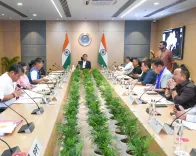
Deputy Chief Ministers Diya Kumari and Dr. Premchand Bairwa, Parliamentary Affairs Minister Jogaram Patel, Director General of Police Rajeev Kumar Sharma, and senior officials from various departments were in attendance. The Chief Minister led the officers and employees in taking the Good Governance pledge during the ceremony.
Point of View
The emphasis on good governance in Rajasthan is crucial. This initiative not only aligns with the broader vision of national leaders but also seeks to elevate the standard of public service. By fostering a culture of accountability and innovation, Rajasthan can serve as a model for other states, demonstrating the positive impact of dedicated governance on citizens' lives.
NationPress
23 Sept 2026
Frequently Asked Questions
What is the vision of PM Modi regarding governance?
PM Modi's vision focuses on 'Minimum Government, Maximum Governance', advocating for streamlined administration and enhanced public service delivery.
How is Rajasthan positioning itself in terms of governance?
Rajasthan aims to become a role model in good governance by fostering a culture of public service, innovation, and accountability among all stakeholders.
What initiatives have been highlighted by CM Bhajan Lal Sharma?
CM Sharma highlighted various initiatives, including the Pradhan Mantri Gram Sadak Yojana and Mission Karmayogi, aimed at empowering citizens and improving governance.
Who was honored during the Good Governance Day ceremony?
The ceremony honored former Prime Minister Atal Bihari Vajpayee, recognizing his contributions to governance and national development.
What is the significance of the Good Governance pledge?
The Good Governance pledge aims to reinforce commitment among officials and employees to prioritize public service and enhance governance standards.