Gujarat's Deputy CM Vows to Eradicate Illegal Encroachments as Rajkot Demolishes 1,119 Structures

Synopsis
The Rajkot Municipal Corporation has taken decisive action by demolishing over 1,100 illegal structures in a significant crackdown on encroachments. This initiative aims to restore law and order in the Jangleshwar area, with more demolitions expected soon.
Key Takeaways
1,119 illegal structures demolished in Rajkot's Jangleshwar area.
Operation aims to clear 1,489 encroachments along key locations.
Strong security measures with over 2,500 police personnel involved.
Future developments planned post-demolition for public amenities.
Significant arrests related to various crime categories reported.
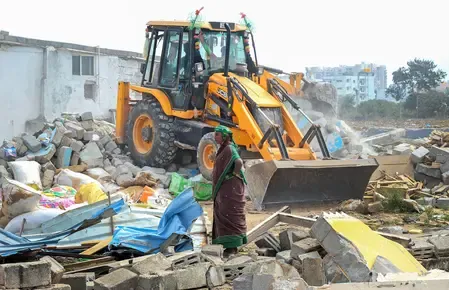
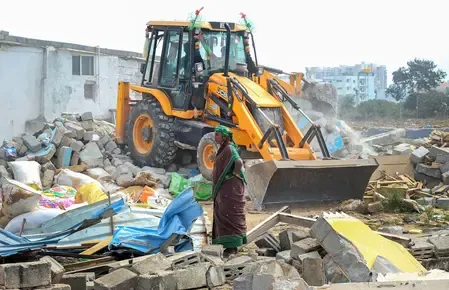
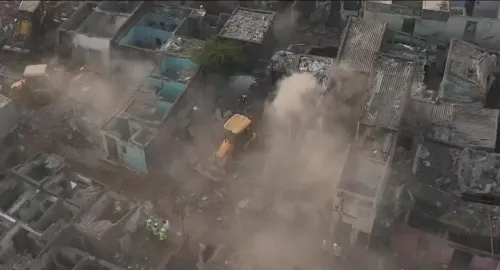
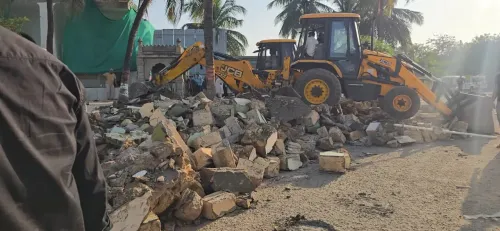
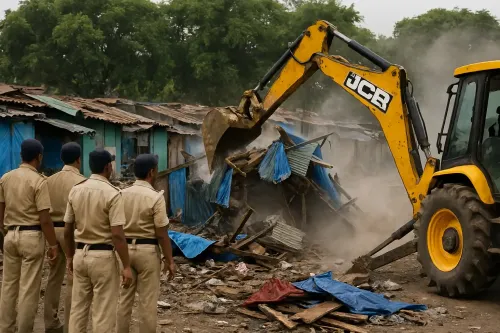
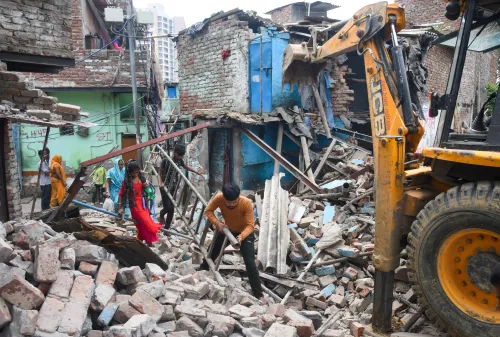
On February 23, the Rajkot Municipal Corporation (RMC) carried out a significant operation in the Jangleshwar locality, demolishing 1,119 illegal structures as part of an extensive initiative to eliminate 1,489 identified encroachments along the Aji River and the Town Planning Road.
The remaining structures are projected to be removed by Tuesday evening.
This demolition took place under strict security protocols.
Gujarat's Deputy Chief Minister Harsh Sanghavi addressed the State Assembly, stating that the operation's objective was to reclaim government land and reinforce law and order in the area.
"Today's demolition proceedings in Jangleshwar are a testament to our commitment to eradicating illegal occupations," Deputy CM Sanghavi emphasized.
He claimed that government plots had been illegally occupied, with substantial houses constructed and rented out.
"We will eradicate any illegal encroachment. Government land will be liberated, and the rule of law will be reinstated," he stated, mentioning that Phase-1 would be completed by Tuesday evening.
Following the completion of Phase-1, amenities will be developed for public use.
Deputy CM Sanghavi provided crime statistics, revealing that eight suspects in murder cases had recently been apprehended in Jangleshwar, alongside numerous suspects in attempted murder incidents.
In total, 68 suspects were arrested in assault cases, while 19 suspects were taken into custody in 15 rape and kidnapping cases. Furthermore, 89 suspects related to unlawful assembly were arrested, and 72 were detained in 37 theft, robbery, and housebreaking cases.
He also noted that out of 187 Prevention of Anti-social Activities (PASA) cases reported in Rajkot, 58 originated from Jangleshwar, and over 65 gambling dens had been dismantled.
In the last eight years, 64 suspects were arrested in 62 weapon-related cases in the area.
During the crackdown, authorities seized 472 kg of ganja, 8 kg of charas, and 33 grams of heroin, leading to the arrest of 53 individuals in drug-related cases.
According to municipal and police officials, thorough preparations were made ahead of the demolition.
The designated area was partitioned into seven operational zones, with a control room established to oversee the initiative.
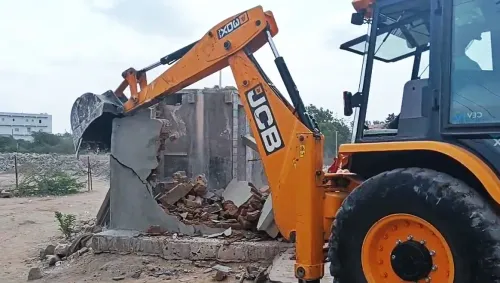
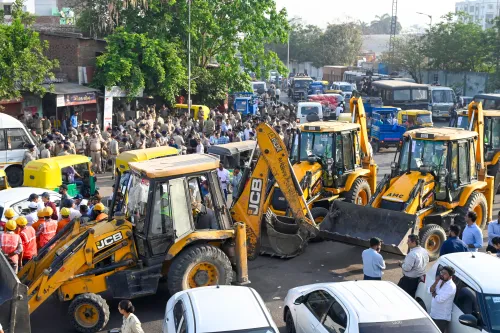
More than 65 heavy machinery units, including bulldozers, excavators, tractors, and dumpers, were utilized for the operation.
Over 1,000 municipal staff and workers were active on-site.
Security measures comprised the deployment of over 2,500 police personnel, including local police, surveillance teams, Special Operations Group members, Quick Response Teams, and State Reserve Police Force officers.
Authorities stated that advance notices had been issued, and water and electricity services were cut off prior to the demolition.
Barricades and traffic diversions were established to maintain order throughout the operation.
Point of View
It's crucial to recognize the significance of the Rajkot Municipal Corporation's actions in addressing illegal encroachments. This operation not only aims to reclaim government land but also seeks to enhance public safety and community order, reflecting a commitment to lawfulness in urban development.
NationPress
30 Sept 2026
Frequently Asked Questions
What prompted the demolition of illegal structures in Rajkot?
The demolition was initiated to clear 1,489 identified encroachments along the Aji River and the Town Planning Road, aiming to restore government land and law and order.
How many structures were demolished in this operation?
A total of 1,119 illegal structures were demolished during this operation.
What measures were taken for security during the demolition?
Over 2,500 police personnel were deployed, including local police, surveillance teams, and special units, to ensure safety and order during the demolition.
What will happen next after the first phase of demolition?
Once Phase-1 concludes, facilities are planned to be developed for public convenience.
What crime statistics were reported in Jangleshwar?
Recent statistics indicated multiple arrests in serious crimes, including murder, assault, and drug-related offenses.