Rajnath Singh Addresses Indian Community in Dushanbe

Synopsis
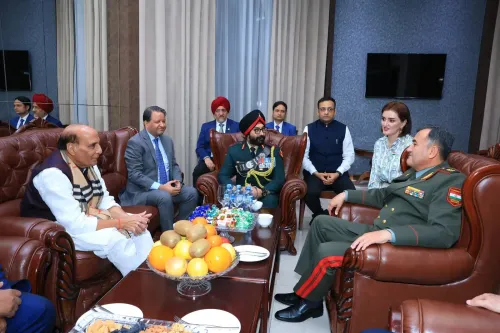
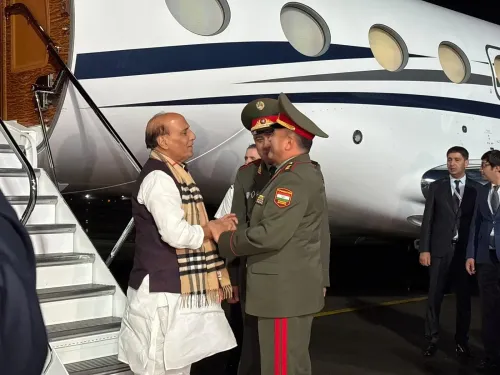
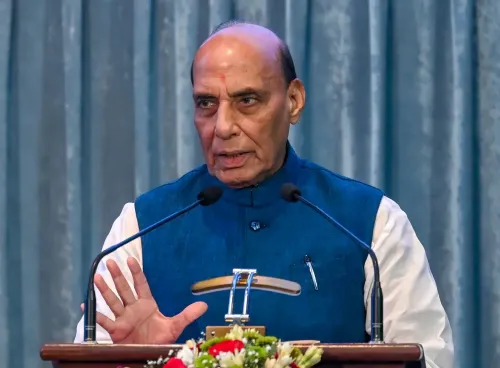
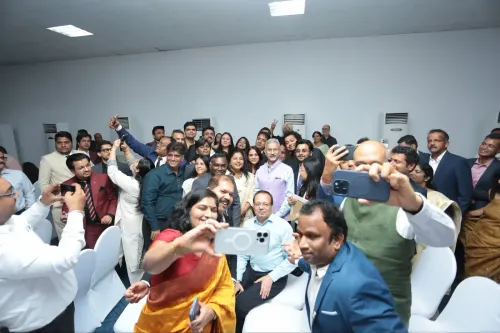
Union Defence Minister Rajnath Singh addressed the Indian community in Dushanbe, Tajikistan on October 20, 2026, combining diaspora outreach with India's long-standing strategic engagement in Central Asia under its Connect Central Asia Policy.
Key Takeaways
Rajnath Singh addressed the Indian community in Dushanbe, Tajikistan on October 20, 2026 .
The visit fits India's Connect Central Asia Policy , articulated in 2012 to deepen regional political, economic and defence ties.
India and Tajikistan share a defence cooperation agreement covering training and logistics, anchored by the Ayni airbase near Dushanbe.
High-level ministerial visits to Central Asia routinely combine official bilateral talks with Indian diaspora community outreach.
Any joint statements or follow-up defence agreements from the visit will be closely watched amid shifting Central Asian geopolitics.
From the heart of Central Asia, Union Defence Minister Rajnath Singh stepped before the Indian community in Dushanbe, Tajikistan on Tuesday, October 20, 2026 — a moment that blends diaspora diplomacy with India's deepening strategic footprint in a region that rarely makes headlines but matters enormously.
A Diaspora Moment in a Strategic Capital
Dushanbe is no ordinary stopover. The capital of Tajikistan sits at the crossroads of South and Central Asia, and for India it carries particular weight — the Ayni airbase near the city has long been a symbol of the defence partnership the two countries have quietly nurtured. When a senior cabinet minister addresses the Indian community here, it signals that New Delhi views this relationship as more than ceremonial.
Community gatherings during high-level visits serve a dual purpose: they reinforce the diaspora's sense of connection to home, and they project soft power in a host country where India competes for strategic space with larger neighbours.
India's 'Connect Central Asia' Blueprint
Singh's presence in Tajikistan fits squarely into a policy architecture India has been building for over a decade. India's Connect Central Asia Policy, articulated in 2012, was designed to deepen political, economic and defence engagement with the five republics of the region. A defence cooperation agreement with Tajikistan — also renewed in 2012 — covers training and logistics, with the Ayni facility as its anchor.
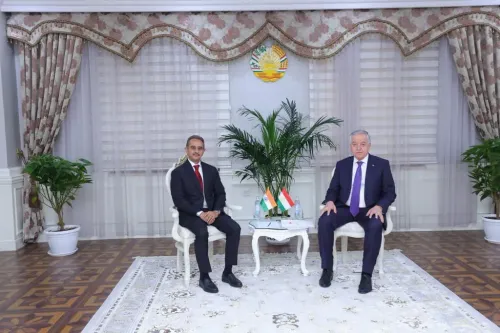
Defence ministers who travel to Central Asian states routinely combine official bilateral talks with community outreach, using both tracks to reinforce the relationship. Singh's Dushanbe appearance follows this well-worn diplomatic playbook — executed at the highest level.
Why Central Asia Is Back on India's Radar
The broader pattern is hard to miss. India has sustained high-level visits to Central Asian states to counter the regional influence of rival powers and maintain presence in a neighbourhood reshaped by the situation in Afghanistan and the intensifying competition for connectivity corridors. SCO frameworks and bilateral summits have kept India's Central Asia engagement alive even as overland access remains constrained.
Any joint statements or defence follow-ups emerging from this visit will be watched closely — they could signal where the India-Tajikistan partnership heads as the region's geopolitics continue to shift.
For the Indians gathered in Dushanbe, the moment was personal. For the strategists watching from afar, every word the Defence Minister spoke carried the weight of a policy decades in the making.
Point of View
Even as the region's geopolitical landscape grows more contested. For a Defence Minister with Singh's stature, the optics of standing in Tajikistan carry a clear message about India's commitment to its strategic partnerships in the neighbourhood. What comes out of the official bilateral track — statements, defence agreements, SCO signals — will determine whether this trip marks a deepening or merely a maintenance of the relationship.
NationPress
20 Oct 2026
Frequently Asked Questions
Why did Rajnath Singh visit Tajikistan in 2026?
Rajnath Singh visited Tajikistan as part of India's ongoing high-level bilateral engagement with Central Asian states, addressing the Indian community in Dushanbe and reinforcing the India-Tajikistan strategic partnership.
What is India's Connect Central Asia Policy?
India's Connect Central Asia Policy was articulated in 2012 to deepen political, economic and defence engagement with the five Central Asian republics, including Tajikistan.
What is the Ayni airbase and why does it matter for India?
The Ayni airbase near Dushanbe is the centrepiece of India's defence cooperation with Tajikistan, covered under a bilateral agreement renewed in 2012 that encompasses training and logistics support.
What does Rajnath Singh do during overseas bilateral visits?
During overseas visits, Rajnath Singh typically combines official bilateral talks — including defence cooperation discussions — with community outreach events to address the Indian diaspora in the host country.
What should we watch for after Rajnath Singh's Dushanbe visit?
Key things to watch include any joint statements or new defence agreements signed during the visit, and whether the trip feeds into broader India-Central Asia summit or SCO-related engagements.