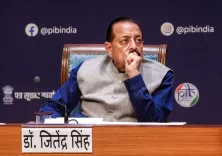
Rajnath Singh hails India's record CWG 2026 haul
Synopsis
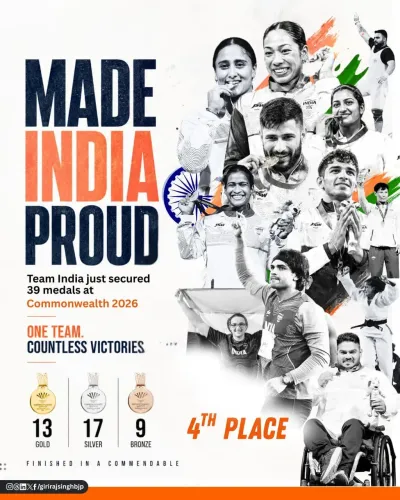
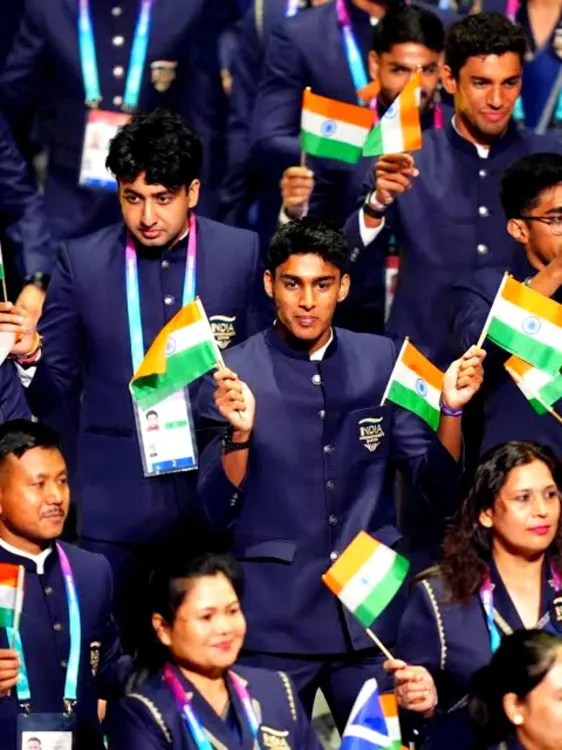
Defence Minister Rajnath Singh hailed India's Commonwealth Games 2026 campaign as a landmark, citing historic firsts in boxing, athletics, and para-sport, and crediting PM Modi's sustained investment in sports infrastructure and grassroots talent development.
Key Takeaways
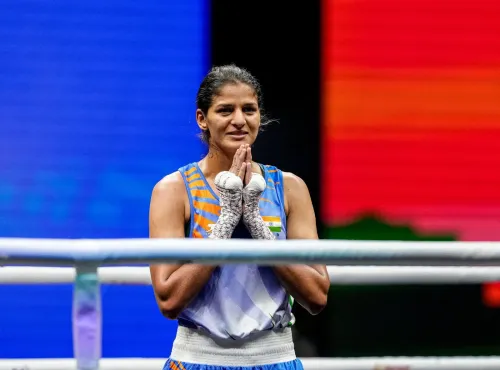
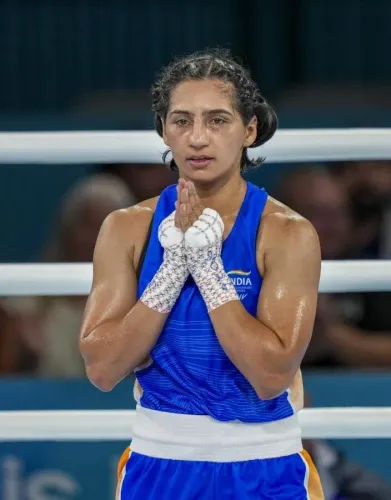
India topped the boxing medal table at CWG 2026 — no country has ever won more gold medals in boxing at a single Commonwealth Games edition.
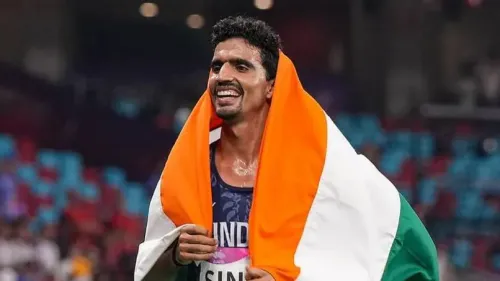
India recorded its best-ever athletics performance at a Commonwealth Games held outside home soil , including first-ever medals in the men's 5000m and 10000m at the same Games.
India claimed its first-ever decathlon medal and historic judo golds at the 2026 edition.
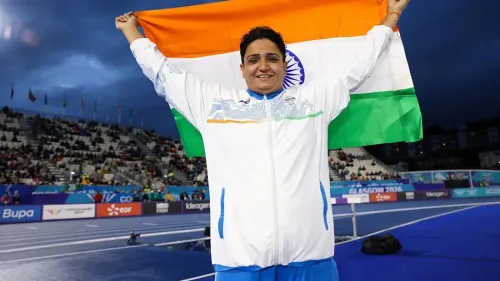
Para-athletics delivered a first-ever CWG gold in the men's Shot Put F57 event and India's first double podium finish in the category.
Defence Minister Rajnath Singh credited PM Modi's investment in the Khelo India scheme and Target Olympic Podium Scheme as the structural foundation for these results.
The performances set a strong benchmark ahead of the 2028 Los Angeles Olympics .
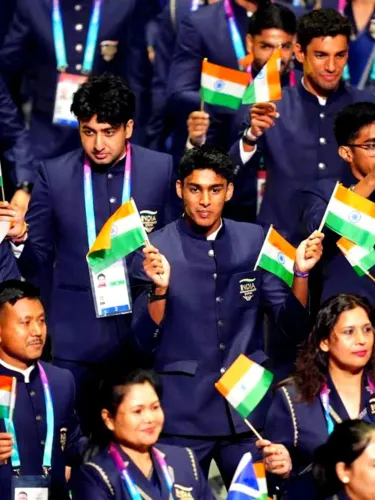
India returned from the Commonwealth Games 2026 having rewritten its own record books — and Union Defence Minister Rajnath Singh made sure the nation paused to take it in. On Monday, 3 August 2026, Singh posted a detailed tribute to Team India, calling the Games 'a landmark chapter in India's sporting journey' defined by historic firsts and a new generation of champions.
India tops boxing's medal table for the first time
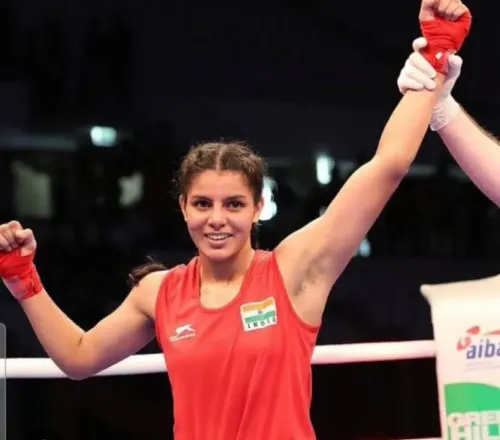
The headline achievement is staggering in its specificity: India finished atop the boxing medal table, delivering what Singh described as its 'finest-ever Commonwealth Games performance' in the sport. No country, he stated, has ever won more gold medals in boxing at a single edition of the Games. That is not a podium finish or a personal best — that is a first in the event's history.
Boxing has long been a pillar of India's Commonwealth programme, but topping the overall table marks a qualitative leap. It signals that the depth of Indian boxing — across weight categories and genders — has reached a point where individual brilliance is now a team pattern.
Athletics and para-sport break new ground outside home soil
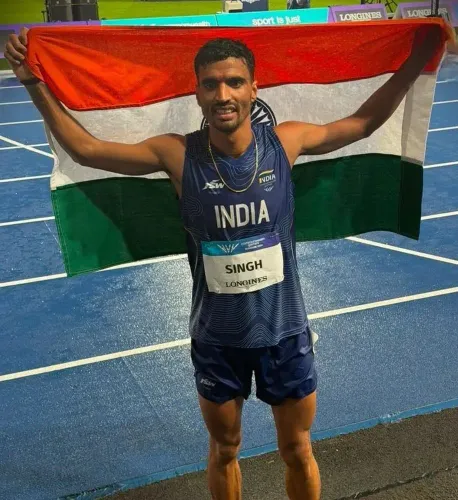
Athletics told a parallel story. Singh noted India's 'best-ever performance at a Commonwealth Games held outside home soil' — a qualifier that matters, because India's 2010 Delhi Games home advantage has long skewed comparisons. This time, on neutral ground, the track-and-field contingent delivered India's first-ever medals in both the men's 5000m and 10000m at a single Commonwealth Games, alongside the country's first decathlon medal and historic judo golds.
Para-athletics added perhaps the most emotionally resonant chapter. India secured its first-ever Commonwealth Games gold in the men's Shot Put F57 event and registered the nation's first double podium finish in the category — a signal that Indian para-sport is no longer a footnote but a force.
The policy scaffolding behind the medals
These results do not arrive in a vacuum. Since 2014, central government sports outlays have risen steadily, anchored by two flagship programmes: the Khelo India scheme, launched in 2017 to build grassroots infrastructure and run talent identification drives at district and state level, and the Target Olympic Podium Scheme (TOPS), introduced in 2014 to funnel financial and scientific support directly to medal prospects at international events.
Singh explicitly credited 'the visionary leadership of PM Narendra Modi' and the government's 'sustained investment in sports infrastructure, athlete welfare, and grassroots talent' as the structural engine behind the haul. The 2010 Delhi Games also left a lasting physical legacy — upgraded national facilities that athletes continue to train in today.
The broader pattern across successive Commonwealth and Asian Games editions shows incremental but accelerating gains, particularly in boxing, athletics, and para events — precisely the disciplines that dominated headlines in Glasgow 2026.
What these Games signal for Los Angeles 2028
A Commonwealth Games gold table in boxing and a historic athletics sweep on foreign soil are not just trophies — they are data points. With the 2028 Los Angeles Olympics two years away, India's selectors, coaches, and policymakers will be studying these performances for patterns: which athletes peaked at the right time, which disciplines have genuine Olympic medal potential, and where the pipeline still needs work.
Singh closed his post with a direct address to every member of Team India: 'The nation is immensely proud of you.' After a Games that rewrote the record books across boxing, athletics, and para-sport, that pride has a very precise, very earned foundation.
Point of View
The messaging is designed to be verifiable and sticky. The emphasis on para-sport is notable: it signals a deliberate broadening of India's sporting identity beyond able-bodied competition. With the 2028 Los Angeles Olympics approaching, this CWG haul becomes a baseline the government will be measured against — and Singh's post plants that flag early.
NationPress
17 Sept 2026
Frequently Asked Questions
How did India perform at the Commonwealth Games 2026?
India had its strongest Commonwealth Games campaign on foreign soil, topping the boxing medal table with a record number of gold medals and achieving historic firsts in athletics and para-sport.
Did India top the boxing medal table at CWG 2026?
Yes, according to Defence Minister Rajnath Singh's post, India finished atop the boxing medal table at CWG 2026 — a feat no country has achieved before at a single Commonwealth Games edition.
What was India's first-ever para-athletics gold at a Commonwealth Games?
India won its first-ever Commonwealth Games gold in the men's Shot Put F57 event at CWG 2026 and also registered its first double podium finish in the para-athletics category.
What is the Khelo India scheme and how does it relate to India's CWG success?
Khelo India is a central government scheme launched in 2017 to build sports infrastructure and identify grassroots talent across India. It is part of the policy ecosystem credited with fuelling India's improving Commonwealth Games performances.
What does India's CWG 2026 performance mean for the 2028 Olympics?
India's historic firsts in boxing, athletics, and para-sport at CWG 2026 provide a strong performance baseline and identify athletes with genuine medal potential ahead of the 2028 Los Angeles Olympics.