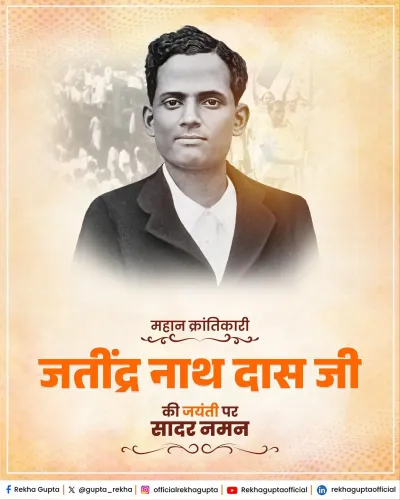
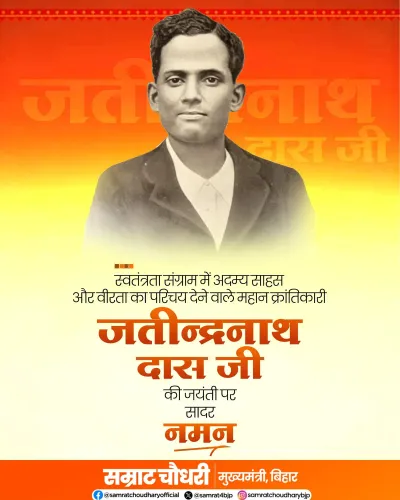
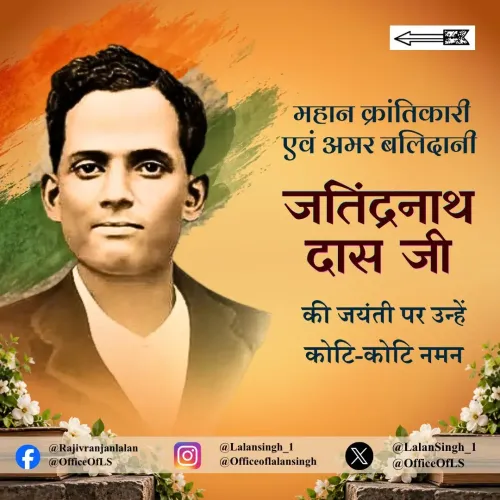
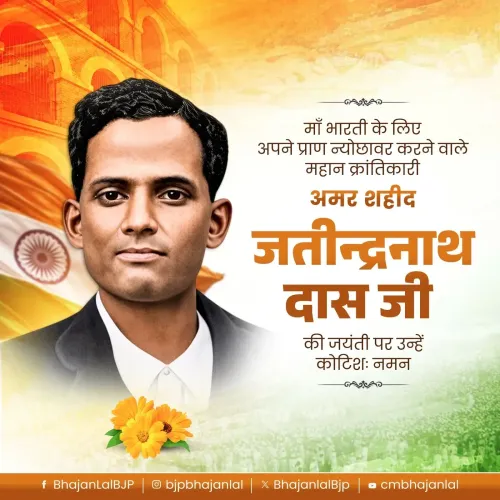
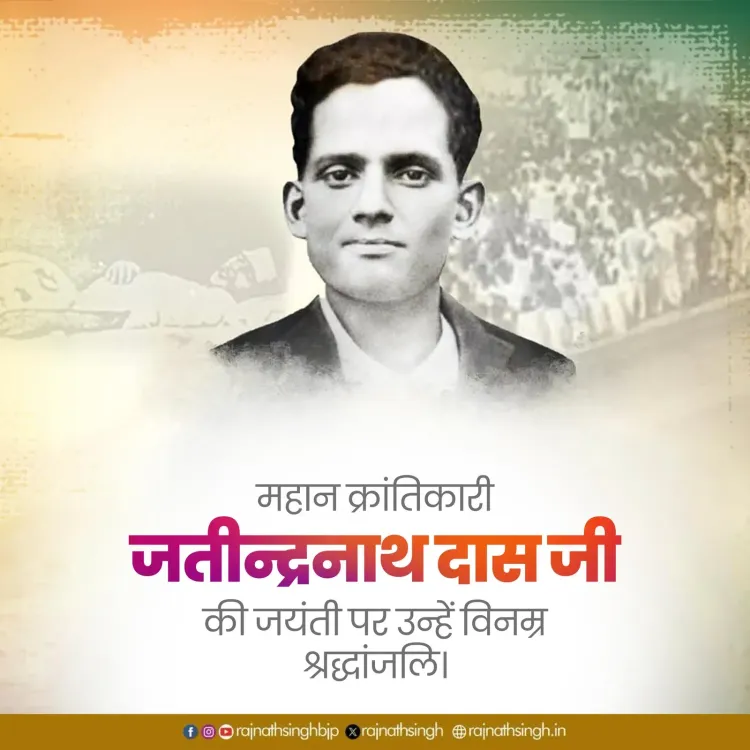
Rajnath Singh pays tribute to revolutionary Jatindranath Das on birth anniversary
Synopsis
Union Defence Minister Rajnath Singh marked the birth anniversary of revolutionary freedom fighter Jatindranath Das on 27 October 2026, honouring the man who died after a 63-day hunger strike in Lahore Central Jail in 1929, protesting British mistreatment of political prisoners.
Key Takeaways
Rajnath Singh paid tribute to Jatindranath Das on his birth anniversary on 27 October 2026 .
Das was born in 1904 and died on 13 September 1929 in Lahore Central Jail after a 63-day hunger strike .
His hunger strike was a protest against the British administration's mistreatment of political prisoners and freedom fighters.
Rajnath Singh described Das's life as a symbol of 'indomitable courage, firm resolve, and devotion to the nation.' The tribute reflects a broader BJP pattern of honouring revolutionary figures from the armed stream of India's independence movement alongside mainstream narratives.
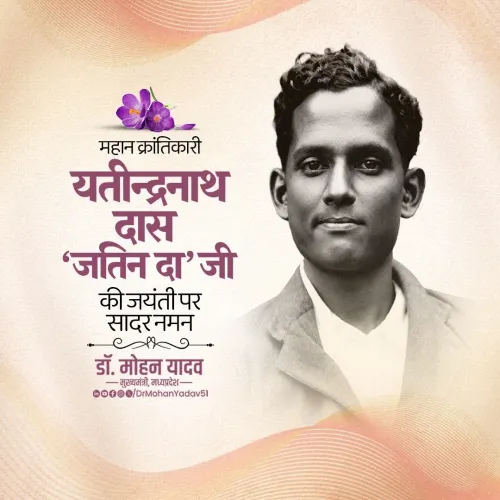
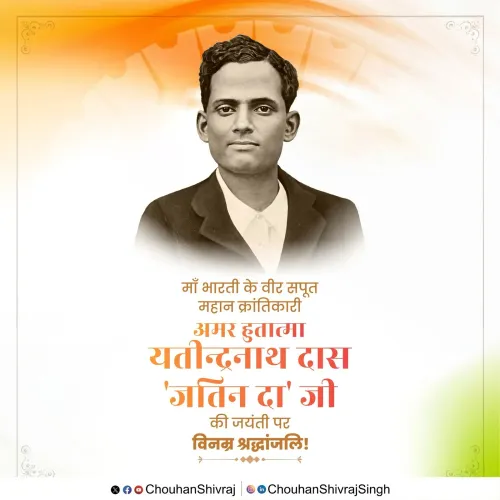
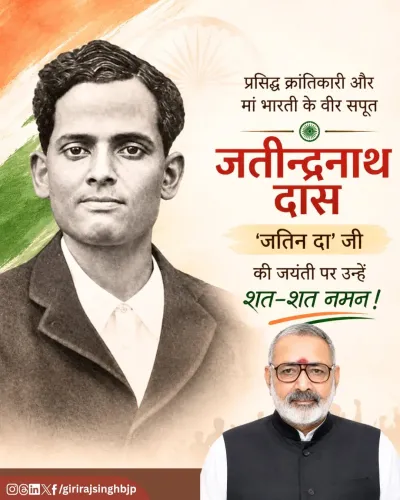
A young man who refused to eat for 63 days rather than submit to British authority — and died for it — has not been forgotten. On Tuesday, 27 October 2026, Union Defence Minister Rajnath Singh paid homage to Jatindranath Das, the firebrand revolutionary freedom fighter, on his birth anniversary, honouring a life that ended in Lahore Central Jail but echoed across a nation fighting for independence.
Posting in Hindi on X, Rajnath Singh offered what he called a 'vinamra shraddhanjali' — a humble tribute — describing Das's life as 'a symbol of indomitable courage, firm resolve, and devotion to the nation.' The minister recalled how the British administration subjected Das to relentless torment behind bars, yet failed to break his spirit or silence his defiance.
The man who starved the Empire into embarrassment
Jatindranath Das, born in 1904, was among the most consequential figures of India's revolutionary stream — distinct from the non-violent mainstream, and no less significant. Imprisoned under British rule, he became a central voice against the systematic mistreatment of political prisoners, demanding that freedom fighters be accorded the status and dignity due to political detainees rather than common criminals.
His weapon was his own body. Das launched a hunger strike inside Lahore Central Jail, refusing to yield to colonial authority for 63 days — a duration that stunned contemporaries and commanded national attention. He died on 13 September 1929, a martyr whose sacrifice galvanised the independence movement and put the brutality of British prison conditions on record for the world to see.
Rajnath Singh's words, and what they signal
In his post, the Defence Minister noted that even within prison walls, Das raised his voice against the 'ill-treatment of freedom fighters' and mounted a fierce challenge to British rule — a challenge not of arms in that moment, but of will. Rajnath Singh described Das's life as an inspiration 'to remain steadfast in the face of injustice and confront every hardship for the honour of the nation.'
The tribute is part of a consistent pattern among senior BJP leaders of marking anniversaries of revolutionary freedom fighters — figures from the armed, militant stream of the independence movement who have historically received less institutional spotlight than their non-violent counterparts. By invoking Das's name publicly, the Defence Minister reinforces a political and cultural emphasis on sacrifice, anti-colonial resistance, and national pride that the party has long championed.
Jatindranath Das was associated with revolutionary organisations that included figures like Bhagat Singh, and his death inside a colonial prison remains one of the most viscerally powerful chapters of India's freedom struggle. That a Union Minister with Rajnath Singh's seniority — former Home Minister, former Chief Minister of Uttar Pradesh, current head of the country's defence establishment — stops to mark this anniversary says something about how these narratives are being kept alive at the highest levels of government.
Some sacrifices don't need rediscovery — they need remembrance. And today, they got it.
Point of View
Armed resistance, and anti-colonial defiance — a deliberate broadening of the independence movement's cultural memory beyond its non-violent canon. Rajnath Singh's tribute to Jatindranath Das, delivered in Hindi to a national audience, fits squarely within this arc. For a Defence Minister who has spent decades framing national security through the lens of sacrifice and resolve, Das's 63-day hunger strike is a resonant symbol — not just historical, but ideologically useful. These commemorations serve a dual purpose: honouring the past and anchoring contemporary political identity to an ethos of unflinching national commitment.
NationPress
27 Oct 2026
Frequently Asked Questions
Who was Jatindranath Das?
Jatindranath Das was an Indian revolutionary freedom fighter born in 1904 who died on 13 September 1929 in Lahore Central Jail after conducting a 63-day hunger strike to protest the British administration's ill-treatment of political prisoners.
Why did Jatindranath Das go on a hunger strike?
Jatindranath Das launched his hunger strike inside Lahore Central Jail to protest the British colonial administration's mistreatment of political prisoners and to demand that freedom fighters be treated with the dignity owed to political detainees rather than common criminals.
What did Rajnath Singh say about Jatindranath Das?
Rajnath Singh described Jatindranath Das's life as 'a symbol of indomitable courage, firm resolve, and devotion to the nation,' and noted that Das raised his voice against the ill-treatment of freedom fighters even while in prison, mounting a fierce challenge to British rule.
When is Jatindranath Das's birth anniversary?
Jatindranath Das's birth anniversary falls on 27 October. He was born in 1904.
Why do BJP leaders frequently pay tribute to revolutionary freedom fighters?
Senior BJP leaders consistently mark the anniversaries of revolutionary freedom fighters to highlight themes of sacrifice, courage, and anti-colonial resistance, underscoring these figures from the armed revolutionary stream of India's independence movement as part of a broader national heritage narrative.