Rajnath Singh links Vikram Batra's valour to India's defence self-reliance
Synopsis
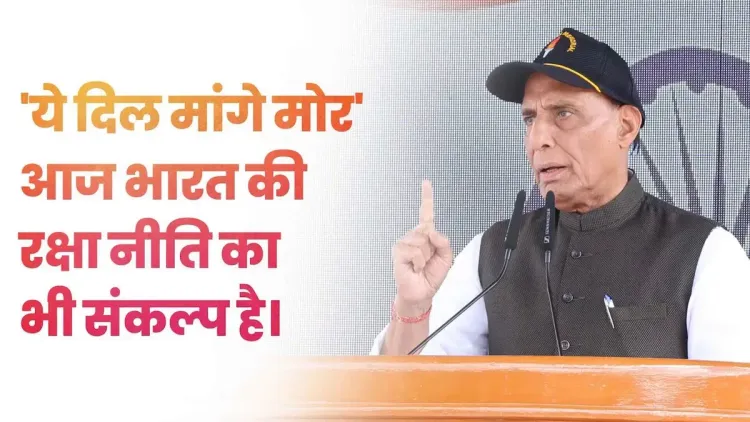
Union Defence Minister Rajnath Singh, on Kargil Vijay Diwas, invoked Captain Vikram Batra's iconic slogan 'Ye dil maange more' to connect the valour of Indian soldiers with the Modi government's drive for defence self-reliance and continuous military modernisation.
Key Takeaways
Rajnath Singh posted on 26 July 2026 — Kargil Vijay Diwas — linking soldier ethos to defence policy.
He cited Captain Vikram Batra 's slogan 'Ye dil maange more' as a symbol of Indian military courage and duty.
Singh credited PM Narendra Modi 's leadership for continuous modernisation of the armed forces.
The post frames Atmanirbhar Bharat in defence as an extension of the Kargil-era soldier spirit.
India 's indigenisation drive, active since 2014 , accelerated in 2020 with positive indigenisation lists banning imports of selected defence items.
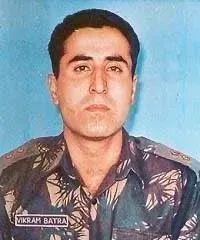
Captain Vikram Batra was posthumously awarded the Param Vir Chakra for his actions in the 1999 Kargil War .
Union Defence Minister Rajnath Singh on Sunday, 26 July 2026 — Kargil Vijay Diwas — invoked the memory of Captain Vikram Batra to draw a direct line between the indomitable spirit of the Indian soldier and the government's push for defence self-reliance under Prime Minister Narendra Modi.
Context
In his post, Singh wrote: 'Ye dil maange more' ('This heart wants more') was not merely Captain Vikram Batra's battle cry — it was a symbol of the Indian soldier's indomitable courage and sense of duty. He added that the same spirit is now visible in India's defence policy, with the armed forces continuously modernising and defence production becoming self-reliant under the leadership of Prime Minister Narendra Modi.
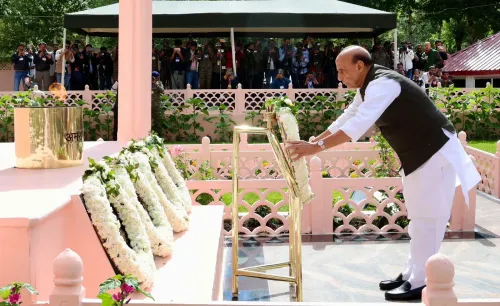
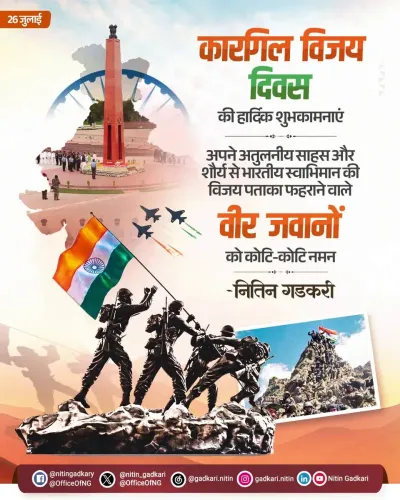
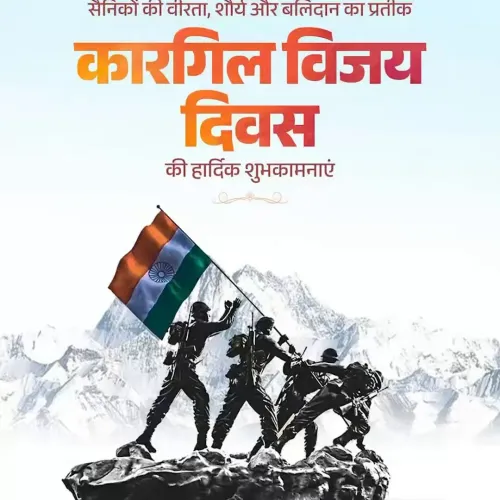
26 July marks Kargil Vijay Diwas, commemorating India's victory in the 1999 Kargil War. The occasion is traditionally used by political and military leadership to honour fallen soldiers and reaffirm national security commitments.
Policy Backdrop
Captain Vikram Batra, who was killed in action during the Kargil War and posthumously awarded the Param Vir Chakra — India's highest wartime gallantry honour — popularised the phrase 'Ye dil maange more' in a battlefield interview. The slogan became one of the most enduring symbols of soldier valour from that conflict.
The Ministry of Defence has pursued a sustained indigenisation drive since 2014, when Make in India identified defence manufacturing as a priority sector. The initiative gained further momentum in 2020 with the launch of the Atmanirbhar Bharat (self-reliant India) framework, which introduced positive indigenisation lists banning imports of selected defence items to compel domestic sourcing and technology absorption.
Successive such lists have progressively expanded the range of equipment — from ammunition and light weapons to complex platforms — that must be procured from Indian manufacturers, aiming to reduce the country's historically high dependence on foreign arms suppliers.
Stakeholders and Impact
The indigenisation push directly affects the Indian Armed Forces, which must align procurement plans with the positive indigenisation lists, and domestic defence manufacturers — both public-sector undertakings and a growing private-sector base — who stand to gain from guaranteed domestic orders.
For the broader strategic community, Singh's framing is significant: by anchoring contemporary policy in the ethos of Kargil-era soldiers, the government seeks to build a normative case for self-reliance as not merely an economic or industrial goal but a matter of national honour and military culture.
What's Next
Attention will turn to forthcoming additions to the positive indigenisation lists, defence export performance figures, and parliamentary scrutiny of the next defence budget — each of which will test whether the self-reliance rhetoric translates into measurable industrial and operational outcomes.
With Kargil Vijay Diwas serving as an annual inflection point for defence-policy messaging, Singh's post signals that indigenisation will remain a central pillar of the government's national-security narrative in the months ahead.
Point of View
It attempts to elevate Atmanirbhar Bharat in defence from a procurement directive to a patriotic imperative. The timing on Kargil Vijay Diwas is deliberate — it maximises the emotional valence of the message at a moment when public attention is already fixed on soldier sacrifice. This rhetorical move is consistent with a broader pattern since 2014 of framing structural economic and industrial reforms in the language of national security and cultural pride. The durability of this strategy will ultimately be tested by hard metrics: export volumes, indigenisation list compliance, and the operational readiness of domestically produced platforms.
NationPress
24 Oct 2026
Frequently Asked Questions
What did Rajnath Singh say about Captain Vikram Batra on Kargil Vijay Diwas 2026?
Rajnath Singh said that 'Ye dil maange more' was not merely Captain Vikram Batra's personal slogan but a symbol of the Indian soldier's indomitable courage and duty, and that the same spirit now drives India's defence policy under PM Modi.
Who was Captain Vikram Batra and what is his connection to 'Ye dil maange more'?
Captain Vikram Batra was an Indian Army officer who became a hero of the 1999 Kargil War. He used the phrase 'Ye dil maange more' in a battlefield interview, and it became one of the most iconic expressions of soldier valour from that conflict. He was posthumously awarded the Param Vir Chakra, India's highest wartime gallantry honour.
What is Atmanirbhar Bharat in defence?
Atmanirbhar Bharat, or self-reliant India, is a policy framework launched in 2020 that includes specific measures for the defence sector, such as positive indigenisation lists that ban imports of selected items to promote domestic manufacturing and reduce dependence on foreign arms suppliers.
What is Kargil Vijay Diwas and why is it observed on 26 July?
Kargil Vijay Diwas is observed every year on 26 July to commemorate India's victory in the 1999 Kargil War against Pakistan. The date marks the day in 1999 when India declared success in recapturing its positions along the Line of Control in Jammu and Kashmir.
What are India's positive indigenisation lists in defence?
Positive indigenisation lists are notifications issued by the Ministry of Defence that ban the import of specified defence items, compelling the Indian Armed Forces to source those products from domestic manufacturers. The policy was introduced in 2020 as part of the Atmanirbhar Bharat initiative to build indigenous defence industrial capacity.