Rajnath Singh hails Shaurya Vijay Yatra as tribute to Kargil heroes
Synopsis
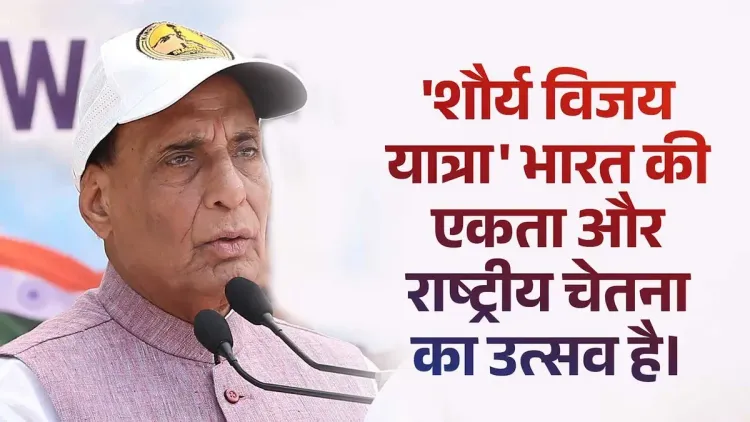
Union Defence Minister Rajnath Singh on 14 July 2026 hailed the Shaurya Vijay Yatra — a march from New Delhi's National War Memorial to Kargil — as a celebration of India's unity and valour, and a symbol of the nation's resolve to defend its sovereignty at all costs.
Key Takeaways
Rajnath Singh on 14 July 2026 praised the Shaurya Vijay Yatra as a celebration of India's unity, valour, and national consciousness.
The yatra runs from the National War Memorial in New Delhi to Kargil , honouring soldiers who died in the 1999 India-Pakistan conflict .
The National War Memorial , inaugurated in 2019 , honours over 25,000 defence personnel killed in post-independence conflicts.
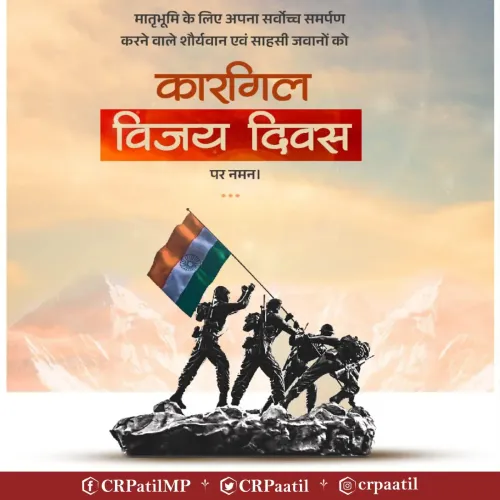
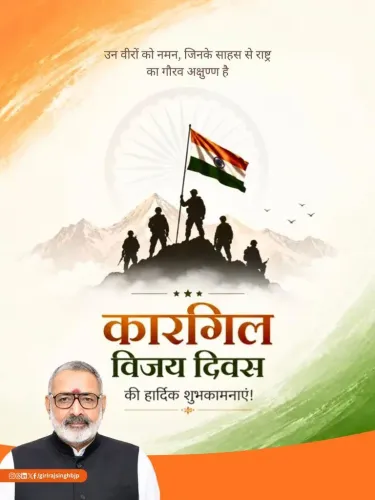
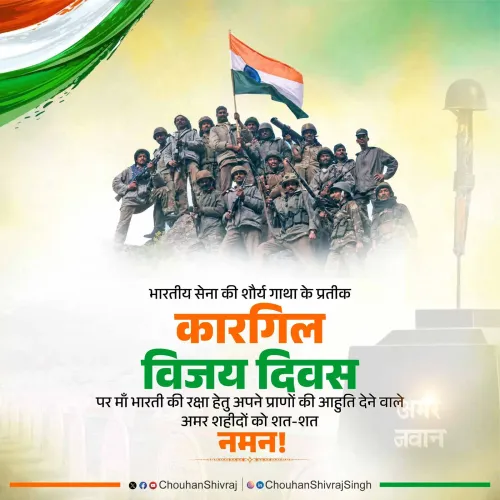
Kargil Vijay Diwas is observed every 26 July since 1999 , marking India's victory in the Kargil War.
Singh described the march as a symbol of India's resolve to defend its identity and respond firmly to every challenge to its honour.
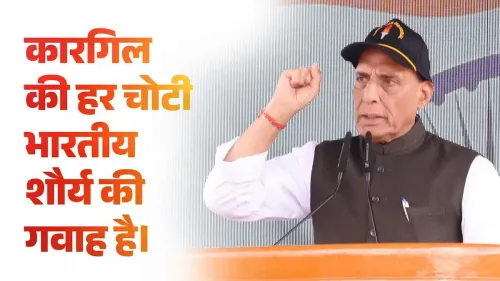
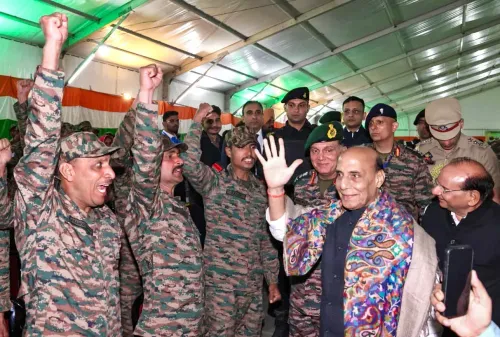
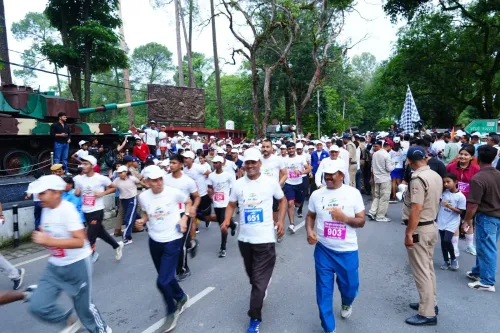
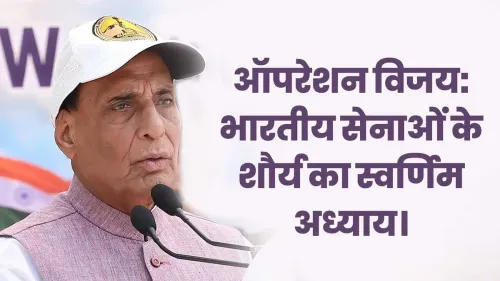
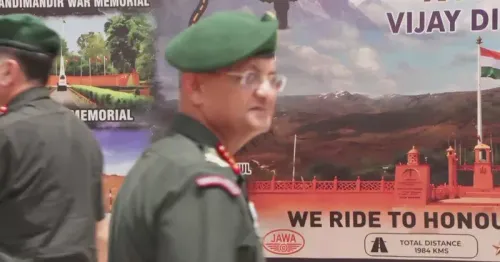
Union Defence Minister Rajnath Singh on Tuesday, 14 July 2026, saluted the Shaurya Vijay Yatra — a commemorative march from the National War Memorial in New Delhi to Kargil — calling it a celebration of India's unity, valour, and national consciousness.
Context
In his post, Rajnath Singh described the yatra as paying homage to the supreme sacrifices of India's brave soldiers — 'हमारे वीर सैनिकों के सर्वोच्च बलिदान को नमन' ('a salute to the supreme sacrifice of our brave soldiers'). He added that the march symbolises India's unwavering resolve to defend its identity with full strength and to respond firmly to every challenge to its honour.
The yatra traces a symbolic route from the National War Memorial — inaugurated in 2019 as the country's central site of military remembrance — to Kargil, the Ladakh region that was the principal theatre of the 1999 India-Pakistan conflict. The route itself underlines the continuity between institutional memory and the battlefield where that memory was forged.
Policy Backdrop
India has observed Kargil Vijay Diwas every 26 July since 1999 to mark the day Indian forces officially declared victory in the high-altitude conflict, recapturing strategic peaks that had been occupied by Pakistani troops. The annual observance has grown into a broader ecosystem of commemorative events that successive governments have used to reinforce national cohesion and signal resolve on territorial sovereignty.
The National War Memorial, built at a cost of approximately Rs 176 crore and inaugurated by Prime Minister Narendra Modi in February 2019, honours more than 25,000 defence personnel who laid down their lives in post-independence conflicts. It has since become the anchor point for major military commemorations, replacing earlier ad-hoc arrangements at India Gate.
Stakeholders and Impact
The yatra directly involves serving defence personnel, war veterans, and families of soldiers killed in the Kargil War — a constituency the government has consistently sought to honour through structured public events. For communities in Ladakh and Jammu and Kashmir, the march carries particular resonance given the region's proximity to the 1999 conflict zone.
Events of this kind also carry a broader messaging function along India's western border, reinforcing the government's stated position that challenges to national sovereignty will be met with firm resolve — a theme Rajnath Singh has articulated repeatedly in his tenure as Union Defence Minister.
What's Next
All eyes will be on the Kargil Vijay Diwas commemorations scheduled for 26 July 2026, which are expected to be the culminating event of this period of military remembrance. Official statements on defence modernisation, border infrastructure projects in Ladakh, and tributes to veterans are anticipated in the run-up to and on the anniversary itself. The yatra's conclusion at Kargil is likely to serve as the backdrop for senior government messaging on India's defence preparedness and territorial resolve.
Point of View
The event reinforces a narrative of unbroken national resolve — from remembrance in the capital to the battlefield in Ladakh. With Kargil Vijay Diwas on 26 July approaching, the timing amplifies the government's messaging on sovereignty and defence preparedness, particularly significant given ongoing attention to India's western and northern borders. The yatra also serves as a platform to sustain public engagement with the armed forces ahead of what are expected to be high-visibility commemorative events later this month.
NationPress
12 Oct 2026
Frequently Asked Questions
What is the Shaurya Vijay Yatra?
The Shaurya Vijay Yatra is a commemorative march from the National War Memorial in New Delhi to Kargil in Ladakh, organised to honour Indian soldiers who made the supreme sacrifice in the 1999 Kargil War and to celebrate India's national unity and resolve.
What did Rajnath Singh say about the Shaurya Vijay Yatra?
Union Defence Minister Rajnath Singh described the Shaurya Vijay Yatra as a celebration of India's unity, valour, and national consciousness, and said it symbolises India's unwavering resolve to defend its identity and respond firmly to every challenge to its honour.
What is the National War Memorial and where is it located?
The National War Memorial is a monument in New Delhi, inaugurated in February 2019, that honours more than 25,000 Indian defence personnel who died in post-independence conflicts. It serves as the country's central site for military commemoration.
When is Kargil Vijay Diwas celebrated?
Kargil Vijay Diwas is observed every year on 26 July, marking the date in 1999 when India officially declared victory in the Kargil conflict after its forces recaptured strategic heights from Pakistani troops.
What was the Kargil War?
The Kargil War was a limited armed conflict fought between India and Pakistan in 1999 in the Kargil district of Ladakh. Indian forces successfully recaptured strategic peaks that had been occupied by Pakistani troops, and the conflict ended with India declaring victory on 26 July 1999.