Rajnath Singh Addresses Indian Navy Personnel at Visakhapatnam
Synopsis
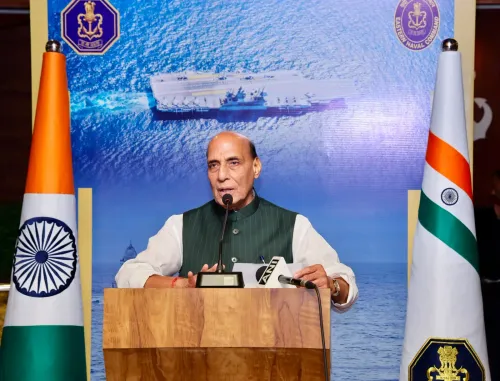
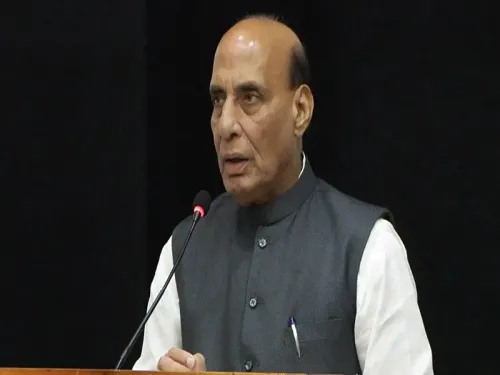
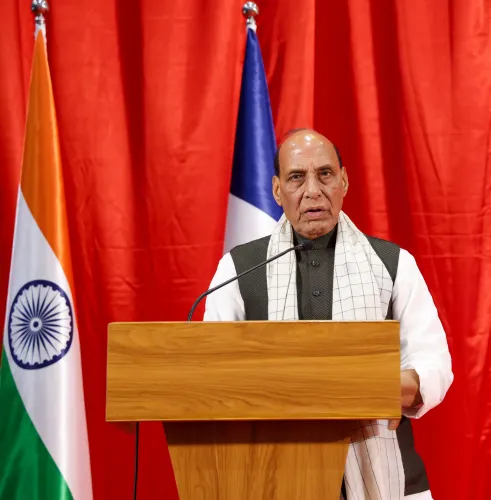
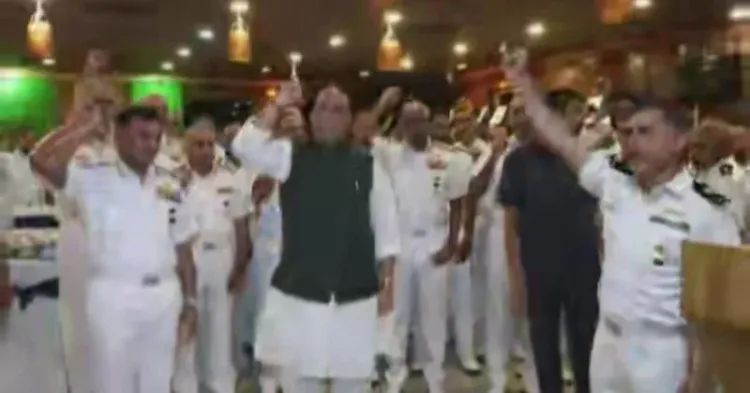
Union Defence Minister Rajnath Singh addressed Indian Navy personnel at Badakhana in the Eastern Naval Command headquarters, Visakhapatnam, on July 10, 2026, underlining political leadership's engagement with the Navy's frontline command overseeing the Bay of Bengal and eastern seaboard.
Key Takeaways
Union Defence Minister Rajnath Singh addressed Indian Navy personnel at Badakhana , Eastern Naval Command HQ, Visakhapatnam , on July 10, 2026 .
The Eastern Naval Command is responsible for maritime operations across the Bay of Bengal and India's eastern seaboard.
Badakhana is a traditional naval gathering format used for direct interaction between senior leadership and personnel.
India's naval modernisation under Atmanirbhar Bharat has accelerated indigenous warship construction since 2020 .
The visit signals continued political engagement with the Navy's strategic eastern command amid India's expanding Indo-Pacific posture.
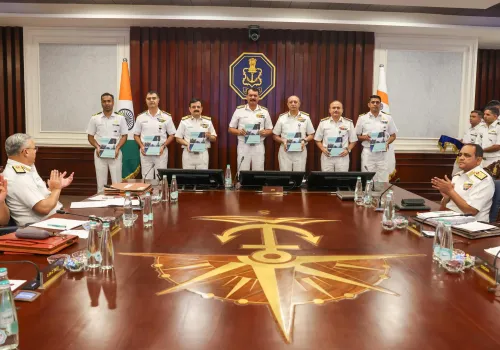
Union Defence Minister Rajnath Singh on Friday, July 10, 2026, addressed Indian Navy personnel at Badakhana, the traditional naval mess and ceremonial space within the Eastern Naval Command headquarters in Visakhapatnam, Andhra Pradesh.
Context
The address took place at Badakhana, a formal gathering of naval officers and sailors that holds deep significance in Indian Navy tradition — the word itself denotes a communal meal and interaction session between senior leadership and the rank and file. Such occasions are used to communicate policy direction, recognise service, and boost morale. The Eastern Naval Command headquarters in Visakhapatnam is one of India's most strategically critical military installations.
Rajnath Singh, who has served as Union Defence Minister since 2019, has made periodic visits to frontline military commands a consistent feature of his tenure, engaging directly with armed forces personnel across all three services.
Policy Backdrop
The Eastern Naval Command (ENC), headquartered in Visakhapatnam, is responsible for maritime operations across the Bay of Bengal and India's eastern seaboard — a zone of increasing strategic importance given India's deepening engagement with Southeast Asia and the broader Indo-Pacific. The Command oversees the Eastern Fleet and coordinates with allied navies during multilateral exercises such as Malabar and MILAN.
India's naval modernisation push, accelerated under the Atmanirbhar Bharat initiative from 2020, has prioritised indigenous warship construction and reduced import dependence. The Indian Navy's Maritime Strategy document, released in 2015, had already emphasised blue-water capability expansion with a particular focus on the eastern seaboard and the Indian Ocean Region.
Stakeholders and Impact
Direct addresses by the Defence Minister to naval personnel serve multiple purposes: they signal political leadership's commitment to the armed forces, provide an opportunity to communicate welfare and infrastructure priorities, and reinforce operational morale. For the Eastern Naval Command, which guards India's longest maritime frontier and manages critical sea lines of communication, such engagements carry particular weight.
The visit is also significant for Visakhapatnam as a city, which hosts several naval establishments including INS Circars, the naval dockyard, and submarine training facilities. Personnel welfare, infrastructure upgrades, and readiness at these installations are recurring themes when senior political leadership interacts with the Navy.
What's Next
Observers will watch for any follow-up announcements on naval acquisitions, personnel policy changes, or infrastructure investments linked to the Eastern Command — particularly in the context of the upcoming defence budget cycle. The Eastern Fleet's participation in multilateral naval exercises in the Bay of Bengal and the Indo-Pacific will remain a key indicator of how strategic priorities articulated in such addresses translate into operational posture.
Point of View
Particularly those with Indo-Pacific relevance. The Eastern Command's centrality to India's Bay of Bengal strategy and multilateral naval exercises makes such interactions politically and operationally significant. At a time when India is deepening naval partnerships across Southeast Asia and expanding its blue-water footprint, a Defence Minister's direct address to ENC personnel reinforces the message that the eastern seaboard is a strategic priority. It also reflects the BJP-led government's broader communication of strong civil-military engagement ahead of the defence budget cycle.
NationPress
10 Jul 2026
Frequently Asked Questions
Why did Rajnath Singh visit Visakhapatnam on July 10 2026?
Rajnath Singh visited Visakhapatnam on July 10, 2026, to address Indian Navy personnel at Badakhana, the traditional gathering space at the Eastern Naval Command headquarters.
What is Badakhana in the Indian Navy?
Badakhana is a traditional Indian Navy institution — a formal communal gathering where senior leadership interacts directly with officers and sailors, often used to communicate policy priorities and boost morale.
What is the Eastern Naval Command responsible for?
The Eastern Naval Command, headquartered in Visakhapatnam, is responsible for maritime operations in the Bay of Bengal and India's eastern seaboard, and oversees the Eastern Fleet.
What is India's naval strategy in the Indo-Pacific?
India's naval strategy, outlined in the 2015 Maritime Strategy document and reinforced through the Atmanirbhar Bharat initiative, focuses on blue-water capability expansion, indigenous warship construction, and active engagement in the Indo-Pacific through exercises like Malabar and MILAN.
How often does the Defence Minister visit naval commands?
Defence Minister Rajnath Singh has made periodic visits to frontline military commands a regular feature of his tenure since 2019, engaging with personnel across the Army, Navy, and Air Force.