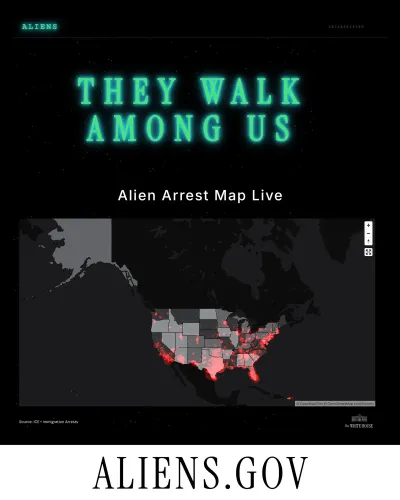
White House Cites US Deportation Policy as Global Model

Synopsis
The White House on July 10, 2026, amplified a report claiming countries in Europe and beyond are modelling their deportation practices on the United States, framing current US immigration enforcement as an international benchmark for migration control.
Key Takeaways
The White House shared a report on July 10, 2026 , claiming European and other nations are following the US example on deportations.
US deportation authority is grounded in the Immigration and Nationality Act , with enforcement priorities varying across administrations.
The Eisenhower administration's 1954 Operation Wetback is an early historical precedent for large-scale US interior enforcement.
Europe has independently expanded deportation capacity since the 2015 migration crisis , with the EU Migration and Asylum Pact set to further standardise return procedures.
Indian nationals have featured in US deportation operations, making international enforcement trends directly relevant for India.
The White House's framing signals an effort to build international legitimacy around its deportation policy ahead of further domestic legislative action.
The White House, the official communications account of the Executive Office of the President of the United States, on Friday, July 10, 2026, shared a media report claiming that countries in Europe and beyond are now following the United States' example on deportations, amplifying the claim as a vindication of current US immigration enforcement policy.
Context
The post quotes a report stating, 'In Europe and beyond, countries are following the US' example on deportations.' By sharing this framing, the White House positions American deportation policy not merely as a domestic enforcement measure but as an international reference point that other sovereign nations are reportedly adopting.
The United States has long maintained a federal deportation framework under the Immigration and Nationality Act, which authorises the removal of undocumented individuals and those who have violated the terms of their legal status. Enforcement volumes and priorities have shifted significantly across successive administrations.
Policy Backdrop
US interior enforcement has deep historical roots. The Eisenhower administration's 1954 Operation Wetback conducted large-scale removals of Mexican nationals, establishing one of the earliest precedents for mass interior enforcement operations in the country's modern history.
In recent decades, Europe has independently expanded its own removal capacity and expedited deportation procedures, particularly following the 2015 migration crisis that saw irregular arrivals surge across the continent. Individual European nations and the broader European Union have since developed parallel frameworks, including the forthcoming EU Migration and Asylum Pact, to manage sustained irregular migration.
Stakeholders and Impact
The primary stakeholders in this policy domain include immigration enforcement authorities in the US and across Europe, European interior ministries navigating domestic political pressure over migration, and migrant populations subject to removal proceedings in multiple jurisdictions.
For India, the framing carries relevance: a significant number of Indian nationals are among those apprehended at the US southern border each year, and Indian citizens have featured in high-profile deportation flights in recent years. Any tightening or internationalisation of deportation norms has direct implications for Indian diaspora communities and prospective migrants.
What's Next
Observers will watch closely for the full rollout of the EU Migration and Asylum Pact, which is expected to standardise asylum processing and return procedures across member states. In the US, any congressional movement on border funding or interior enforcement appropriations will further shape the scale and pace of removals.
The White House's decision to amplify a comparative media narrative suggests an intent to build a broader international legitimacy argument around its deportation posture — a framing that will likely feature in domestic political messaging through the remainder of 2026.
Point of View
Casting US deportation practice as a global norm rather than a contested domestic choice. This mirrors a broader pattern in which the current administration uses international peer behaviour to reinforce the political acceptability of aggressive interior enforcement at home. For European governments already under pressure from right-leaning electorates on migration, the framing offers a convenient external reference point, even as their legal frameworks differ substantially from the US model. The post stops short of policy specifics, but its timing and tone suggest it is laying rhetorical groundwork for further legislative or executive action on immigration enforcement.
NationPress
11 Jul 2026
Frequently Asked Questions
Why is the White House saying Europe is following the US on deportations?
The White House shared a media report on July 10, 2026, claiming that European and other countries are modelling their deportation practices on the United States, using the comparison to frame US enforcement policy as an internationally validated approach.
Which countries in Europe are deporting migrants like the US?
The White House post does not name specific European countries. European nations have broadly expanded deportation and return procedures since the 2015 migration crisis, and the EU Migration and Asylum Pact is expected to further standardise removal processes across member states.
How does US deportation policy affect Indian nationals?
Indian nationals have been among those apprehended at the US southern border and included in deportation flights in recent years, meaning any escalation or internationalisation of US deportation norms has direct implications for Indian migrants and diaspora communities.
What is the legal basis for US deportations?
US deportations are authorised under the Immigration and Nationality Act, which empowers federal authorities to remove undocumented individuals and those who have violated the terms of their legal immigration status.
What is the EU Migration and Asylum Pact?
The EU Migration and Asylum Pact is a framework being rolled out across European Union member states to standardise asylum processing and return procedures, representing Europe's most significant overhaul of migration governance since the 2015 crisis.