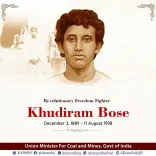
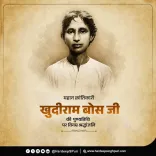
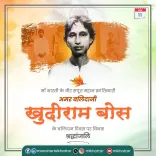
Rajnath Singh pays tribute to Khudiram Bose on martyrdom anniversary
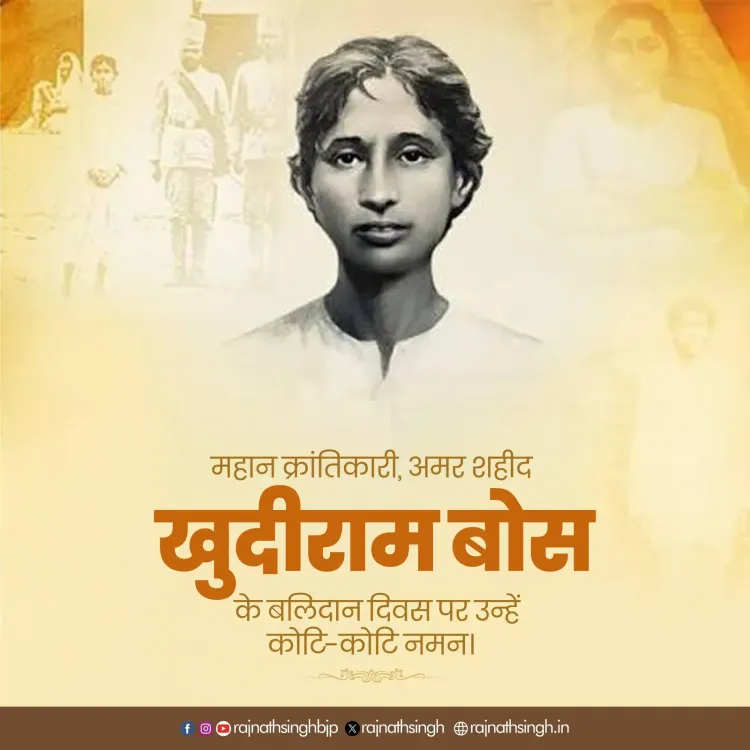
Synopsis
Union Defence Minister Rajnath Singh marked the martyrdom anniversary of revolutionary Khudiram Bose on 11 August 2026, honouring the 18-year-old hanged by British authorities in 1908 as an enduring symbol of fearless patriotism and sacrifice in India's freedom struggle.
Key Takeaways
Rajnath Singh paid tribute to Khudiram Bose on his martyrdom anniversary on 11 August 2026 .
Khudiram Bose was executed by British colonial authorities in 1908 at the age of 18 .
Bose was a Bengali revolutionary involved in an assassination attempt against a British official — one of the earliest acts of armed resistance in the Indian independence movement.
Rajnath Singh described Bose's courage and patriotism as 'always memorable in the history of India's freedom struggle.' Senior Indian leaders across parties routinely mark such anniversaries to keep pre-Gandhian revolutionary figures in national memory.
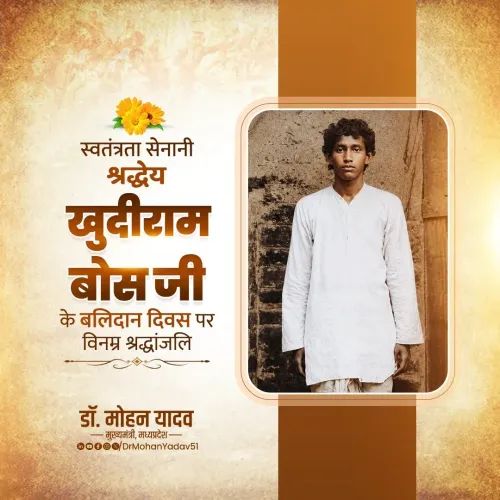
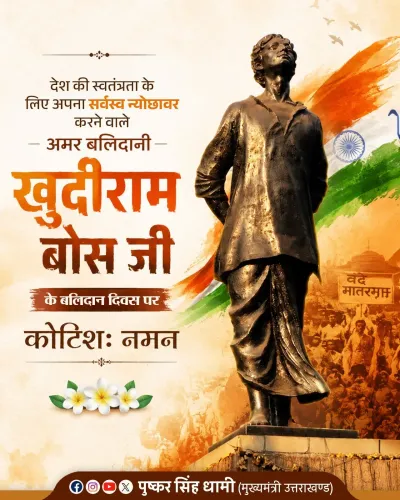
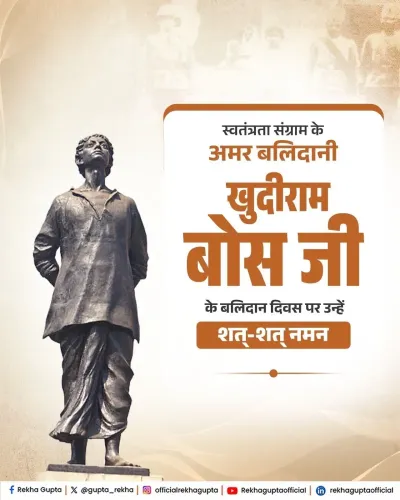
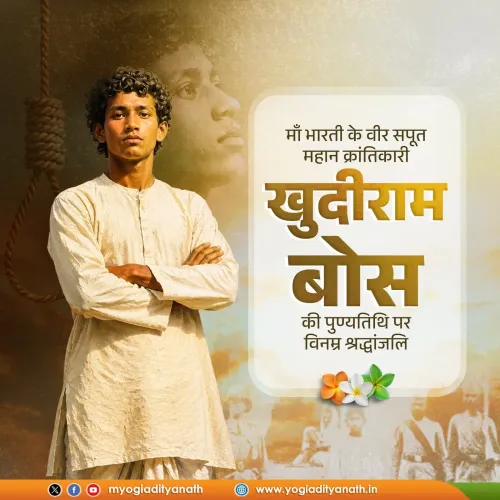
At 18 years of age, Khudiram Bose walked to the gallows — and into history. On his martyrdom anniversary, Tuesday, 11 August 2026, Union Defence Minister Rajnath Singh paid solemn homage to the young revolutionary, calling his courage and patriotism an enduring inspiration for generations to come.
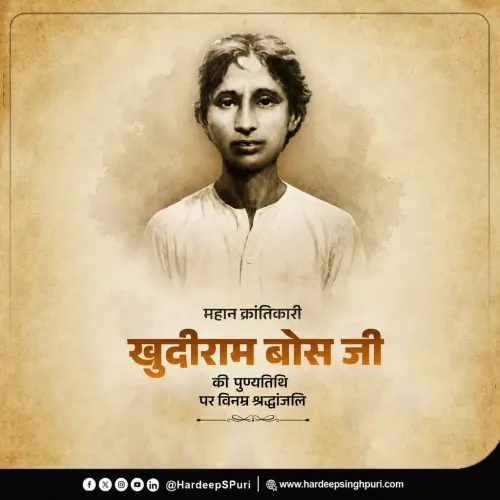
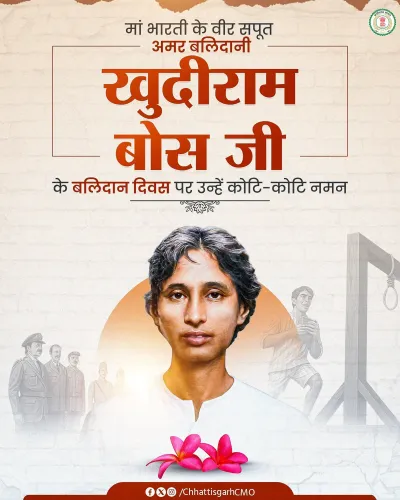
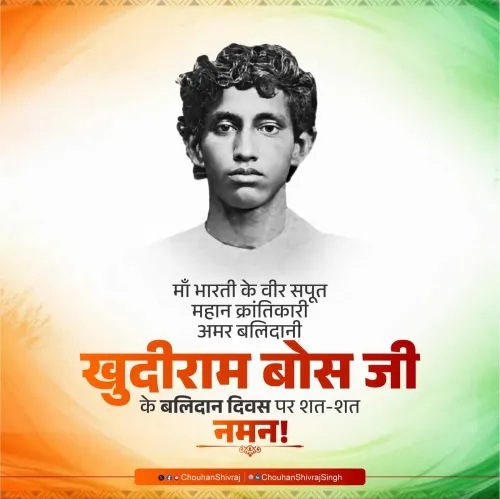
In his tribute, Rajnath Singh wrote: 'महान क्रांतिकारी खुदीराम बोस जी के बलिदान दिवस पर उन्हें विनम्र श्रद्धांजलि' — 'A humble tribute to the great revolutionary Khudiram Bose on his martyrdom day.' He added that Bose's 'indomitable courage, unshakeable patriotism, and dedication to the nation will always be remembered in the history of India's freedom struggle,' and that his fearlessness at such a young age remains a beacon of love for the country and sacrifice for generations ahead.
Who was Khudiram Bose — and why he still matters
Khudiram Bose was a Bengali revolutionary executed by British colonial authorities in 1908, aged just 18, for his role in an assassination attempt against a British judge — one of the earliest acts of armed resistance in the Indian independence movement. He is widely regarded as one of the youngest martyrs of the freedom struggle, his name synonymous with the pre-Gandhian phase of militant nationalism that predated mass civil disobedience.
His execution shocked colonial India and galvanised a generation of young nationalists. The image of a teenager facing death without flinching became a foundational symbol of revolutionary sacrifice — one that Indian leaders have invoked across decades and across party lines.
A ritual of remembrance in Indian public life
Rajnath Singh's tribute follows a well-established pattern in Indian political discourse: senior leaders marking the birth and death anniversaries of freedom fighters with public homages, particularly those from the armed revolutionary tradition. Such commemorations serve to keep pre-Gandhian figures — often overshadowed in mainstream historical narratives — visible in national memory.
For a Defence Minister, the resonance is pointed: invoking a young man who gave his life for the nation carries particular weight from the office that oversees those who serve in uniform today.
Khudiram Bose did not live to see independence. But on every anniversary of his hanging, India remembers that freedom was not only won through marches — it was also purchased at the gallows, by teenagers who never blinked.
Point of View
Sustained effort by the current political establishment to foreground armed revolutionary figures alongside the Gandhian mainstream — a rebalancing of India's freedom-struggle narrative that resonates with a certain strand of nationalist sentiment. For a Defence Minister, invoking a teenage martyr who faced the gallows without hesitation carries institutional weight beyond routine commemoration. The gesture also reinforces the BJP's consistent positioning as the custodian of a broader, more militant conception of patriotism. Whether these annual tributes translate into deeper curricular or institutional recognition for figures like Bose remains the real measure of the commitment.
NationPress
11 Aug 2026
Frequently Asked Questions
Who was Khudiram Bose?
Khudiram Bose was a Bengali revolutionary executed by British colonial authorities in 1908 at the age of 18 for his role in an assassination attempt against a British judge. He is regarded as one of the youngest martyrs of India's freedom struggle.
When is Khudiram Bose's martyrdom day?
Khudiram Bose's martyrdom day is observed on 11 August, the date he was hanged by the British in 1908.
What did Rajnath Singh say about Khudiram Bose?
Rajnath Singh said Khudiram Bose's 'indomitable courage, unshakeable patriotism, and dedication to the nation' would always be remembered in Indian freedom-struggle history, and that his fearlessness at such a young age is an inspiration for future generations.
Why is Khudiram Bose important in Indian history?
Khudiram Bose represents the pre-Gandhian armed phase of the Indian independence movement. His willingness to sacrifice his life at 18 made him a foundational symbol of revolutionary nationalism and inspired a generation of freedom fighters.
Why do Indian leaders pay tribute to freedom fighters on anniversaries?
Paying public tribute on birth and death anniversaries of freedom fighters is a longstanding tradition in Indian political life. It keeps revolutionary figures visible in national memory and underscores themes of sacrifice and patriotism in public discourse.