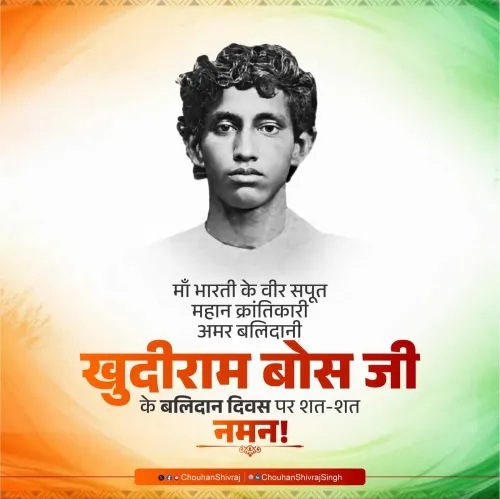
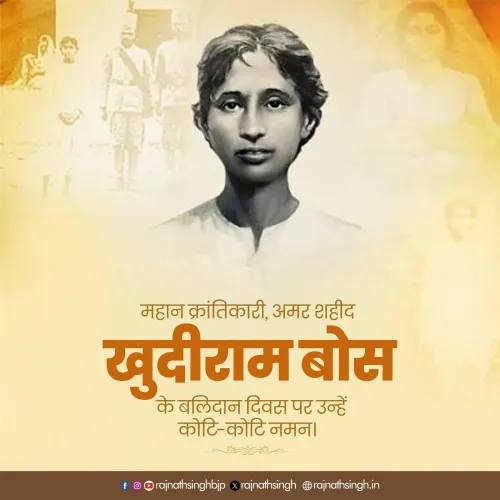
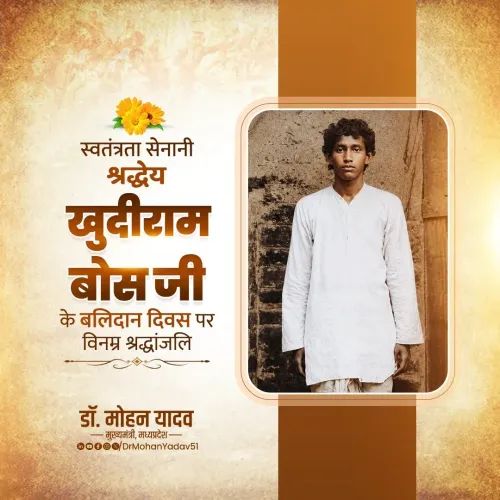
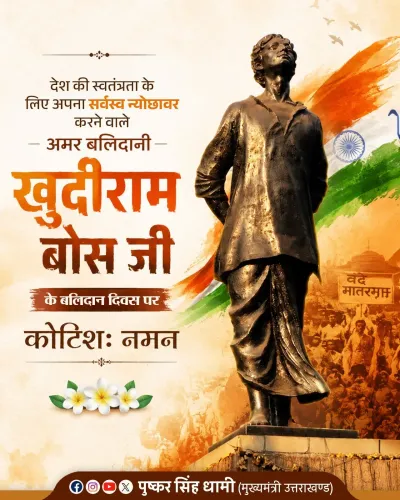
Amit Shah pays tribute to Khudiram Bose on martyrdom anniversary
Synopsis
Union Home Minister Amit Shah marked the martyrdom anniversary of revolutionary Khudiram Bose on 11 August 2026, posting a bilingual Hindi-Bengali tribute honouring the 18-year-old hanged by the British in 1908 for his role in the Muzaffarpur bombing.
Key Takeaways
Amit Shah posted a bilingual Hindi-Bengali tribute to Khudiram Bose on his martyrdom anniversary on 11 August 2026 .
Khudiram Bose was hanged by British authorities in 1908 at age 18 following the Muzaffarpur bombing , an attempt to assassinate a British judge.
Shah described Bose as having 'shaken the foundations of the British Empire' through his courage, valour, and sacrifice.
The post was written in both Hindi and Bengali , reflecting Bose's Bengali heritage and the BJP's outreach to West Bengal audiences.
Senior BJP leaders regularly mark anniversaries of revolutionary nationalists, emphasising armed resistance as a distinct strand of the freedom struggle narrative.
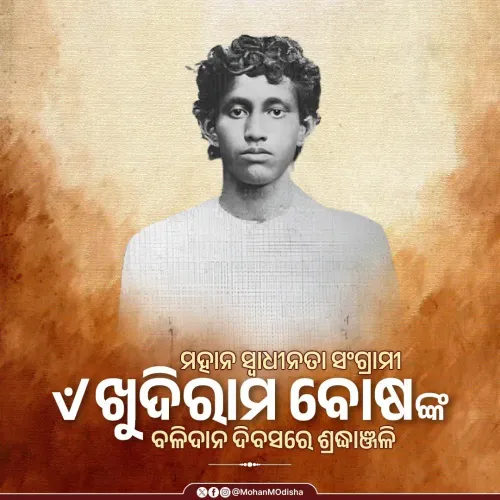
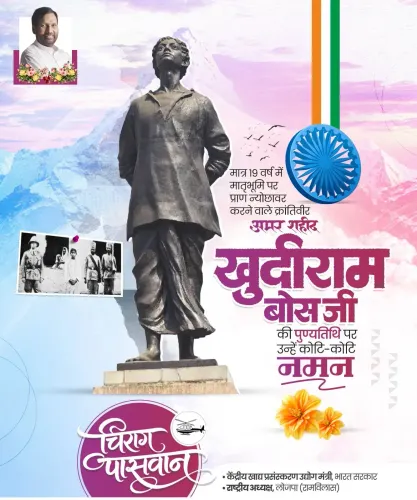
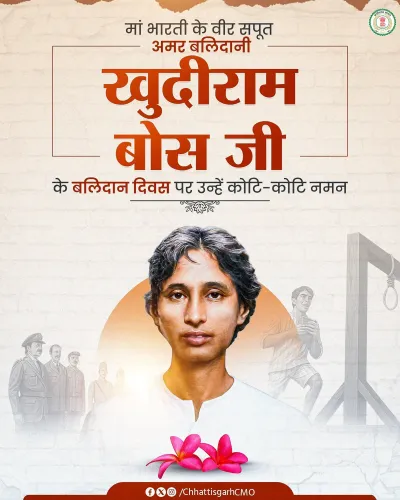
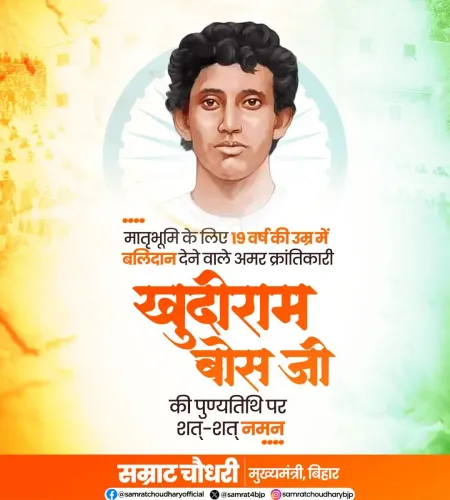
At just 18 years old, Khudiram Bose walked to the gallows smiling — and in doing so, shook the foundations of the British Empire. On his martyrdom anniversary, Union Home Minister Amit Shah offered tribute to the revolutionary on Tuesday, 11 August 2026, honouring a life cut short but never diminished.
In a bilingual post in Hindi and Bengali, Shah wrote: 'महान क्रांतिकारी खुदीराम बोस जी के बलिदान दिवस पर उन्हें कोटि-कोटि नमन' — 'Salutations in crores to the great revolutionary Khudiram Bose on his martyrdom day.' He recalled how Bose, at a young age, raised the call for armed revolution to free Maa Bharati (Mother India) from the chains of colonial slavery, and wrote an immortal saga of patriotism and supreme sacrifice that would inspire India's youth across generations.
The boy who made the Empire flinch
Khudiram Bose was among the youngest revolutionaries in India's independence movement. His involvement in the Muzaffarpur bombing of 1908 — an attempt to assassinate a British judge — led to his arrest and trial. He was hanged by British authorities in 1908, barely out of adolescence, becoming an enduring symbol of armed resistance at a time when the mainstream freedom movement was still finding its footing.
Shah's tribute specifically underscored Bose's 'courage, valour and sacrifice' (साहस, शौर्य व त्याग) and the way he 'shook the very foundations of the British Empire.' The phrasing is deliberate — it frames Bose not merely as a martyr but as an active force whose defiance had structural consequences for colonial rule.
Bengali outreach woven into the tribute
The post's bilingual format — identical tribute rendered in both Hindi and Bengali — is not incidental. Khudiram Bose was born in Bengal, and his legacy holds particular resonance for Bengali audiences in West Bengal and across the diaspora. Senior BJP leaders have consistently used anniversaries of revolutionary nationalists — Bose, Bhagat Singh, Subhas Chandra Bose — to speak directly to Bengali voters and assert a narrative of armed sacrifice alongside the broader freedom struggle story.
The message closes with the aspiration that Khudiram's story will remain a source of 'courage, self-respect, and national service' (शौर्य, स्वाभिमान व राष्ट्रसेवा) for India's youth — not a closed chapter of history, but a living instruction.
One teenager's defiance in 1908 is still being invoked to shape the politics and patriotism of 2026 — that, more than any single tribute, is the measure of Khudiram Bose's reach.
Point of View
Bhagat Singh, Subhas Chandra Bose — as ideological touchstones, countering the Congress-era emphasis on Gandhian non-violence as the dominant freedom-struggle narrative. The deliberate bilingual Hindi-Bengali format signals continued political investment in West Bengal, where invoking Bengali icons carries electoral weight. Framing an 1908 martyr as a live inspiration for today's youth also serves a broader cultural-nationalism project that connects historical sacrifice to present-day civic identity.
NationPress
25 Sept 2026
Frequently Asked Questions
Who was Khudiram Bose?
Khudiram Bose was an Indian revolutionary born in Bengal who was hanged by British authorities in 1908 at the age of 18 for his role in the Muzaffarpur bombing, an attempt to assassinate a British colonial judge. He is remembered as one of the youngest martyrs of India's independence movement.
What was the Muzaffarpur bombing?
The Muzaffarpur bombing of 1908 was an attempt by revolutionary nationalists, including Khudiram Bose, to assassinate a British judge in Muzaffarpur, Bihar. The bomb struck a carriage but killed two British women instead. Bose was arrested, tried, and executed for his role.
Why did Amit Shah post in both Hindi and Bengali?
Khudiram Bose was from Bengal, making him a particularly significant figure for Bengali audiences. The bilingual tribute reflects the BJP's consistent outreach to voters in West Bengal and the broader Bengali-speaking community by invoking icons from their regional history.
When is Khudiram Bose's martyrdom anniversary?
Khudiram Bose was executed by British authorities in 1908. His martyrdom anniversary is observed annually and was marked by Union Home Minister Amit Shah with a tribute post on 11 August 2026.
Why do BJP leaders frequently tribute revolutionary freedom fighters?
Senior BJP leaders regularly post tributes on anniversaries of revolutionary nationalists like Khudiram Bose, Bhagat Singh, and Subhas Chandra Bose to highlight armed resistance as a central part of India's freedom struggle, alongside and distinct from the Gandhian non-violence tradition.