Rajya Sabha adjourned amid Opposition uproar during Zero Hour on August 11
Synopsis
Zero Hour in the Rajya Sabha on 11 August descended into sloganeering and chaos, forcing Chairman C.P. Radhakrishnan to adjourn the House till noon. With both Opposition and treasury benches contributing to the disorder, a session that had begun with substantive committee reports and ministerial statements was cut short before any urgent public matter could be heard.
Key Takeaways
The Rajya Sabha was adjourned till noon on 11 August after Opposition sloganeering disrupted Zero Hour .
Radhakrishnan suspended the session after repeated attempts to restore order failed.
Leader of Opposition Mallikarjun Kharge attempted to raise a new point but was drowned out in the chaos.
Before the disruption, ministers tabled papers for six ministries and multiple standing committee reports were presented.
Karamvir Singh Boudh tabled five reports of the Standing Committee on Rural Development and Panchayati Raj.
Sanjay Kumar Jha presented the 392nd Report of the Standing Committee on Transport, Tourism and Culture.
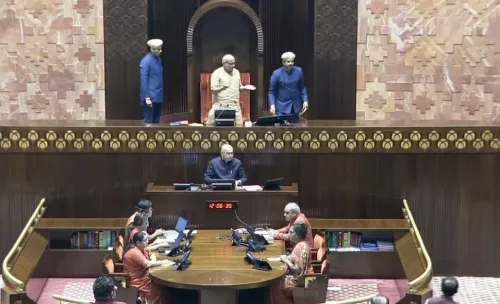
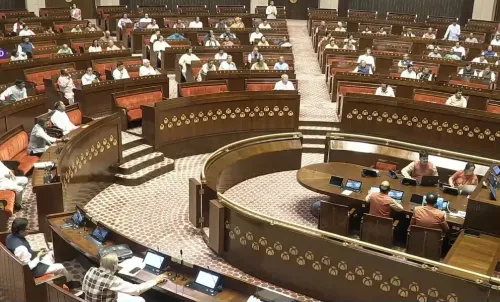
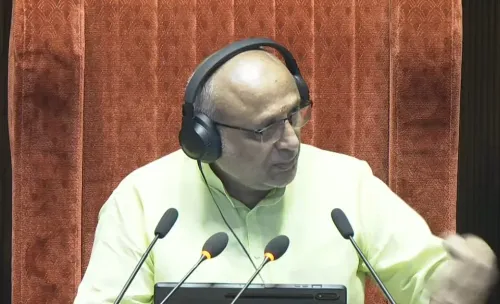
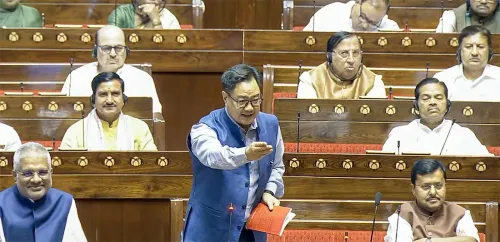
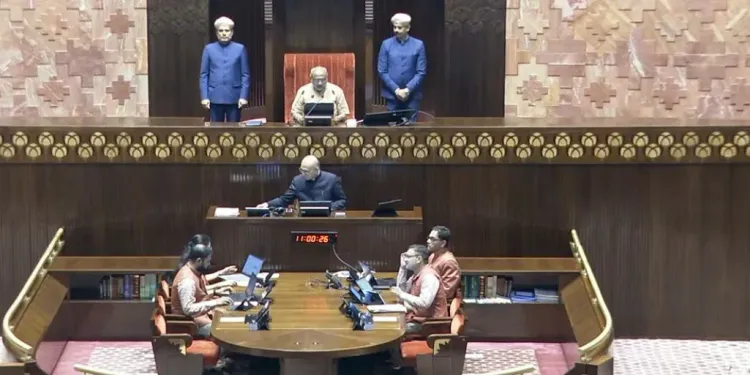
The Rajya Sabha was adjourned till noon on Tuesday, 11 August, after Opposition members raised slogans and disrupted proceedings during Zero Hour, with members from both sides contributing to the chaos. Chairman C.P. Radhakrishnan suspended the session after repeated attempts to restore order failed.
How the Disruption Unfolded
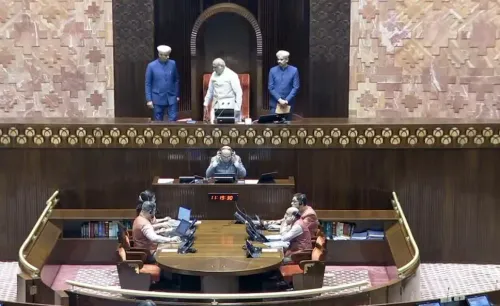
The House had assembled at 11 am and completed its formal business before the trouble began. After allowing matters of urgent public importance, the Chairman permitted Santrupt Mishra to raise his Zero Hour issue — at which point Opposition members began shouting slogans, bringing proceedings to a halt.
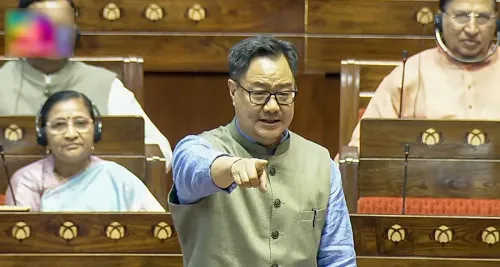
Radhakrishnan then turned to Leader of Opposition Mallikarjun Kharge, asking whether he wished to speak and requesting that he wait until Mishra concluded his statement. When the Chairman subsequently invited Kharge to intervene with a specific query, members from both the Opposition and treasury benches escalated the disorder. Kharge maintained he was raising a new point, but his words were lost in the sloganeering. Seeing no improvement, the Chairman adjourned the House.
Papers and Reports Tabled Before the Adjournment
Before the disruption, ministers tabled papers relating to the Ministries of Health and Family Welfare, Finance, Chemicals and Fertilisers, Consumer Affairs, Food and Public Distribution, and Ports, Shipping and Waterways. The papers were laid by Prataprao Jadhav, Pankaj Chaudhary, Anupriya Patel, B.L. Verma, Shantanu Thakur, and Nimuben Jayantibhai Bambhaniya.
Committee Reports Presented
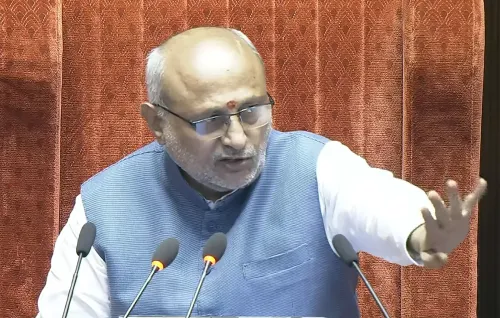
G.C. Chandrashekhar laid the 12th report of the Standing Committee on Housing and Urban Affairs, covering the government's action on recommendations from its report on Demands for Grants (2026-27) of the Ministry of Housing and Urban Affairs.
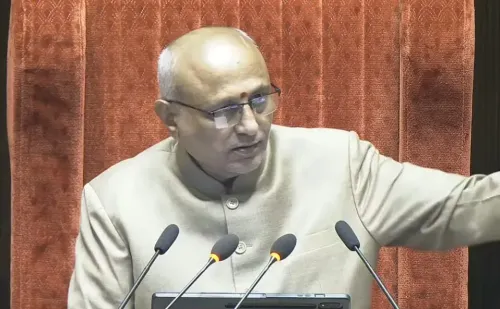
Karamvir Singh Boudh tabled five reports of the Standing Committee on Rural Development and Panchayati Raj. These covered action-taken reports on Demands for Grants for the Departments of Rural Development, Land Resources and Panchayati Raj, along with reports examining the impact of rural skilling schemes and the implementation of the Digital India Land Records Modernisation Programme.
Sanjay Kumar Jha presented the 392nd Report of the Standing Committee on Transport, Tourism and Culture on enabling inclusive, digital and sustainable bus transport. Sumitra Balmik laid the final action-taken statements of the Standing Committee on Social Justice and Empowerment.
Ministerial Statements on the Record
Prataprao Jadhav made a statement on the implementation status of recommendations related to the Ministry of Ayush. S.P. Singh Baghel spoke on reports about the Ministry of Panchayati Raj, Suresh Gopi addressed the National Gas Grid, and Harsh Malhotra spoke on Demands for Grants of the Ministry of Corporate Affairs.
The adjournment adds to a pattern of disrupted parliamentary sessions this year, with Zero Hour — designed for urgent public matters — increasingly becoming a flashpoint for political confrontation. Whether the House resumes substantive business after noon will depend on whether both sides reach an informal understanding.
Point of View
The chamber loses one of its few unscheduled spaces for accountability. Notably, both the Opposition and treasury benches contributed to Tuesday's disorder, which complicates the usual narrative of one side obstructing the other. The pattern raises a harder question: whether the Rajya Sabha's rules of procedure need reform to give the Chairman sharper tools to manage disruptions without resorting to adjournment as the only lever.
NationPress
11 Aug 2026
Frequently Asked Questions
Why was the Rajya Sabha adjourned on 11 August?
The Rajya Sabha was adjourned till noon on 11 August after Opposition members raised slogans during Zero Hour and members from both sides created a ruckus, making it impossible to conduct proceedings. Chairman C.P. Radhakrishnan suspended the session after repeated calls for order went unheeded.
What is Zero Hour in Parliament?
Zero Hour is an unscheduled but established parliamentary convention that begins at noon, allowing members to raise matters of urgent public importance without prior notice. It is distinct from formal Question Hour and is not mentioned in the rules of procedure, making it a convention rather than a codified session.
What was Mallikarjun Kharge trying to raise?
Leader of Opposition Mallikarjun Kharge stated he was raising a new point when the Chairman invited him to intervene, but his words were drowned out by the sloganeering and chaos from both sides of the House.
What business was completed before the adjournment?
Before the disruption, the House completed formal business including tabling of papers for six ministries, five reports of the Standing Committee on Rural Development and Panchayati Raj, the 392nd Report of the Standing Committee on Transport, Tourism and Culture, and ministerial statements on Ayush, Panchayati Raj, the National Gas Grid, and Corporate Affairs.
Who tabled papers in the Rajya Sabha on 11 August?
Papers were tabled by ministers Prataprao Jadhav, Pankaj Chaudhary, Anupriya Patel, B.L. Verma, Shantanu Thakur, and Nimuben Jayantibhai Bambhaniya, covering six ministries including Health, Finance, and Ports, Shipping and Waterways.