What Did Rajya Sabha Chairman Say About Rule 267?
Click to start listening
Synopsis
Explore the recent discussion in the Rajya Sabha regarding Rule 267, as Chairman C.P. Radhakrishnan clarifies its purpose amid contrasting views from the Opposition and the treasury benches. What implications does this have for parliamentary procedures?
Key Takeaways
- Rule 267 is not equivalent to an adjournment motion.
- It allows for the suspension of rules only for listed business.
- Amendments in 2000 restricted its application to ensure procedural integrity.
- It has rarely been invoked since the amendments.
- The discussions reflect ongoing tensions between the government and the Opposition.
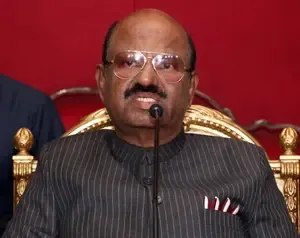
New Delhi, Dec 4 (NationPress) A comprehensive dialogue regarding the application and interpretation of Rule 267 took place in the Rajya Sabha after Chairman C.P. Radhakrishnan announced to the assembly that he had received two separate notices under this rule.
He reflected on the demands from various members, assuring the assembly that he would evaluate the existing practice surrounding the submission of Rule 267 notices and provide a well-considered decision.
While elaborating on his stance, the Chairman pointed out that notices under Rule 267 had been submitted “almost daily” with the aim of halting the scheduled business to discuss topics chosen by individual members.
“Unfortunately, this is not the intended purpose of Rule 267,” he emphasized, highlighting the necessity to clarify its intended use. He made it clear that Rule 267 in the Rajya Sabha cannot be likened to an adjournment motion in the Lok Sabha, which is permitted under Article 75(3) of the Constitution.
“No constitutional or procedural provision grants Rajya Sabha members the authority to submit any adjournment notice in any form,” he remarked.
The Chairman clarified that Rule 267 permits the suspension of a rule only for matters that are already part of the day's agenda. Any notice regarding an issue not included in the scheduled business, he stated, is deemed invalid. He also noted that the current iteration of Rule 267 arose from amendments made in 2000 by a committee led by then Rajya Sabha Chairman Krishan Kant, with notable members including Dr. Manmohan Singh, Pranab Mukherjee, Arun Jaitley, M. Venkaiah Naidu, and Fali S. Nariman.
The committee had identified misuse of this rule to address matters not listed or not yet acknowledged, leading to recommendations that restricted its application strictly to topics related to the scheduled business. The House ratified these suggestions on May 15, 2000.
Chairman Radhakrishnan highlighted that between 1988 and 2000, Rule 267 was invoked merely three times, and only twice in strict adherence to the rule. Since the 2000 amendment, discussions under Rule 267 have occurred only with prior agreement, and there have only been eight consensual discussions in almost four decades.
“This mechanism has been utilized on extremely rare occasions,” he stated.
Leader of the Opposition Mallikarjun Kharge countered that, given the absence of an adjournment motion in the Rajya Sabha, Rule 267 serves as the sole avenue for addressing urgent matters.
He urged the Chair not to “dismiss everything in one go,” asserting that the rule was formulated and approved by the House itself.
In response, Leader of the House J.P. Nadda refuted the notion that the government was avoiding discussions. “We have always allotted time for your queries,” he remarked, noting that the preceding session included comprehensive debates requested by the Opposition. He also mentioned that discussions on Vande Mataram and electoral reforms, agreed upon during the all-party meeting, were slated for the upcoming week.
Point of View
I believe the clarity brought forth by Chairman Radhakrishnan on Rule 267 is essential for maintaining the integrity of parliamentary procedures. While the Opposition argues for its necessity, it is crucial to adhere to established rules to ensure effective governance. The discussion reflects a healthy democratic process, balancing urgency with procedural integrity.
NationPress
04/12/2025
Frequently Asked Questions
What is Rule 267 in the Rajya Sabha?
Rule 267 is a provision that allows members to seek the suspension of the listed business in the Rajya Sabha to discuss urgent matters.
Who is the current Chairman of the Rajya Sabha?
The current Chairman of the Rajya Sabha is C.P. Radhakrishnan.
What did the committee in 2000 recommend regarding Rule 267?
The committee recommended restricting the application of Rule 267 strictly to subjects related to the day's business, following instances of misuse.
How many times was Rule 267 invoked between 1988 and 2000?
Rule 267 was invoked only three times between 1988 and 2000.
What is the significance of the discussions on Vande Mataram and electoral reforms?
These discussions signify the government’s commitment to address important issues agreed upon in the all-party meeting, showing a willingness to engage with the Opposition.