Is Putin's India Visit an Auspicious Moment for Strategic Outcomes?

Synopsis
As Russian President Vladimir Putin begins his two-day visit to India, the BJP expresses optimism about strengthening ties. This pivotal meeting could lead to significant agreements in trade and defense, reinforcing the longstanding relationship between India and Russia. Will this visit reshape their strategic partnership?
Key Takeaways
Putin's visit is seen as a crucial moment for India-Russia relations.
Expect significant agreements in trade and defense .
Personal rapport between Putin and Modi strengthens ties.
Focus on strategic cooperation amidst global tensions.
Potential agreements could span until 2030.
New Delhi, Dec 4 (NationPress) As Russian President Vladimir Putin embarks on a two-day trip to India, the BJP expressed on Thursday that this is a remarkably auspicious moment. The party emphasized the longstanding and multifaceted ties between India and Russia, conveying that the capital is eager to host him and anticipates fruitful outcomes.
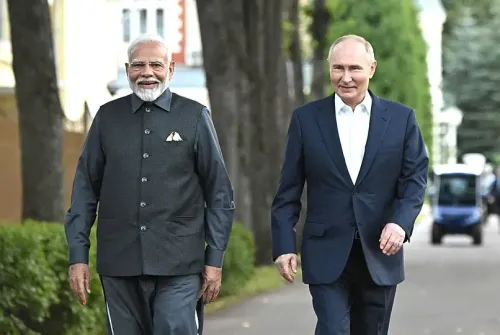
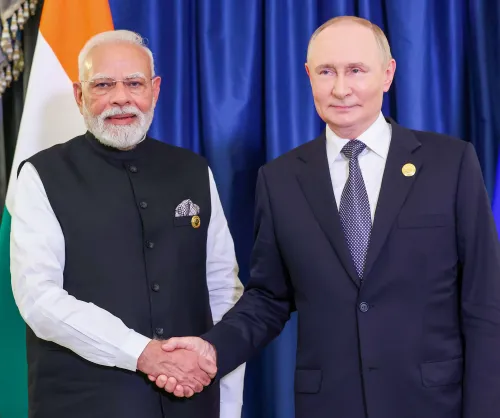
In an interview with IANS, BJP spokesperson Shahnawaz Hussain remarked, “Our friends are coming from Moscow. Putin’s connection with India is exceptionally robust. He shares a personal rapport with Prime Minister Narendra Modi, which further bolsters our relationship. Russia has been a steadfast ally during pivotal moments, and we are prepared to receive him; an important meeting is on the horizon, and we await promising news.”
BJP MP Kamaljeet Sherawat echoed these sentiments, stating, “Putin's visit to India signifies a very positive advancement. The ties between India and Russia have always been resilient. Putin is arriving with a substantial entourage, including a Cabinet Minister and approximately 75 business leaders, indicating that numerous agreements, especially in trade, technology, and strategic collaboration, are expected to be established, which will be advantageous for our nation.”
BJP MP Shashank Mani also welcomed the visit, emphasizing, “This moment is indeed auspicious. India and Russia have cultivated various forms of friendship over time. Our collaboration extends beyond defense to numerous sectors. During the Ukraine conflict, while many nations opposed Russia, India upheld its position, and in turn, Russia has consistently supported India. Both nations are formidable republics, and together, we can advance and foster global peace.”
BJP MP Damodar Agrawal noted, “The arrival of the Russian President will further solidify our friendly and close relations. The central government's policy prioritizes the interests of Indian consumers, farmers, and producers.
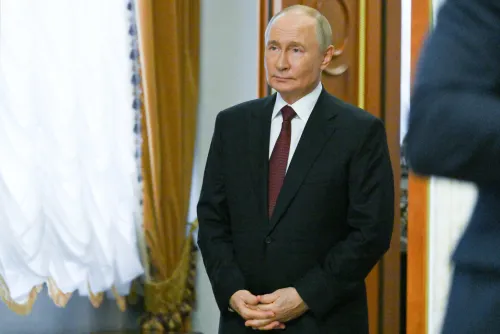
Currently, Russian President Vladimir Putin has set off for his two-day state visit to India, as reported by local media.
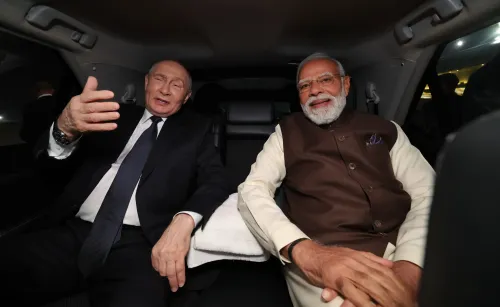
Upon arrival in New Delhi, Prime Minister Narendra Modi will host a private dinner for him, reflecting the same courtesy Putin extended when he welcomed PM Modi during the latter's visit to Moscow last year. This marks Putin's first journey to India since the onset of the Russia-Ukraine war in 2022.
The upcoming 23rd India-Russia Annual Summit, scheduled for Friday, will take place amidst punitive sanctions imposed by the US on New Delhi and will focus on enhancing defense cooperation, alongside discussions on trade and energy partnerships.
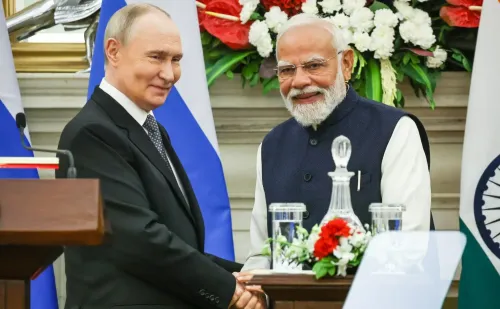
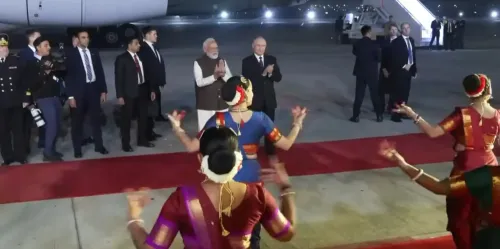
On Friday, he will receive a ceremonial welcome before formal discussions commence. Subsequent to the talks, PM Modi and President Putin will address the media. Putin will also lay a wreath at the Mahatma Gandhi memorial on the same day.
On Wednesday, Russian Presidential Aide Yuri Ushakov characterized the upcoming dinner dialogue between Putin and PM Modi as “one of the pivotal aspects of the Russian leader's visit,” as reported by the Russian state-run news agency TASS. Ushakov indicated that Putin would engage in discussions about critical issues concerning bilateral relations and the global situation with PM Modi.
He conveyed that Putin will also engage in discussions in both narrow and expanded formats. Essential elements of trade and economic collaboration will be on the agenda, with several agreements expected to be finalized during Putin's visit to India. Ushakov noted that India and Russia aim to establish a program for strategic economic cooperation development through to 2030.
The visit is anticipated to produce multiple agreements, including one to facilitate the movement of Indian workers to Russia. Furthermore, the two governments may deliberate on India's proposed free trade agreement with the Eurasian Economic Union, which New Delhi has been pursuing to bolster strategic and economic collaboration.
Point of View
The visit of President Putin marks a significant step in fortifying India-Russia relations. In a world of shifting alliances, maintaining a robust partnership with Russia is crucial for India's strategic interests, especially in defense and economic cooperation. This visit has the potential to yield beneficial agreements, reinforcing India's global standing.
NationPress
27 Sept 2026
Frequently Asked Questions
What is the significance of Putin's visit to India?
Putin's visit is significant as it aims to strengthen the longstanding ties between India and Russia, focusing on strategic cooperation in defense, trade, and technology.
What agreements are expected during this visit?
Several agreements are anticipated, particularly in trade, technology, and strategic cooperation, including a potential framework for economic collaboration until 2030.
How does this visit impact India-Russia relations?
This visit could enhance India-Russia relations by reaffirming their partnership amidst global challenges and could lead to substantial economic and strategic agreements.
Why is this visit crucial now?
The visit is crucial as it comes at a time of geopolitical tension, with the US imposing sanctions on India, making it essential for India to solidify its ties with Russia.
What are the anticipated outcomes of this summit?
Expected outcomes include enhanced defense cooperation, trade agreements, and discussions on energy partnerships, which could significantly benefit both nations.