Has RBI Cut India's Inflation Forecast to 2% for 2025-26?
Synopsis
In a pivotal move, the RBI has revised its inflation forecast for India to 2% for the fiscal year 2025-26. This adjustment comes as food prices plummet and GST rate cuts take effect, signaling a positive change in economic outlook. Governor Sanjay Malhotra emphasizes the favorable conditions supporting this decision, marking a significant shift in monetary policy.
Key Takeaways
RBI forecasts India's inflation at 2% for 2025-26.
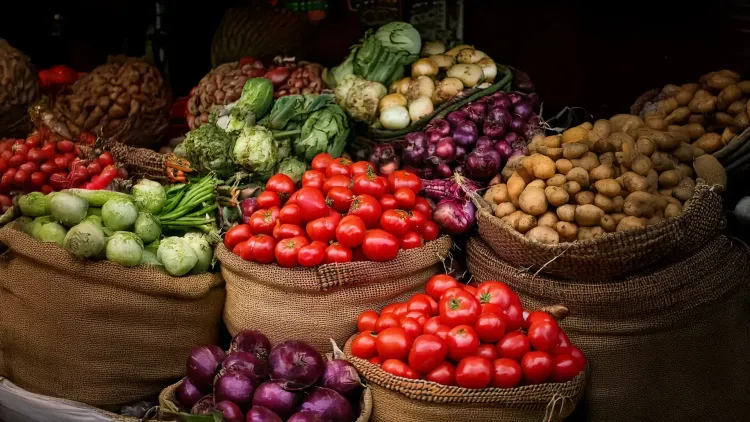
Significant decline in food prices drives this change.
Core inflation remains stable, with pressures from precious metals.
Policy space available to support economic growth.
Unanimous decision to cut policy repo rate by 25 bps .
Mumbai, Dec 5 (NationPress) The RBI’s monetary policy committee (MPC) made a significant reduction in its forecast for India’s inflation rate for the financial year 2025-26, adjusting it to 2 percent from the previously estimated 2.6 percent in October. This revision is attributed to a notable drop in food prices and the implementation of GST rate cuts.
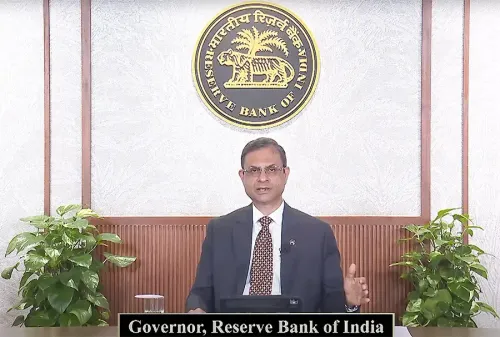
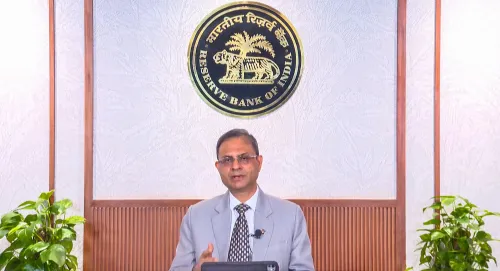
According to RBI Governor Sanjay Malhotra, “the MPC observed that headline inflation has considerably eased and is anticipated to be lower than earlier forecasts, largely due to exceptionally low food prices. In light of these positive developments, the average headline inflation projections for 2025-26 and the first quarter of 2026-27 have been revised downwards.”
Malhotra highlighted that core inflation (which excludes food and fuel) has remained quite stable in September and October, despite ongoing price pressures from precious metals. Excluding gold, core inflation decreased to 2.6 percent in October. The overall reduction in inflation has become more widespread, he noted.
The RBI Governor remarked that food supply conditions have improved thanks to increased kharif production, healthy rabi sowing, adequate reservoir levels, and favorable soil moisture. Aside from a few metals, international commodity prices are expected to decrease further.
“In conclusion, inflation is expected to be softer than what was previously projected in October, primarily due to falling food prices. Taking all these factors into account, CPI inflation for 2025-26 is now anticipated to be at 2.0 percent, with Q3 at 0.6 percent and Q4 at 2.9 percent. CPI inflation for Q1 2026-27 and Q2 is projected at 3.9 percent and 4.0 percent, respectively. The underlying inflation pressures are even lower as the effect of rising precious metal prices is about 50 bps. The risks are evenly balanced,” Malhotra underscored.
He elaborated that core inflation, which had been increasing steadily since Q1 2024-25, eased slightly in Q2 2025-26 and is expected to remain steady in the future. Both headline and core inflation are projected to be at or below the 4 percent target during the first half of 2026-27. The underlying inflation pressures are even lower since the impact of precious metals price increase is around 50 basis points. While growth remains robust, a slight softening is anticipated.
“Thus, the balance between growth and inflation, particularly with the favorable outlook for both headline and core inflation, continues to provide the policy space needed to support growth momentum. Consequently, the MPC unanimously voted to lower the policy repo rate by 25 bps to 5.25 percent,” Malhotra concluded.
He noted that headline CPI inflation hit an all-time low in October 2025. The faster-than-expected decline in inflation was primarily driven by a correction in food prices, contrary to the usual trends seen during September and October.
Point of View
I believe the RBI's decisive action reflects a proactive approach to managing inflation in our economy. The reduction in inflation forecasts not only signifies improved food supply conditions but also offers a strategic opportunity for growth. It is crucial for our nation to remain vigilant and responsive to these economic shifts, ensuring a stable financial environment for all.
NationPress
24 Sept 2026
Frequently Asked Questions
What is the new inflation forecast for India?
The RBI has revised India's inflation forecast for the fiscal year 2025-26 to 2%, down from the previous prediction of 2.6%.
What factors contributed to this change?
The sharp decline in food prices and the implementation of GST rate cuts have significantly contributed to this revision.
What does the RBI Governor say about core inflation?
RBI Governor Sanjay Malhotra noted that core inflation remains contained despite price pressures from precious metals.
How does this affect monetary policy?
The favorable inflation outlook provides the RBI with policy space to support growth, prompting a unanimous decision to reduce the policy repo rate.
What are the projections for CPI inflation in 2026?
CPI inflation for Q1 2026-27 is projected at 3.9%, and for Q2 at 4.0%, with Q3 at 0.6%.