Bay of Bengal Nations Set to Revamp Small-Scale Fisheries Governance
Synopsis
Countries in the Bay of Bengal are on the brink of a transformative reform in fisheries governance, aimed at enhancing policy frameworks for small-scale fisheries that support millions of coastal families. This initiative could significantly reshape the sector's future.
Key Takeaways
Transformative reforms in fisheries governance are underway in the Bay of Bengal.
A focus on small-scale fisheries is crucial for coastal livelihoods.
National Plans of Action will be created for each participating country.
Addressing the aging fishing fleet is vital for sustainability.
Increased women's participation is a priority for growth.
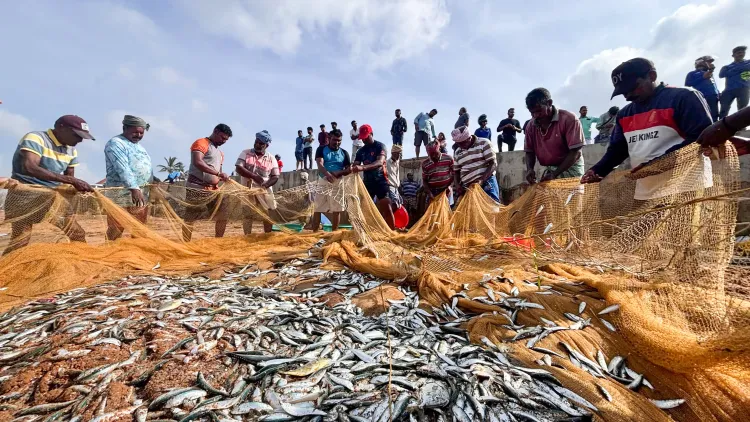
Kochi, Feb 27 (NationPress) Nations within the Bay of Bengal are gearing up for a crucial transformation in fisheries governance. This reform aims to bolster policy frameworks for the small-scale fisheries sector, which is vital for the livelihoods of millions of coastal communities.
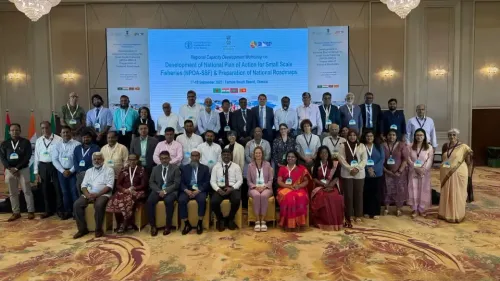
During a recent meeting of the Sub-Committee on Fisheries Management (COFI-FM), organized by the Food and Agriculture Organisation in Reykjavik, the Bay of Bengal Programme Inter-Governmental Organisation (BOBP-IGO) presented a strategic plan for enhanced regional collaboration with the FAO to revamp governance structures in India, Bangladesh, the Maldives, and Sri Lanka.
A major initiative includes the formulation of National Plans of Action tailored for small-scale fisheries, fully owned by the respective nations.
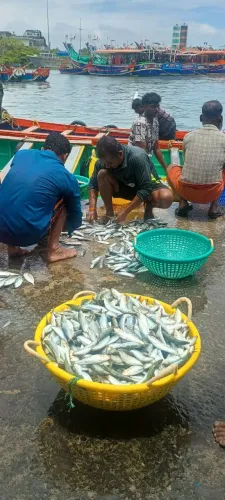
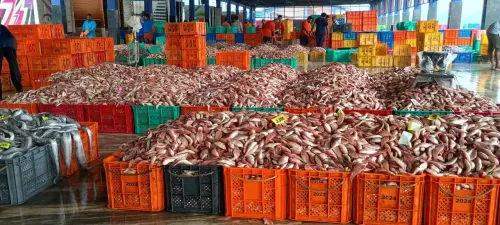
In India, which supports over four million marine fishermen alongside countless others in inland fisheries, this shift towards inclusive governance, social safety nets, and effective management tools could significantly impact forthcoming policy and regulatory measures.
BOBP-IGO has raised an urgent issue: a considerable portion of the region's fishing fleet is approaching the end of its operational lifespan.
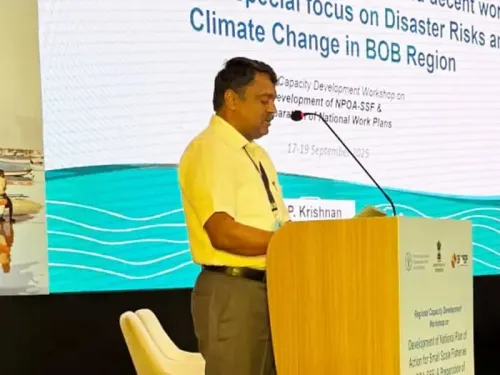
Director Dr. P. Krishnan emphasized the necessity for time-sensitive strategies to retire aging vessels, promote circular economy principles, and adopt safer, more resilient materials for boat construction.
This transition is critical not just for sustainability but also for protecting the livelihoods that rely on coastal resources.
In addition to infrastructure, the reform agenda highlights social aspects such as maritime safety, insurance coverage, decent working conditions, and diverse livelihood support.
There is a particular focus on increasing women's involvement throughout the fisheries value chains, indicating a broader movement toward gender-inclusive development.
From a management perspective, the proposed roadmap encourages the translation of scientific stock assessments into straightforward, actionable guidelines to accelerate policy execution.
Strengthened regional collaboration on shared and transboundary fish stocks through joint assessments and coordinated strategies is also pivotal to the proposal, aimed at mitigating overfishing and ensuring long-term fish stock stability.
Moreover, countries are anticipated to enhance synchronized efforts against illegal fishing by utilizing digital tools and AI-driven monitoring systems to modernize compliance and reporting.
If these governance reforms are implemented effectively, they could transform the economic and ecological landscape of the Bay of Bengal's fisheries sector, improving incomes, elevating safety standards, and reinforcing sustainability in one of the globe's most densely populated marine areas.
Point of View
The proposed reforms in fisheries governance present an opportunity to enhance livelihoods while ensuring sustainable resource management. By prioritizing inclusive policies and regional cooperation, these nations can address pressing challenges in the fisheries sector responsibly.
NationPress
26 Sept 2026
Frequently Asked Questions
What is the main goal of the fisheries governance reform?
The primary goal is to strengthen policy frameworks for the small-scale fisheries sector, which is crucial for the livelihoods of millions of coastal households.
Which countries are involved in this fisheries governance reform?
The countries involved are India, Bangladesh, the Maldives, and Sri Lanka.
Why is the aging fishing fleet a concern?
A significant portion of the region's fishing fleet is nearing the end of its operational life, which poses risks to sustainability and livelihoods.
How will women's participation be encouraged?
The reform agenda emphasizes expanding women's roles across fisheries value chains, promoting gender-inclusive growth.
What measures will be taken against illegal fishing?
Countries are expected to enhance coordinated actions against illegal fishing using digital tools and AI-based monitoring systems.