Bay of Bengal nations adopt AI for fisheries governance and IUU crackdown
Synopsis
India, Bangladesh, Sri Lanka, and the Maldives have agreed to build a regional AI roadmap for fisheries governance — covering IUU detection, vessel tracking, and seafood traceability — for a Bay of Bengal that feeds nearly half a billion people. India's ReALCraft platform, already tracking over 2,25,000 vessels, is the most advanced template on the table.
Key Takeaways
Policymakers from India , Bangladesh , Sri Lanka , and the Maldives met in Mumbai on 30 May under BOBP-IGO to develop a regional AI roadmap for fisheries governance.
India's ReALCraft platform has registered more than 2,25,000 fishing vessels under a unified digital monitoring framework.
Planned AI tools cover IUU fishing detection , vessel behaviour analysis, predictive safety advisories, and seafood traceability.
CMFRI showcased automated fish landing estimation and mobile-based species identification as ready-to-deploy innovations.
BOBP-IGO Director Dr P.
Krishnan noted the Bay of Bengal supports the food security of nearly half a billion people .
Experts stressed that AI must be backed by strong institutions and reliable data systems to deliver on its promise.
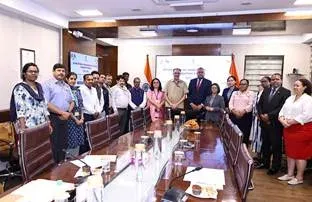
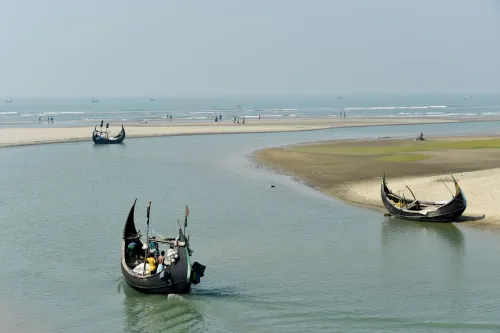
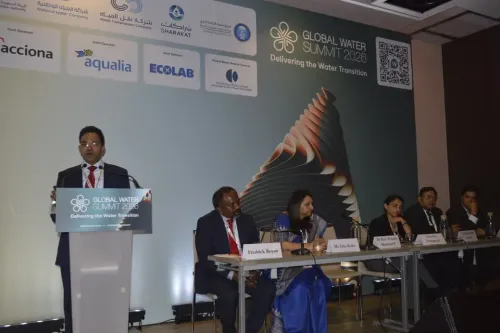
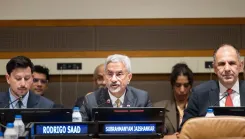
Countries bordering the Bay of Bengal are turning to artificial intelligence (AI) to overhaul fisheries governance, curb illegal fishing, and protect marine resources that sustain the livelihoods of nearly half a billion people across the region. Senior policymakers and marine scientists from India, Bangladesh, Sri Lanka, and the Maldives convened in Mumbai on 30 May for a high-level policy dialogue hosted by India under the aegis of the Bay of Bengal Programme Inter-Governmental Organisation (BOBP-IGO).
What the Meeting Set Out to Do
The dialogue, organised by BOBP-IGO, focused on identifying practical AI applications and charting a regional roadmap for technology-enabled fisheries management in one of the world's most productive marine ecosystems. Representatives from SAARC, BIMSTEC, and other regional bodies also participated, signalling the breadth of institutional buy-in.
India's Digital Fisheries Push
Dr Sanjay Pandey, Deputy Commissioner of Fisheries, presented India's digital initiatives, highlighting the expansion of the ReALCraft digital vessel registration platform, which has brought more than 2,25,000 fishing vessels under a unified monitoring framework. The system enables real-time information sharing, vessel identification, and integration with national digital platforms.
India also outlined plans to deploy AI-powered tools for vessel behaviour analysis, fisheries intelligence, traceability systems, predictive safety advisories, and the detection of illegal, unreported, and unregulated (IUU) fishing activities. Experts noted that combining oceanographic data, weather forecasts, potential fishing zone advisories, and real-time catch information could improve fish catch efficiency, reduce fuel consumption, and enhance fisher safety.
Scientific Innovations on the Table
Scientists from the ICAR-Central Marine Fisheries Research Institute (CMFRI) and the Indian National Centre for Ocean Information Services (INCOIS) presented emerging AI applications across the fisheries value chain. Dr J.K. Jena, Deputy Director General (Fisheries) at ICAR, said AI is increasingly being used to improve seafood traceability, quality assurance, and supply-chain transparency.
CMFRI Director Dr Grinson George highlighted specific innovations including automated fish landing estimation, species identification through mobile applications, and AI-driven tools for marine conservation and aquaculture management.
The Stakes: Food Security for Half a Billion
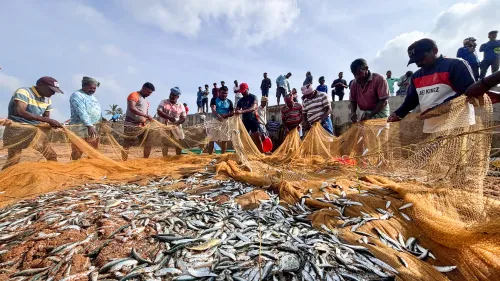
BOBP-IGO Director Dr P. Krishnan underscored the urgency, noting that the Bay of Bengal supports the food security and livelihoods of nearly half a billion people. AI, he said, offers a promising pathway to bridge critical information gaps and strengthen oversight, particularly in the region's vast small-scale fisheries sector.
Experts cautioned, however, that strong institutions, reliable data systems, and meaningful stakeholder participation remain prerequisites for successful implementation. With fisheries worldwide under mounting pressure from overfishing and climate change, the meeting concluded that technology alone is not sufficient — governance architecture must keep pace.
What Comes Next
Delegates are expected to work toward a formal regional AI roadmap for fisheries governance, building on the frameworks discussed in Mumbai. The outcome will feed into broader BIMSTEC and SAARC fisheries cooperation mechanisms, with implementation timelines to be finalised in subsequent technical consultations.
Point of View
25,000 vessels registered — is a genuine regional outlier, but vessel registration is the easy part; AI-driven IUU detection requires cross-border data sharing that SAARC and BIMSTEC have historically struggled to operationalise. The half-billion food-security figure is cited repeatedly in such forums, yet small-scale fishers — the most vulnerable and the hardest to monitor — remain chronically underrepresented in the data architectures being built around them. Until the roadmap addresses data sovereignty, multilingual interfaces for fishing communities, and independent verification of catch data, it risks being a high-tech overlay on a low-trust system.
NationPress
26 Sept 2026
Frequently Asked Questions
What was decided at the Bay of Bengal AI fisheries meeting in Mumbai?
Policymakers and scientists from India, Bangladesh, Sri Lanka, and the Maldives met in Mumbai on 30 May 2025 to develop a regional roadmap for AI-enabled fisheries governance under BOBP-IGO. The dialogue identified practical applications including IUU fishing detection, vessel tracking, and seafood traceability, with formal implementation timelines to be set at follow-up technical consultations.
What is the ReALCraft platform and why does it matter?
ReALCraft is India's digital vessel registration platform that has brought more than 2,25,000 fishing vessels under a unified monitoring framework. It enables real-time information sharing and vessel identification, and is being positioned as a template for broader regional adoption across Bay of Bengal nations.
How does AI help combat illegal fishing in the Bay of Bengal?
AI tools can analyse vessel behaviour patterns, cross-reference oceanographic and catch data, and flag anomalies consistent with illegal, unreported, and unregulated (IUU) fishing. Combined with real-time satellite data and predictive advisories, these systems can significantly strengthen surveillance across a vast and under-monitored maritime zone.
Which institutions are driving AI adoption in Indian fisheries?
Key institutions include ICAR-CMFRI, which has developed automated fish landing estimation and mobile-based species identification tools, and INCOIS, which provides oceanographic and fishing zone advisory data. BOBP-IGO is coordinating the regional policy framework.
Why is sustainable fisheries governance urgent for the Bay of Bengal?
The Bay of Bengal supports the food security and livelihoods of nearly half a billion people, according to BOBP-IGO Director Dr P. Krishnan. Mounting pressure from overfishing, climate change, and declining fish stocks makes technology-backed governance a regional priority, particularly for small-scale fishing communities.