Sonia Gandhi memoir: 'No real contact' with PM Modi in 12 years
Synopsis
In her 544-page memoir 'Belonging: A Journey of Love', Sonia Gandhi reveals she has had 'practically no real contact' with PM Modi across more than 12 years — their encounters limited to formal namaste greetings at which, she writes, 'he tends to look away.' The BJP has fired back, calling the book an attempt to 'whitewash history.'
Key Takeaways
Sonia Gandhi writes in her memoir that she has had 'practically no real contact' with PM Narendra Modi in over 12 years .
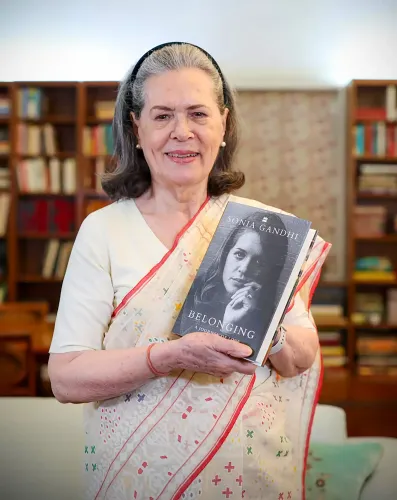
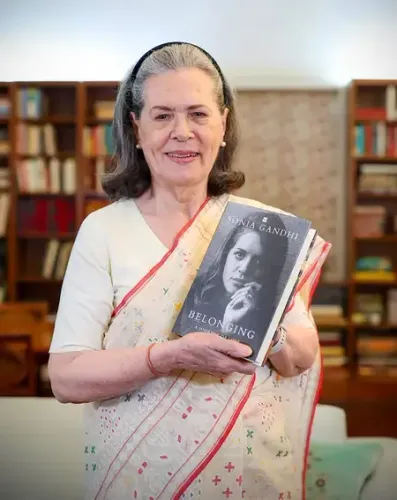
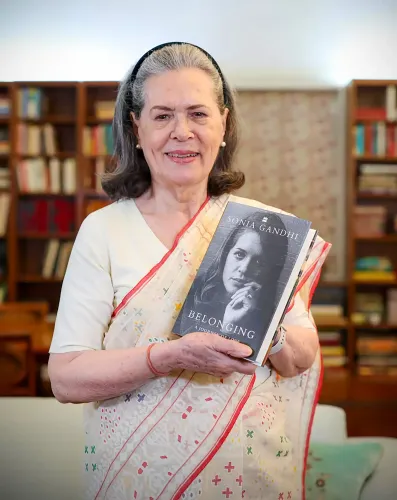
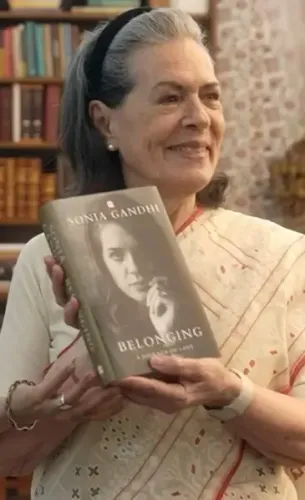
The book, 'Belonging: A Journey of Love' , is a 544-page memoir published by HarperCollins India , released on 10 November 2026 .
Gandhi describes their meetings as limited to a formal namaste , contrasting it with the cross-party cordiality of earlier political eras.
She accuses PM Modi of using coarse language against Jawaharlal Nehru , attributing it to his RSS 'conditioning'.
The BJP has criticised the memoir, calling it an attempt to 'whitewash the history'.
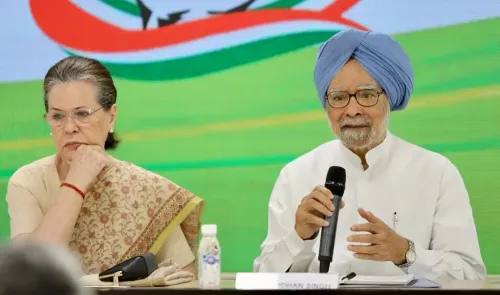
Congress Parliamentary Party Chairperson Sonia Gandhi has revealed in her newly published memoir that she has had virtually no substantive interaction with Prime Minister Narendra Modi across more than a decade of his tenure — describing their relationship as one defined by formal distance and deliberate avoidance.
What the Memoir Says
In 'Belonging: A Journey of Love', a 544-page autobiography published by HarperCollins India and released on Tuesday, 10 November 2026, Gandhi writes candidly about her equation with the man she identifies as her 'biggest' political adversary. 'Narendra Damodardas Modi has been the Prime Minister of India for more than twelve years as of this writing and is now in his third term in office. To this day, I've had practically no real contact with him,' she writes.
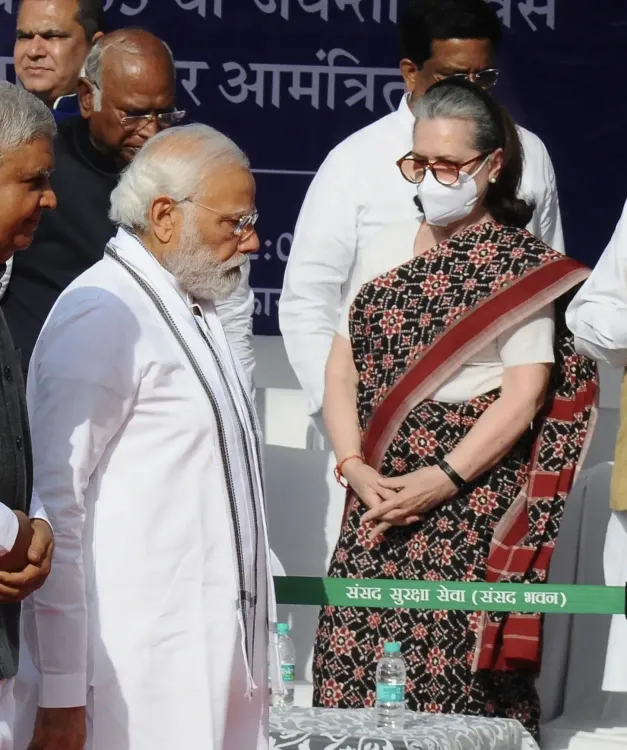
Gandhi describes their encounters at semi-official gatherings — typically held at the close of each Parliament session — as perfunctory at best. 'It's a very small room, and usually many people are present, but when he comes face-to-face with me, we greet each other with a formal namaste. This is different from the past, when leaders across party divides would treat one another with cordiality. He tends to look away, avoiding eye contact,' she writes.
Brief Exchanges, No Real Conversations
Beyond those formal greetings, Gandhi says the two have never held a real conversation. 'Apart from such brief exchanges, we have never really conversed, though we've exchanged formal birthday and New Year greetings over the years,' she notes. The memoir does, however, document one moment of human exchange: when PM Modi enquired after her health following her discharge from hospital, asking 'Theek hain aap? (Are you alright?)' — to which she replied, 'Ji, ab main theek hoon, shukriya (Yes, thank you... I am okay now).'
Ideological Fault Lines
Gandhi draws a stark contrast between her political vision and Modi's, arguing that they inhabit 'different ideological worlds.' She writes that he was 'fighting for his vision of India, and I for mine: an India against hegemony, an India that stands for inclusiveness, secularism, and social justice.' She also objects to what she describes as coarse language and name-calling directed by the serving Prime Minister at India's first Prime Minister Jawaharlal Nehru, attributing it to his 'conditioning' by the Rashtriya Swayamsevak Sangh (RSS) — the ideological parent of the Bharatiya Janata Party (BJP).
BJP's Response
The memoir has already drawn sharp pushback from the BJP, which has mounted criticism of the book, calling it an attempt to 'whitewash the history.' The political ripple from Gandhi's disclosures — spanning her personal observations, ideological differences, and commentary on the current government — is widely expected to deepen the already considerable distance between the two principal national parties.
Significance of the Book
This is a rare instance of a senior Congress leader offering a first-person, on-record account of the nature of cross-party relations at the highest level of Indian politics. Notably, Gandhi served as Congress President for two stints totalling over two decades, making her memoir one of the most significant political autobiographies to emerge from the Opposition in recent years. The book's release comes as the Congress is recalibrating its strategy ahead of several state elections, lending additional weight to the political context of her disclosures.
Point of View
It narrows the bandwidth for any crisis-level back-channel diplomacy. The BJP's reflexive 'whitewash history' response also signals that the party sees reputational risk in the book — otherwise, the more effective counter would have been silence. Gandhi's framing of Modi's rhetoric against Nehru as RSS 'conditioning' is a pointed, deliberate provocation — and one that will keep this memoir in political circulation well beyond its release week.
NationPress
10 Nov 2026
Frequently Asked Questions
What does Sonia Gandhi say about PM Modi in her memoir?
Sonia Gandhi writes in her memoir 'Belonging: A Journey of Love' that she has had 'practically no real contact' with PM Narendra Modi across more than 12 years of his tenure. She describes their encounters as limited to a formal namaste at semi-official gatherings, noting that he 'tends to look away, avoiding eye contact.'
What is the name of Sonia Gandhi's memoir and when was it released?
The memoir is titled 'Belonging: A Journey of Love' and was released on Tuesday, 10 November 2026. The 544-page book has been published by HarperCollins India.
How has the BJP responded to Sonia Gandhi's memoir?
The BJP has mounted scathing criticism of the book, calling it an attempt to 'whitewash the history.' The party's response came shortly after the memoir's release and is expected to trigger further political debate.
What does Sonia Gandhi write about PM Modi and Jawaharlal Nehru?
Gandhi objects in her memoir to what she calls coarse language and name-calling directed by PM Modi at India's first Prime Minister Jawaharlal Nehru. She attributes this to his 'conditioning' by the RSS, the ideological parent of the BJP.
What does Sonia Gandhi say about their ideological differences?
Gandhi writes that she and PM Modi 'hail from different ideological worlds,' with his vision of India being very different from hers. She describes herself as fighting for 'an India against hegemony, an India that stands for inclusiveness, secularism, and social justice.'