Have Rising Labour Costs Pushed Sugarcane Farmers to the Brink?

Synopsis
As sugarcane farmers in Chennai grapple with soaring labour costs, the future of their cultivation practices hangs in the balance. Urgent intervention from mills and local authorities may be the key to safeguarding their livelihoods.
Key Takeaways
Sugarcane farmers in Chennai are facing unsustainable labour costs.
Harvesting expenses can reach nearly Rs 1 lakh per acre.
Farmers are seeking intervention from sugar mills and local authorities.
Labour charges have seen a significant increase as the crushing season ends.
Without action, small farmers may struggle to continue cultivation.
Chennai, Jan 31 (NationPress) Sugarcane farmers throughout the region are voicing significant worries over the drastic increase in labour expenses, cautioning that the financial viability of their cultivation practices is rapidly deteriorating.
During a recent farmers' grievance meeting, growers appealed to sugar mills and local authorities to intervene—either by regulating labour rates or by providing targeted subsidies to alleviate rising costs.
Detailing the financial burden, Karuppannan, a farmer, shared that starting sugarcane farming often requires substantial borrowing.
“Typically, a farmer takes out a crop loan of around Rs 70,000 solely for planting, fertilizers, and pesticides. Once harvesting begins, the financial strain becomes overwhelming,” he explained.
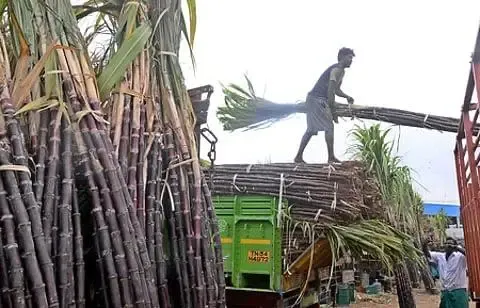
As per his insights, farmers currently incur nearly Rs 1,200 per labourer for every tonne of sugarcane during the harvest. With an average yield of about 27 tonnes per acre, harvesting costs can soar to nearly Rs 1 lakh per acre.
While the State Advised Price stands at approximately Rs 3,612 per tonne with a recovery rate of 10.43%, Karuppannan noted that a significant portion of the income is consumed by labour costs.
“If labour expenses were even slightly manageable, farmers might still cope. However, in the current climate, profits are consistently diminishing, compelling us to seek action from mills and the authorities,” he added.
Echoing these sentiments, S.A. Chinnasamy, State president of Tamilaga Vivasayigal Sangam, remarked that labour charges are escalating sharply as the crushing season approaches its conclusion.
“In my own fields, I spent around Rs 1,400 per tonne this season. As the grinding season winds down, there's a genuine risk of labour costs spiking to Rs 2,000 per tonne,” he stated.
Chinnasamy noted that last year, labour charges surged to nearly Rs 1,800 per tonne towards the season's end, rendering farming exceedingly unfavourable.
Addressing the farmers' concerns, R. Priya, Managing Director of Subaramaniya Siva Cooperative Sugar Mill, indicated that the mill had previously endeavored to organize a shared labour force to manage costs effectively.
“Nevertheless, in most instances, farmers prefer to hire labourers independently. Given that these are individual choices, the mill's capacity to intervene is limited,” she explained.
With labour expenses continuing to rise, farmers fear that without coordinated efforts from both mills and the government, sugarcane farming may soon become unfeasible for small and marginal producers.
Point of View
The rising labour costs in sugarcane farming highlight a significant agricultural crisis that threatens the viability of small-scale producers. Addressing these challenges through effective policy measures and support mechanisms is crucial for the sustainability of the sector.
NationPress
20 Sept 2026
Frequently Asked Questions
What has caused the rise in labour costs for sugarcane farmers?
The rise in labour costs is attributed to increased demand for harvesting as the crushing season approaches its end, leading to higher charges per tonne.
How much do farmers typically spend on labour during the sugarcane harvest?
Farmers currently spend around Rs 1,200 per labourer per tonne during the harvest, with total costs reaching Rs 1 lakh per acre.
What are farmers requesting from sugar mills and the government?
Farmers are urging sugar mills and the government to regulate labour costs and provide targeted subsidies to help manage rising expenses.