Why is Rohini Acharya Criticizing Bihar's Women Empowerment Policies?

Synopsis
Rohini Acharya's bold critique of Bihar's women's welfare policies has ignited a critical conversation about the effectiveness of existing programs and the need for profound social reform to truly empower women in the state.
Key Takeaways
Rohini Acharya criticizes Bihar's women welfare programs.
She emphasizes the need for systemic change beyond financial aid.
The concept of a maternal home as a refuge is introduced.
Patriarchal structures in Bihar need urgent reform.
Political discourse in Bihar may evolve due to these critiques.
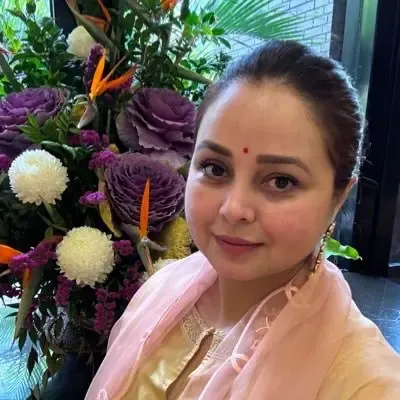
Patna, Dec 11 (NationPress) Rohini Acharya, the daughter of Lalu Prasad Yadav, has sharply criticized the Bihar government’s initiatives aimed at empowering women, describing them as insufficient in tackling the fundamental structural challenges that women in the state confront.
Her comments cast doubt on the efficacy of Chief Minister Nitish Kumar’s signature programs, which include the bicycle distribution scheme and financial incentives.
Rohini Acharya asserted that while programs providing Rs 10,000 to girls or distributing bicycles might be well-intentioned, they do not adequately address the underlying societal and systemic issues hindering true women’s empowerment.
She stressed that mere financial assistance is not enough to instigate meaningful change, contending that Bihar requires a transformation of entrenched attitudes and social norms.
According to her, Bihar’s deeply entrenched patriarchal structure must be reformed, as no government initiative can guarantee that daughters will receive their rightful opportunities and dignity unless society itself evolves.
Political analysts note that her remarks indirectly assess both Nitish Kumar’s governance strategy and the legacy of her father, Lalu Prasad Yadav, which is now being continued by her brother, Tejashwi Yadav.
Rohini also proposed a groundbreaking concept—the right to one’s maternal home.
She argued that every daughter should be able to grow up confident in the knowledge that her maternal home is a permanent sanctuary, where she can return freely without fear, guilt, shame, or social stigma.
In Bihar and many other regions, a married woman returning to her maternal home is often viewed as socially unacceptable, which can place women in precarious situations.
She asserted that acknowledging this right is not merely a governmental obligation but a vital social reform necessary to shield women from exploitation, domestic violence, and emotional oppression.
Rohini’s statements have sparked renewed discussions within Bihar’s political landscape, challenging long-standing narratives regarding women’s empowerment and suggesting potential tensions within the broader political dialogue in the state.
She subtly communicated to Nitish Kumar that the government’s foremost duty should be to implement tangible measures to safeguard the equal rights of daughters, especially when families and society exhibit indifference.
She reiterated that actualizing this responsibility is not just an administrative task; it is a moral imperative.
Point of View
I believe Rohini Acharya's critique of Bihar's welfare programs underscores a critical need for systemic change in women's empowerment. While financial aid is vital, it must be complemented by a broader societal transformation that addresses deep-rooted issues. The ongoing political discourse in Bihar must evolve to genuinely advocate for women's rights and equal opportunities, reflecting the true essence of empowerment.
NationPress
9 Oct 2026
Frequently Asked Questions
What are the key criticisms made by Rohini Acharya?
Rohini Acharya criticizes the Bihar government's welfare schemes for women, claiming they are inadequate in addressing the deeper structural issues and societal challenges that hinder true empowerment.
What is the significance of the right to maternal home proposed by Rohini?
Rohini's proposal for the right to maternal home aims to provide women with a safe refuge, challenging societal stigmas associated with married women returning to their parental homes.
How does Rohini Acharya's viewpoint reflect on Nitish Kumar's governance?
Her remarks suggest that Nitish Kumar's initiatives may not effectively address the fundamental issues faced by women, highlighting the need for a more profound societal reform.