Rs 7,981 Crore Disbursed to 75 Lakh SC Students: Virendra Kumar
Synopsis
Union Minister Virendra Kumar revealed that Rs 7,981.47 crore was disbursed to over 75 lakh SC students in 2025-26, with scholarship schemes growing up to 21%. Simultaneously, the Nasha Mukt Bharat Abhiyaan has now reached 26 crore Indians — and a new digital app is set to supercharge its monitoring.
Key Takeaways
Rs 7,981.47 crore disbursed to over 75 lakh SC students in financial year 2025-26 , announced by Minister Virendra Kumar .
The Pre Matric Scholarship Scheme for SCs recorded the highest growth at 21 per cent year-on-year.
The SHRESHTA Scheme for residential education of SC students in high schools saw a 16 per cent increase .
The Nasha Mukt Bharat Abhiyaan has reached over 26 crore people , including 9.5 crore youth , through 8.3 lakh+ activities .
NMBA was expanded from 272 vulnerable districts to all districts in India from August 15, 2023 .
The government plans to launch NMBA App 2.0 — a centralised digital tool for real-time monitoring under the National Action Plan for Drug Demand Reduction (NAPDDR) .
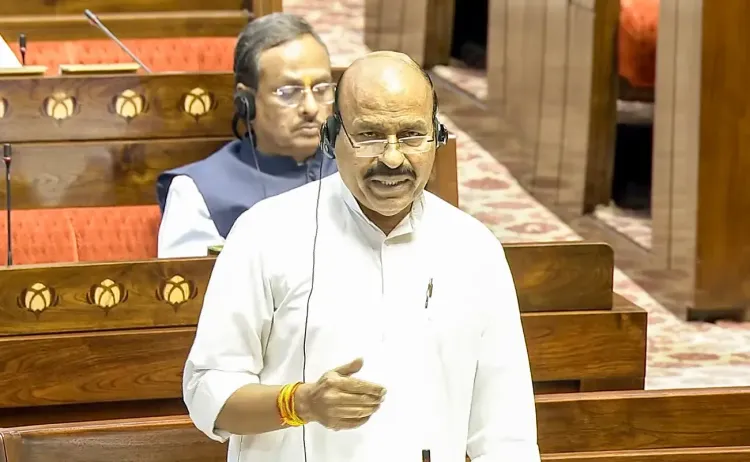
New Delhi, April 24: In a major push for educational empowerment of marginalised communities, Union Minister for Social Justice and Empowerment Virendra Kumar announced that Rs 7,981.47 crore has been disbursed to over 75 lakh Scheduled Caste (SC) beneficiaries during the financial year 2025-26. The Ministry of Social Justice and Empowerment confirmed the figures, highlighting consistent growth across multiple scholarship and welfare schemes targeting India's most vulnerable student populations.
Scholarship Schemes Record Significant Growth
According to an official statement from the Ministry, expenditure under SC welfare schemes has shown a steady upward trajectory. The Pre Matric Scholarship Scheme for SCs and Others recorded a 21 per cent increase compared to the previous financial year 2024-25, signalling a stronger government commitment to early-stage educational support.
The Post Matric Scholarship Scheme for SCs saw an 11.23 per cent rise, while the Central Sector Scholarship of Top Class Education for SC Students registered a 13.5 per cent increase. Additionally, the SHRESHTA Scheme — Scheme for Residential Education for Students in High Schools in Targeted Areas — recorded a 16 per cent increase, reflecting expanded residential learning opportunities for SC students in underserved regions.
Government's Commitment to Inclusive Development
Minister Virendra Kumar reaffirmed that the government remains steadfast in its mission of inclusive development and social justice for all sections of society through targeted interventions. He emphasised that the Department of Social Justice and Empowerment is actively implementing Acts and welfare schemes for the upliftment of Scheduled Castes (SCs), Other Backward Classes (OBCs), senior citizens, transgender persons, De-notified and Nomadic Tribes (DNTs), manual scavengers, sanitation workers, waste pickers, and Economically Weaker Sections (EWS).
This breadth of coverage underscores a whole-of-society approach — one that goes beyond caste-based interventions and attempts to address overlapping vulnerabilities across India's social fabric.
Nasha Mukt Bharat Abhiyaan Reaches 26 Crore People
In a parallel development, the Ministry revealed that the Nasha Mukt Bharat Abhiyaan (NMBA) has sensitised over 26 crore people on substance abuse, including 9.5 crore youth, 6.47 crore women, and more than 28,000 master volunteers. This was achieved through over 8.3 lakh activities conducted across educational institutions and community platforms nationwide.
Launched on August 15, 2020, by the Department of Social Justice and Empowerment, the NMBA initially covered 272 identified most-vulnerable districts. From August 15, 2023, it was expanded to all districts across the country — a significant scale-up reflecting the urgency of India's drug demand reduction challenge.
NMBA App 2.0: Digital Governance Upgrade
The Ministry also announced plans to launch the upgraded NMBA App 2.0, a centralised digital platform designed to enable real-time reporting, monitoring, and coordination among implementing agencies at the National, State, District, and institutional levels. The new version builds on the existing app infrastructure while introducing enhanced features focused on transparency, accountability, and data-driven governance.
The upgraded app will serve as a resource hub providing Information, Education and Communication (IEC) materials and communication support for Nasha Mukti Mitras — grassroots volunteers facilitating awareness drives. It forms a key pillar of the National Action Plan for Drug Demand Reduction (NAPDDR) monitoring framework.
Why This Matters: Deeper Context and Impact
The disbursement of nearly Rs 8,000 crore to SC students in a single financial year is among the largest such allocations in recent memory, and arrives at a time when India's Gross Enrolment Ratio (GER) for SC students in higher education continues to lag behind the national average, according to AISHE data. The consistent year-on-year growth across all four scholarship schemes suggests a deliberate policy correction — though critics and civil society groups have long argued that actual fund utilisation and timely disbursal remain persistent bottlenecks at the state level.
Notably, the SHRESHTA scheme, which focuses on residential schooling in high schools within targeted areas, directly addresses the dropout crisis among SC students — a structural issue that scholarship money alone cannot solve. The 16 per cent increase in its allocation is therefore particularly significant from a long-term outcomes perspective.
As the 2025-26 academic year progresses, the government is expected to release granular district-level utilisation data, which will be the true test of whether these disbursements translate into measurable improvements in SC student retention and graduation rates.
Point of View
981 crore to SC students is a headline-worthy number — but the real question is whether the money reaches students on time, or gets trapped in state-level bureaucratic delays, a chronic failure that has plagued India's scholarship ecosystem for decades. The consistent growth across all four schemes is encouraging, but without district-level utilisation audits made public, these figures risk becoming another statistical success story that masks ground realities. Meanwhile, the NMBA's expansion to all districts is ambitious — but the true measure will be whether it reduces substance abuse incidence, not just awareness event counts. India needs outcomes data, not just outreach data.
NationPress
19 Sept 2026
Frequently Asked Questions
How much money was disbursed to SC students in 2025-26?
The Indian government disbursed Rs 7,981.47 crore to over 75 lakh Scheduled Caste (SC) beneficiaries in the financial year 2025-26. This was announced by Union Minister for Social Justice and Empowerment Virendra Kumar .
Which scholarship schemes for SC students saw an increase in 2025-26?
Four schemes recorded growth: the Pre Matric Scholarship Scheme rose by 21%, the Post Matric Scholarship Scheme by 11.23%, the Top Class Education Scholarship by 13.5%, and the SHRESHTA Scheme by 16%, all compared to 2024-25.
What is the Nasha Mukt Bharat Abhiyaan and how many people has it reached?
The Nasha Mukt Bharat Abhiyaan (NMBA) is a government campaign to spread awareness about substance abuse, launched on August 15, 2020 . It has sensitised over 26 crore people , including 9.5 crore youth and 6.47 crore women, through more than 8.3 lakh activities.
What is the NMBA App 2.0 and what does it do?
The NMBA App 2.0 is an upgraded digital platform planned by the Ministry of Social Justice and Empowerment to enable real-time reporting, monitoring, and coordination under the Nasha Mukt Bharat Abhiyaan . It will serve national, state, district, and institutional stakeholders with enhanced transparency and data-driven governance tools.
Who is covered under the Department of Social Justice and Empowerment's welfare schemes?
The Department covers a wide range of groups including Scheduled Castes (SCs) , Other Backward Classes (OBCs) , senior citizens, transgender persons, De-notified and Nomadic Tribes (DNTs) , manual scavengers, sanitation workers, and Economically Weaker Sections (EWS) .