Rubio calls UN experts 'oxymoron', says CJP protests India's domestic matter
Synopsis
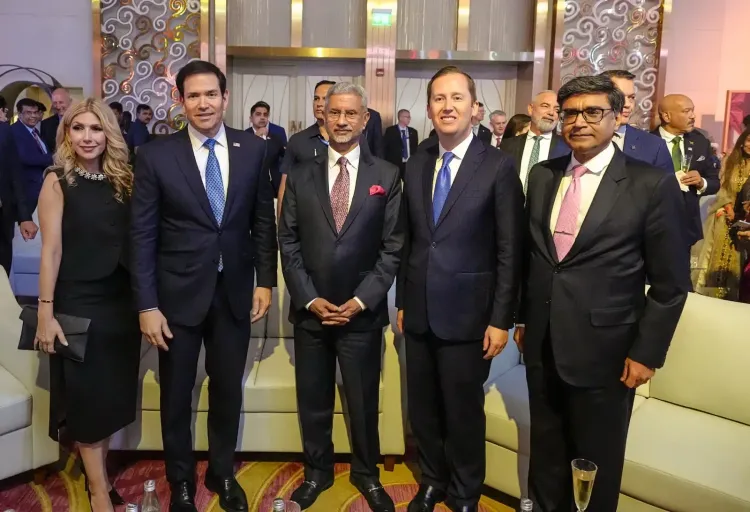
Visiting India, US Secretary of State Marco Rubio dismissed UN expert commentary on domestic protests as an 'oxymoron' and flatly refused to opine on what he called India's internal political matter — a posture that broadly aligns with New Delhi's own sharp rebuttal of UN scrutiny delivered the same day at the General Assembly's Third Committee.
Key Takeaways
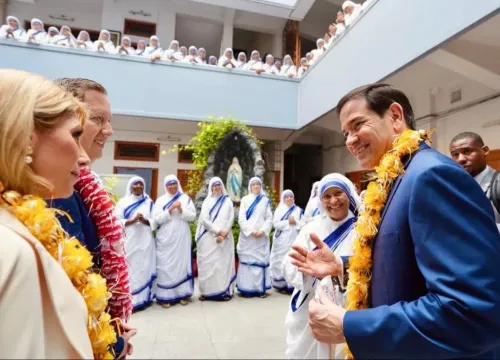
US Secretary of State Marco Rubio on 21 October 2026 labelled UN experts an 'oxymoron' while visiting Mumbai .
Rubio declined to comment on CJP and opposition protests against CEC Gyanesh Kumar , calling them India's 'domestic political matter' .
UN experts had on Tuesday called on India to respect the right to peaceful protest and ensure justice for reported human rights violations.
Barkha Tamrakar of the External Affairs Ministry told the UN General Assembly's Third Committee that India opposes use of human rights as a political tool based on unverified allegations.
India said it remains willing to engage on 'specific, properly documented cases through established channels' .
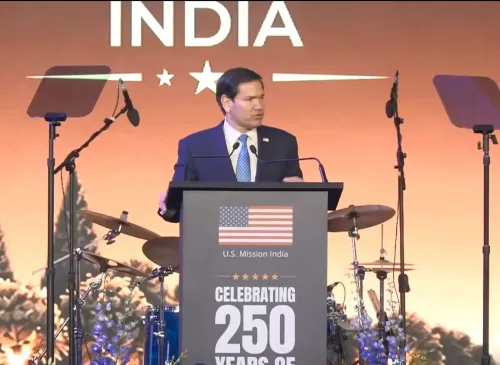
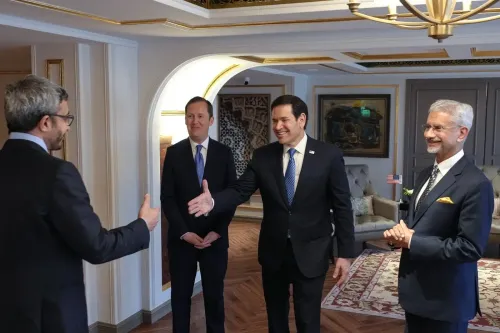
US Secretary of State Marco Rubio, currently on a visit to India, on Wednesday, 21 October dismissed remarks by United Nations experts on protests led by the Congress Janta Party (CJP) and opposition parties against Chief Election Commissioner (CEC) Gyanesh Kumar, calling the demonstrations a strictly domestic political matter and labelling UN experts an 'oxymoron'.
What Rubio Said in Mumbai
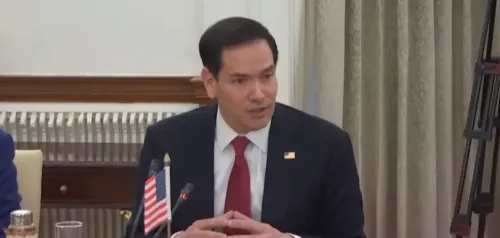
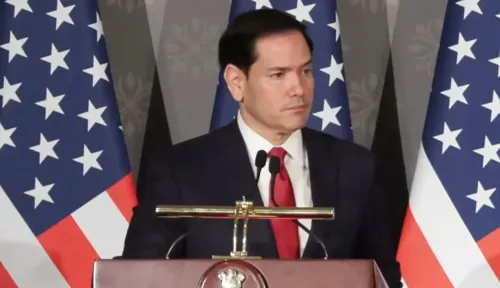
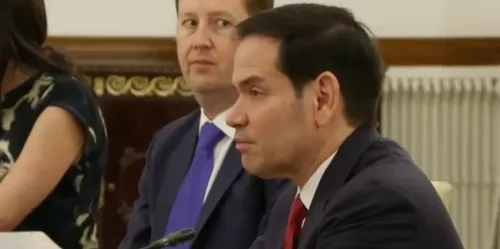
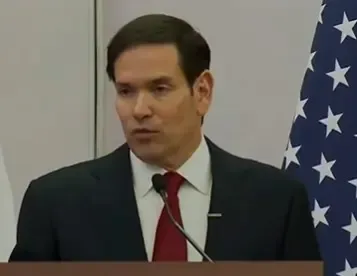
Speaking to reporters in Mumbai before departing for Jamnagar, Rubio was asked to respond to remarks made by UN human rights experts regarding the CJP-led protests and the subsequent response by Indian law enforcement. His reply was pointed. 'Oh, UN experts, my favourite. The UN experts are the oxymoron,' he said.
Rubio then made clear he would not weigh in on the substance of the protests or the government's handling of them. 'It is a domestic political matter. I am not going to comment on it. This is a democracy, they have elections here. I am not going to opine on their domestic, political matters. We have protests every day in US,' he told reporters.
The UN Intervention That Sparked the Question
On Tuesday, so-called UN experts had called on Indian authorities to respect, protect and fulfil the right to peaceful protest, and to ensure justice for human rights violations 'reported during these and previous protests'. The statement drew sharp pushback from New Delhi. This is consistent with a pattern in which UN mandate holders issue country-specific statements that India has repeatedly characterised as politically motivated and factually unverified.
India's Rebuttal at the UN General Assembly
Earlier on Wednesday, India addressed the UN General Assembly's Third Committee — which handles humanitarian affairs — and pushed back against the framing. Barkha Tamrakar, a Deputy Secretary in the External Affairs Ministry's UN Economic and Social Division, said India is a 'vibrant democracy anchored in the rule of law' and that Article 21 of its Constitution guarantees the right to life and personal liberty.
Tamrakar said India 'firmly opposes any attempt to convert unverified allegations, incomplete statistics or a report that contains no India country-specific observation into a negative characterisation of the world's largest democracy.'
She added that India remains prepared to clarify 'specific, properly documented cases through established channels' and that engagement with international human rights mechanisms must be 'based on dialogue, consultation, cooperation with non-selectivity and transparency as guiding principles.'
India's Principled Stand on Human Rights Mechanisms
New Delhi's position, articulated at the Third Committee, is that human rights must not be used as an instrument of political pressure or selective country targeting. India's objection centres on what it describes as the 'stealth use' of human rights concepts to selectively scrutinise democracies on the basis of unverified claims.
The convergence of Rubio's dismissal and India's own UN statement signals a degree of alignment between Washington and New Delhi on the limits of UN expert commentary — even as the two governments maintain independent positions on a range of bilateral issues. How the Indian government handles the ongoing domestic protests in the days ahead will determine whether international scrutiny intensifies further.
Point of View
Creating an unusual moment of public alignment between New Delhi and Washington on the credibility of UN mandate holders. What mainstream coverage risks missing is the domestic dimension — the CJP protests and the controversy around CEC Gyanesh Kumar remain unresolved, and American diplomatic cover, however informal, does not close that accountability gap at home.
NationPress
21 Oct 2026
Frequently Asked Questions
What did Marco Rubio say about the UN experts' comments on India?
Rubio called UN experts an 'oxymoron' and declined to comment on the CJP-led protests against CEC Gyanesh Kumar, saying it was India's domestic political matter. He made the remarks in Mumbai on 21 October during his visit to India.
What had UN experts said about the protests in India?
On Tuesday, UN human rights experts called on Indian authorities to respect and protect the right to peaceful protest and to ensure justice for human rights violations reportedly committed during these and previous protests. India rejected the statement as based on unverified allegations.
How did India respond to the UN at the General Assembly?
India's Deputy Secretary Barkha Tamrakar told the UN General Assembly's Third Committee on 21 October that India is a 'vibrant democracy anchored in the rule of law' and firmly opposes converting unverified allegations into a negative characterisation of the world's largest democracy. She said India is open to engaging on specific, properly documented cases through established channels.
What are the CJP protests about?
The demonstrations were led by the Congress Janta Party (CJP) and opposition parties against Chief Election Commissioner Gyanesh Kumar. The protests drew a response from Indian law enforcement, which in turn attracted comment from UN human rights experts.
What is India's stated position on international human rights scrutiny?
India's position is that engagement with international human rights mechanisms must be based on dialogue, non-selectivity, and transparency, and that human rights must not be used as an instrument of political pressure or selective country targeting.