Five Eyes must include India to counter Pakistan terror, Khalistani threat: UK MP Bob Blackman
Synopsis
A senior British Conservative MP and Padma Shri recipient is calling for India to join the Five Eyes intelligence alliance — not as diplomatic courtesy, but as a counter-terrorism imperative. Bob Blackman argues that Pakistan-sponsored terror and Khalistani extremism now threaten both nations, making intelligence exclusion a strategic liability the West can no longer afford.
Key Takeaways
Bob Blackman , UK Conservative MP and Padma Shri awardee, has renewed his call for India's inclusion in the Five Eyes (FVEY) intelligence alliance.
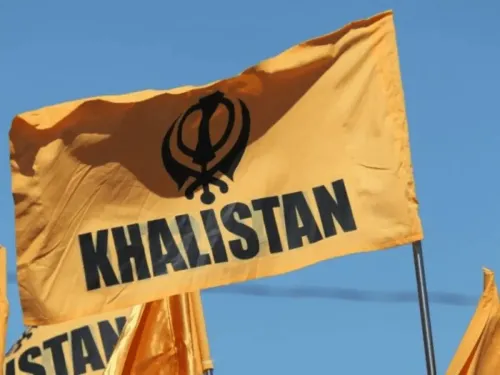
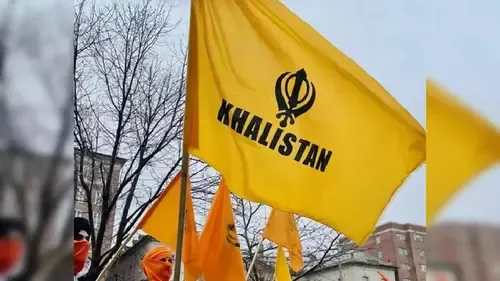
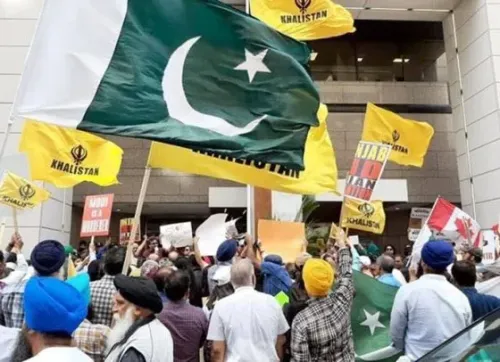
He cited Pakistani terror networks and the Khalistani movement as direct and growing threats to both India and the United Kingdom .
Blackman described PM Narendra Modi as a 'symbol of modern India' and backed India's bid for a permanent UN Security Council seat .
He warned of China 'literally surrounding India' through strategic partnerships with Pakistan , Sri Lanka , and East Africa .
Blackman called for UK government funding to extend to Hindu temples and Jain temples , which are currently excluded from security grants available to other places of worship.
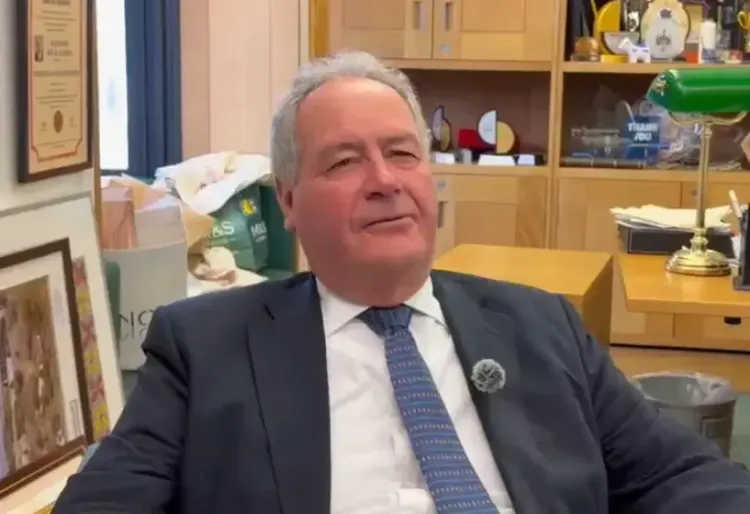
British Conservative Party Member of Parliament Bob Blackman, a Padma Shri awardee, has renewed his call for India's inclusion in the Five Eyes (FVEY) intelligence-sharing alliance, citing the escalating threat posed by Pakistani terror networks and Khalistani extremism to both India and the United Kingdom. Speaking in an exclusive interview in London, Blackman argued that closer intelligence cooperation between India and the Five Eyes bloc is now a strategic necessity.
The Case for India in Five Eyes
The Five Eyes alliance currently comprises the United States, Canada, Australia, New Zealand, and the United Kingdom — a grouping that shares signals and human intelligence across borders. Blackman has consistently advocated for India's entry into this framework, and he reiterated that position with urgency.
'India is threatened by Pakistan in particular, where the terrorism is almost promoted into India. So we must share intelligence... We should include India in that process. I've always said that India becomes an important part of the free world — obviously it is the biggest democracy in the world — enabling us to share intelligence on potential terrorist attacks,' Blackman said.
He also acknowledged the effectiveness of existing intelligence partnerships, noting: 'We know that our intelligence services, thanks to our friends in Israel and the United States, thwart terrorist atrocities in this country. We've got to do more to help attacks that take place in India.'
Pakistan Terror and the Khalistani Threat
Blackman identified two distinct but interconnected security challenges. On Pakistan, he was measured but direct: 'I'm not saying every Pakistani is a terrorist, but what we are saying is that terrorism from Pakistan keeps happening. The military rule that takes place in Pakistan doesn't seem to stop this, and that's very important.'
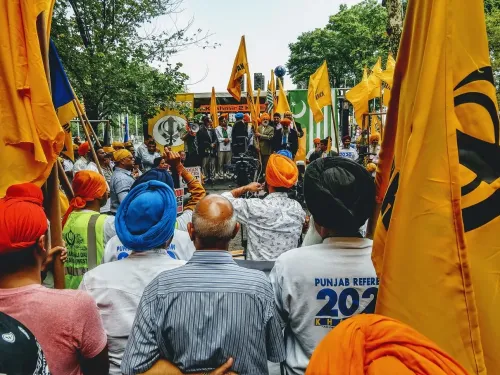
On the Khalistani movement, he described it as a threat that has grown beyond its South Asian roots: 'We've got the Khalistani movement, which is a direct threat both to India and increasingly over here. So we've got to make sure that that intelligence is shared.' He added that any action to prevent such activities 'has got to be positive,' even if it does not enter the public domain.
Blackman on PM Modi and India's Global Rise
The Conservative MP offered an effusive assessment of Prime Minister Narendra Modi, crediting him with transforming both Gujarat and India. 'Narendra Modi has not only been Chief Minister of Gujarat and turned Gujarat from almost a desert into a powerhouse of the Indian economy. Since he's been Prime Minister in India, he's done the same thing for India,' Blackman said, also praising Modi's 'incredible enthusiasm and energy' in bringing marginalised communities into economic participation through rural electrification and industrial growth.
Blackman described Modi as a 'symbol of modern India' who has strengthened India's standing across the G20 and G7 forums, and argued that India deserves a permanent seat on the United Nations Security Council. He also positioned India as a vital strategic counterweight to China's expanding regional influence — including Beijing's infrastructure footprint in Sri Lanka, East Africa, and its alignment with Pakistan — warning of a 'ring around India' that needs to be broken.
Indian Diaspora, Hindu Temples, and UK Politics
Blackman also turned to domestic British concerns, lauding the contribution of the Indian diaspora to the UK's economy and public services. He noted that the community tends to be 'the least likely to commit crime' and forms 'the most important element of the foundation of our economy,' while calling for greater political participation from Indian-origin residents.
On religious security, Blackman flagged a specific inequity: while the UK government funds security for some places of worship, Hindu temples and Jain temples are currently excluded from that funding. 'There's no funding for Hindu temples or Jain temples. Why? That question is constantly asked and they are at risk as well as any other religious place of worship,' he said, calling for an equitable allocation to ensure congregants can 'worship as they wish' in safety.
As geopolitical pressure on India's borders intensifies and Khalistani-linked activity in Western nations draws increasing scrutiny, Blackman's remarks reflect a growing chorus among Western legislators who see India's strategic partnership with the Five Eyes bloc as a logical and overdue next step.
Point of View
But the context around it has sharpened considerably — Khalistani-linked incidents in Canada and the UK have elevated the issue from a bilateral talking point to a live Western security debate. What is striking is the framing: he presents India's exclusion from Five Eyes not as a diplomatic gap but as an active intelligence vulnerability for alliance members themselves. The China encirclement argument, however, complicates the picture — Five Eyes was built on a shared Anglophone intelligence culture, and expanding its remit to counter China's Indo-Pacific moves would fundamentally alter the alliance's scope. Whether Western governments are prepared for that shift, or whether Blackman's advocacy remains a minority position within his own party, is the question mainstream coverage tends to skip.
NationPress
21 Oct 2026
Frequently Asked Questions
What is the Five Eyes alliance and why does Bob Blackman want India included?
The Five Eyes (FVEY) is an intelligence-sharing alliance comprising the United States, Canada, Australia, New Zealand, and the United Kingdom. Bob Blackman, UK Conservative MP and Padma Shri recipient, wants India included because he argues that Pakistan-backed terrorism and Khalistani extremism pose direct threats to both India and the UK, making shared intelligence a security necessity.
What did Bob Blackman say about Pakistan and Khalistani extremism?
Blackman said 'terrorism from Pakistan keeps happening' despite military rule, and that the Khalistani movement is 'a direct threat both to India and increasingly over here' in the UK. He called for greater intelligence sharing to prevent such activities, noting that the effort need not be visible to the public to be effective.
What did Blackman say about PM Modi and India's global role?
Blackman praised PM Narendra Modi as a 'symbol of modern India,' crediting him with transforming Gujarat and then India's broader economy, including rural electrification and poverty alleviation. He also backed India's bid for a permanent UN Security Council seat and described India as a vital counterbalance to China's regional expansion.
Why did Bob Blackman raise the issue of funding for Hindu and Jain temples in the UK?
Blackman highlighted that UK government security funding for places of worship currently excludes Hindu and Jain temples, which he called an unfair disparity given that these sites face comparable security risks. He called for an equitable share of funding so congregants can worship safely.
What is Bob Blackman's connection to India?
Bob Blackman is a British Conservative Party MP who has been awarded the Padma Shri, one of India's highest civilian honours, for his contribution to strengthening India-UK ties. He represents a constituency in the London Borough of Harrow, which has a significant Indian-origin population, and has long advocated for closer strategic and economic cooperation between the two nations.