CM Saini Hails Haryana Para Athletes' Asian Para Games 2026 Wins
Synopsis
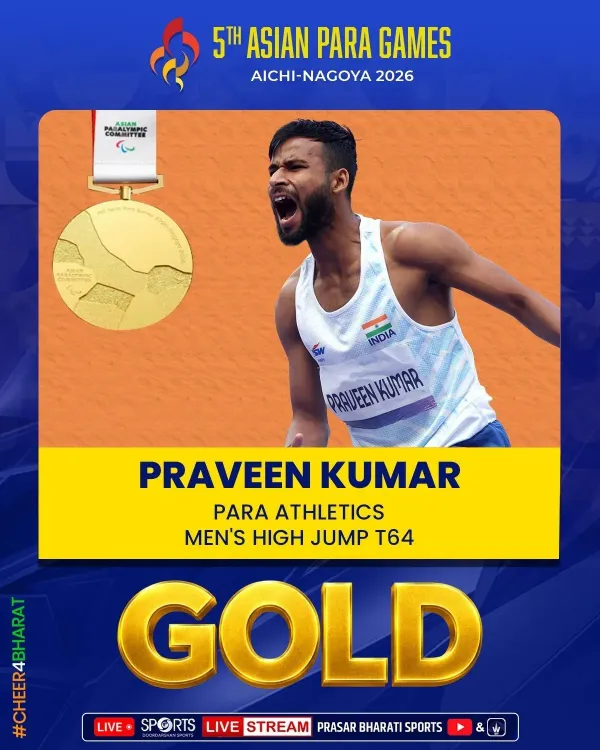
Haryana CM Nayab Singh Saini praised four Indian para athletes — Praveen Kumar (gold, high jump), Banti, Manjeet, and Kasthuri Rajamani — for their medals at the Asian Para Games 2026, calling their achievements a source of national pride.
Key Takeaways
Praveen Kumar won gold in men's high jump at the Asian Para Games 2026.
Banti claimed silver in men's high jump at the same Games.
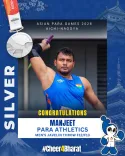
Manjeet , from Haryana, won silver in men's javelin throw F12/F13 .
Kasthuri Rajamani took silver in women's para powerlifting 67 kg .
Haryana CM Nayab Singh Saini publicly congratulated all four athletes on October 21, 2026 .
The Asian Para Games are held every four years and serve as a key continental qualifier ahead of the Paralympics.
Four Indian para athletes brought home medals at the Asian Para Games 2026, and Haryana Chief Minister Nayab Singh Saini wasted no time celebrating each one — from gold to silver — on Wednesday, October 21, 2026.
Posting on X, CM Saini extended warm congratulations to Praveen Kumar for clinching gold in men's high jump, to Banti for a silver in the same event, to Manjeet — whom Saini affectionately called 'm'hare Haryana ke bete' (a son of our Haryana) — for silver in men's javelin throw F12/F13, and to Kasthuri Rajamani for silver in women's para powerlifting 67 kg. 'Your achievements raise the pride of the nation and inspire athletes,' he wrote.
Praveen Kumar's gold anchors a strong day for India
Praveen Kumar is among India's most recognised para high-jumpers at the continental level, having built a consistent international profile across Asian and Paralympic competitions. A gold at the Asian Para Games is the highest continental honour in his discipline — a statement win ahead of future Paralympic cycles. Banti's silver in the same event doubles Haryana's footprint on the high-jump podium in a single day, a rare feat at any multi-sport meet.
Manjeet's javelin silver and a Chief Minister's pride
The F12/F13 classification covers athletes with visual impairments, making Manjeet's silver in men's javelin throw a technically and athletically demanding achievement. Saini's choice of the phrase 'm'hare Haryana ke bete' — 'a son of our Haryana' — signals more than courtesy; it places Manjeet squarely in the state's proud sporting identity. Haryana has consistently punched above its weight in Indian para sports, producing competitors across athletics, wrestling, and powerlifting at Asian and Paralympic levels.
Kasthuri Rajamani's podium in para powerlifting
Kasthuri Rajamani adds a different dimension to this medal haul — a silver in women's para powerlifting at 67 kg, an event that rewards raw strength combined with precise technique. Her inclusion in Saini's post, alongside three Haryana-origin athletes, underlines the increasingly national character of India's para sports contingent, drawing talent from multiple states and disciplines into a unified effort.
The Asian Para Games, held every four years, function as the continent's premier para-sport showcase and a critical performance marker ahead of each Paralympic cycle. India's medal count at these Games has grown steadily, and each podium finish feeds directly into the visibility and funding arguments that state governments and national federations make for para sports infrastructure.
With state-level acknowledgements like today's post, the policy pressure on governments to back these athletes with concrete incentives — cash awards, employment, and training facilities — sharpens. The applause from Chandigarh today may well be followed by an announcement from the stands of policy.
Point of View
And claiming para athletes within that narrative extends the state's sporting identity into a growing, high-visibility domain. The singling out of Manjeet as 'a son of Haryana' while also celebrating Kasthuri Rajamani reflects a deliberate effort to signal both regional pride and national inclusivity. As India's para sports ecosystem matures, state-level recognition posts like this one often precede formal cash-award announcements, making them early signals of policy intent. Whether Chandigarh follows through with incentives will be the real test of how seriously Haryana's government backs these athletes beyond social media.
NationPress
21 Oct 2026
Frequently Asked Questions
Who is Praveen Kumar the para-athlete?
Praveen Kumar is an Indian para-athlete who competes in high jump at international events including the Asian Para Games and Paralympics, and won gold in men's high jump at the Asian Para Games 2026.
What medals did India win at Asian Para Games 2026 on October 21?
On October 21, 2026, India's para athletes won at least one gold — Praveen Kumar in men's high jump — and three silvers: Banti (men's high jump), Manjeet (men's javelin F12/F13), and Kasthuri Rajamani (women's powerlifting 67 kg).
Who is Kasthuri Rajamani?
Kasthuri Rajamani is an Indian para powerlifter who competed in the women's 67 kg category at the Asian Para Games 2026, winning a silver medal.
Why did Haryana CM Nayab Saini congratulate para athletes?
CM Nayab Singh Saini posted congratulations on X to celebrate Indian para athletes' medals at the Asian Para Games 2026, highlighting Haryana's contribution to national para sports success.
What is the Asian Para Games and when is it held?
The Asian Para Games is a continental multi-sport event for para-athletes held every four years across Asia, serving as a major platform alongside the Paralympics for tracking India's para sports progress.