Raj Thackeray backs Sanjay Raut's upheaval claim, demands ballot papers
Synopsis
MNS chief Raj Thackeray raised the political temperature on Wednesday, endorsing Sanjay Raut's prediction of a major upheaval in two to five months and going a step further — warning that India may soon find itself without a Prime Minister. His remarks, combining EVM criticism, NEET protest defence, and sharp swipes at the Central government, signal a hardening opposition mood in Maharashtra ahead of a politically charged period.
Key Takeaways
Raj Thackeray on 21 October 2026 endorsed Sanjay Raut 's prediction of major political upheaval within two to five months .
Thackeray warned the country could soon be without a Prime Minister , citing what he called repeated government missteps.
He renewed his demand — first raised in 2018 — to abolish EVMs and restore ballot-paper voting, citing examples from France , Pakistan , Bangladesh , and Nepal .
He targeted gangster Lawrence Bishnoi , lodged in Sabarmati jail , calling for punitive action if law enforcement is given a free hand.
Thackeray defended students who participated in NEET protests , criticising the government's baton-charge response and linking the unrest to deeper public frustration.
He argued BJP 's 2014 landslide was driven by PM Narendra Modi , not the RSS , and that ultimate power rests with Indian citizens.
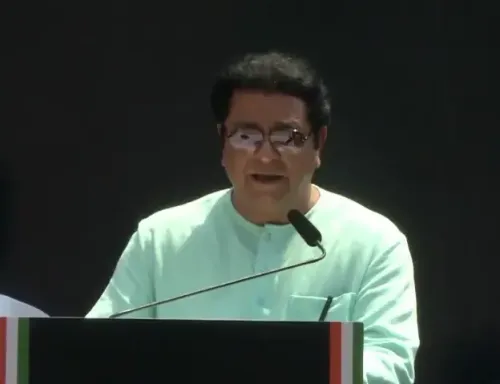
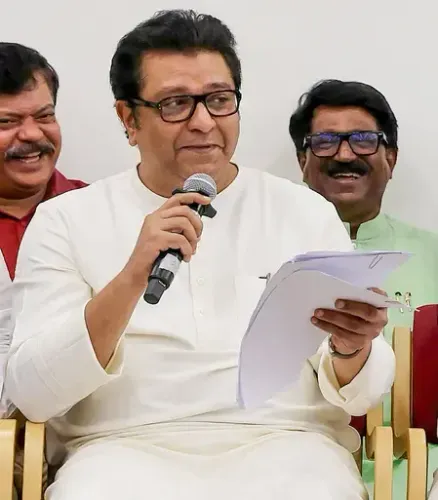
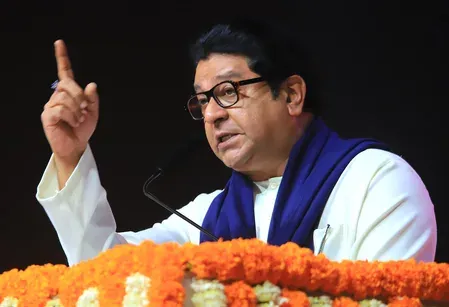
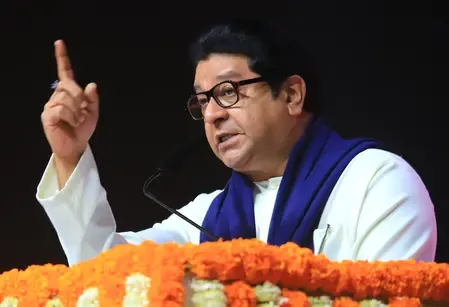
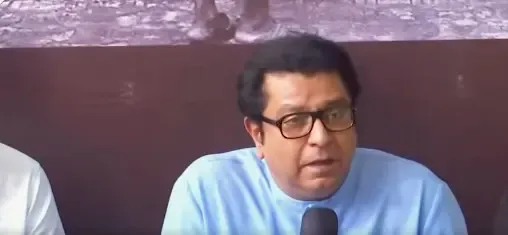
Maharashtra Navnirman Sena (MNS) chief Raj Thackeray on Wednesday, 21 October, launched a sharp broadside against the Central government in Mumbai, endorsing Shiv Sena-UBT MP Sanjay Raut's prediction of a major political upheaval within the next two to five months and renewing his longstanding demand to replace Electronic Voting Machines (EVMs) with traditional ballot papers. The remarks, made to reporters, marked one of Thackeray's most expansive and direct attacks on the ruling dispensation in recent memory.
The EVM Debate: A Demand Since 2018
Thackeray said he has been advocating ballot-paper voting since 2018, arguing that voters deserve both transparency and what he described as the 'psychological satisfaction' of watching their vote physically drop into a box. He cited international precedent, noting that countries including France, Pakistan, Bangladesh, Nepal, and Sri Lanka use ballot papers.
'Since 2018, I have been continuously striving for voting to take place via ballot paper, and I even met with election commissioners to discuss this,' he said. 'You must get satisfaction from the vote you cast. You need the reassurance that your vote has actually gone into the ballot box; winning and losing are separate matters.'
On France specifically, he remarked: 'In France, voting machines were scrapped and they reverted to ballot papers. Looking at those photos brings back old memories. Even if counting takes four days, what does it matter? Who is in a hurry?'
Political Upheaval Prediction
Endorsing Raut's assessment, Thackeray went further, warning that 'something major and disruptive' would unfold in the country within the next two to five months — 'to the extent that there might not even be a Prime Minister for the nation.' He attributed this to what he characterised as a series of critical missteps by the Union government.
'The Central government will continue to make mistakes, and this cycle won't stop. I won't be surprised if the country ends up on the streets in the coming years,' he said. He also alluded to unspecified international controversies, stating that 'photographs alongside Epstein have surfaced, and many more things are going to come out.'
On Crime, Gangsters and Policing
Turning to law and order, Thackeray expressed concern over rising crime and targeted gangster Lawrence Bishnoi, currently lodged in Sabarmati jail in Gujarat. While expressing confidence in Mumbai and Maharashtra Police, he argued that criminals like Bishnoi should be 'pulled out of jail and beaten publicly' to restore deterrence — provided, he said, that law enforcement is given a free hand without political interference.
Democratic Freedoms and the NEET Protests
Thackeray also criticised what he called the censorship of documentaries on prominent figures and questioned the neutrality of autonomous institutions and the judiciary. He contended that 'true democracy thrives in nations like the US, whereas freedom of expression is heavily curtailed in India.'
On the NEET protests, he defended student demonstrators, saying: 'You cane-charged children who were protesting peacefully; those kids hadn't done anything. Has the Bharatiya Janata Party (BJP) forgotten its old days?' He argued that the agitations reflected deeper systemic frustrations — citing a drought declared in the state and foodgrain shortages — that the current administration would struggle to contain.
Thackeray also claimed that BJP's sweeping 2014 victory was driven by Prime Minister Narendra Modi personally rather than the Rashtriya Swayamsevak Sangh (RSS), adding that power ultimately rests with India's citizens. Whether his warnings of imminent political turbulence gain traction will likely depend on how the Central government handles the string of pressures — economic, civic, and political — building ahead of upcoming state and national cycles.
Point of View
And Thackeray signals relevance ahead of any realignment. The EVM demand, now a staple of opposition rhetoric across parties, functions primarily as a trust-deficit proxy rather than a technical argument. The more revealing moment was his NEET commentary: invoking peaceful student protesters and a state drought in the same breath as 'no Prime Minister' signals that he is trying to connect elite political grievance to mass-level frustration — a harder case to make from a party that has limited grassroots reach.
NationPress
21 Oct 2026
Frequently Asked Questions
What did Raj Thackeray say about a political upheaval in India?
Raj Thackeray on 21 October 2026 backed Shiv Sena-UBT MP Sanjay Raut's prediction that a major political upheaval would occur within two to five months. He went further, warning that the country might soon be without a Prime Minister, attributing this to what he described as repeated missteps by the Central government.
Why is Raj Thackeray demanding a return to ballot papers?
Thackeray has been demanding the abolition of EVMs since 2018, arguing that voters need the 'psychological satisfaction' of physically placing a vote in a ballot box. He cited France's return to paper ballots and the continued use of ballot papers in Pakistan, Bangladesh, Nepal, and Sri Lanka as justification.
What did Thackeray say about gangster Lawrence Bishnoi?
Thackeray expressed concern over rising crime and said that criminals like Bishnoi, currently lodged in Sabarmati jail in Gujarat, should be 'pulled out of jail and beaten publicly' to restore deterrence. He stated this should happen only if law enforcement is given a free hand without political interference, while expressing full faith in Mumbai and Maharashtra Police.
How did Thackeray react to the NEET protests?
Thackeray defended the student protesters, criticising the government for baton-charging what he described as peaceful demonstrators. He argued that the protests reflected deeper systemic frustration among citizens, compounded by a state drought and foodgrain shortages that he said are beyond the current government's capacity to handle.
What is Raj Thackeray's position on BJP and Prime Minister Modi?
Thackeray argued that BJP's sweeping 2014 electoral victory was driven by Narendra Modi personally, not by the RSS. He maintained that ultimate power in a democracy rests with citizens, and warned that public discontent — as seen during the NEET protests — could fuel significant political consequences in the months ahead.