CM Saini Targets Hooda Over Contract Labour Exploitation
Synopsis
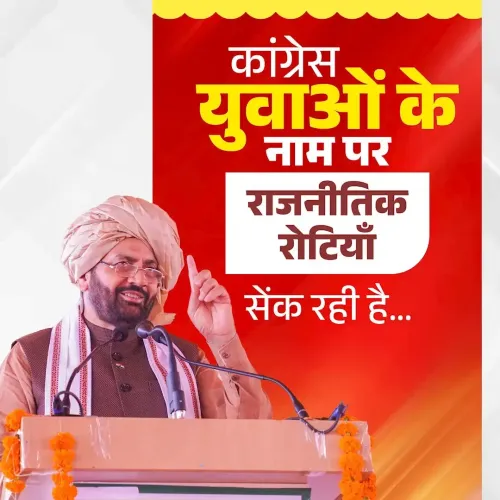
Haryana CM Nayab Singh Saini publicly accused former CM Bhupinder Singh Hooda of exploiting youth through the contract labour system, using a pointed Hindi idiom to demand self-reflection from the Congress veteran ahead of Independence Day 2026.
Key Takeaways
Haryana CM Nayab Singh Saini attacked former CM Bhupinder Singh Hooda on 14 August 2026 over contract labour exploitation of youth.
Saini used the Hindi idiom girebaan mein jhaankna (look into one's own collar) to demand accountability from Hooda.
Hooda served as Haryana Chief Minister for two terms from 2005 to 2014 under the Congress.
The 'thekedaree pratha' (contractor system) denies workers permanent status, job security, and equal pay — a long-standing grievance in Haryana.
The exchange is part of a recurring BJP-Congress battle over youth employment in Haryana, with both parties using contractual hiring as a political weapon.
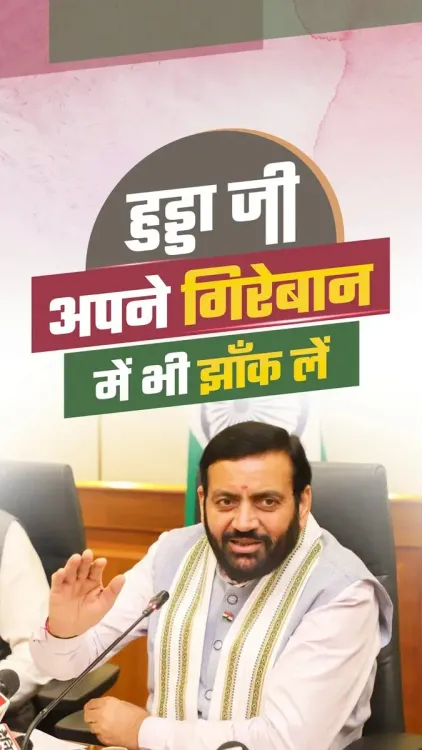
A sharp political jab landed in Haryana's public square on Friday, 14 August 2026, when Haryana Chief Minister Nayab Singh Saini turned the tables on former Chief Minister Bhupinder Singh Hooda, accusing him of exploiting youth through the contract labour system — and telling him to look inward before pointing fingers.
Posting in Hindi on X, CM Saini wrote: 'Thekedaree pratha ke madhyam se yuvaon ka shoshan karne wale Hooda ji, apne girebaan mein bhi jhaankein' — 'Hooda ji, who exploited youth through the contract labour system, should also look into his own collar.' The phrase girebaan mein jhaankna — to look into one's own collar — is a pointed Hindi idiom for self-examination, and its use here is deliberate: a demand for accountability directed squarely at the Congress veteran.
Hooda's Record and the Contract Labour Fault Line
Bhupinder Singh Hooda served as Chief Minister of Haryana for two consecutive terms, 2005 to 2014, under the Indian National Congress. Contractual and outsourced hiring in government departments expanded significantly across India during that era, and Haryana was no exception. The 'thekedaree pratha' — the contractor system — refers to the practice of engaging workers through third-party contractors rather than as permanent government employees, a model widely criticised for denying workers job security, equal pay, and statutory benefits.
That criticism has been bipartisan and cyclical: whichever party sits in opposition tends to weaponise it against the ruling dispensation. CM Saini, who assumed office in 2024 as the BJP's choice to lead Haryana, is now flipping the script — framing Hooda not as the critic of exploitative hiring but as its architect.
BJP vs Congress: Haryana's Employment Battle Heats Up
Youth unemployment and precarious government jobs are perennial flashpoints in Haryana, a state where competition for public-sector positions is intense and contractual posts are a recurring grievance. The timing of Saini's post — on the eve of Independence Day — adds a layer of political symbolism: a reminder, directed at the opposition, of who the BJP holds responsible for the state's labour vulnerabilities.
Congress has not yet issued a formal response to this specific remark. But the exchange fits a well-worn pattern in Haryana politics: the BJP pointing to the Congress decade in power, and Congress countering with present-day governance failures. The contract labour question, caught between both narratives, remains unresolved for the young workers at its centre.
The real audience for this exchange is not Hooda — it is Haryana's youth, and both parties know it.
Point of View
Making it endlessly exploitable by whichever party is out of power. Until concrete regularisation or reform is legislated, this particular argument will keep circling.
NationPress
28 Sept 2026
Frequently Asked Questions
What did Haryana CM Nayab Singh Saini say about Bhupinder Singh Hooda?
CM Saini accused Hooda of exploiting Haryana's youth through the contract labour (thekedaree) system and told him to introspect before criticising others.
What is the 'thekedaree pratha' that Saini referred to?
'Thekedaree pratha' means the contractor system — hiring workers through third-party contractors instead of as permanent employees, denying them job security and equal benefits.
When did Bhupinder Singh Hooda serve as Haryana Chief Minister?
Hooda served as Haryana Chief Minister for two terms under the Congress from 2005 to 2014.
Why is contract labour a political issue in Haryana?
Haryana has intense competition for government jobs, and contractual hiring is a major grievance among youth who lack permanent status, fair pay, and statutory protections.
Has Congress responded to Saini's remarks?
No formal Congress response to this specific remark has been recorded; the exchange is part of the ongoing BJP-Congress political rivalry over Haryana's youth employment record.