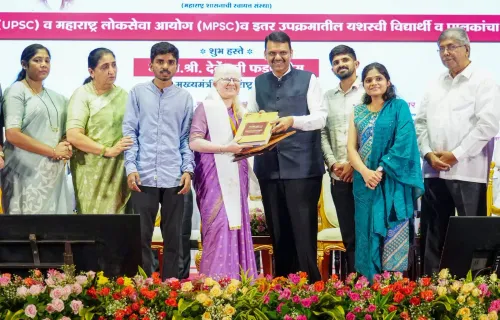
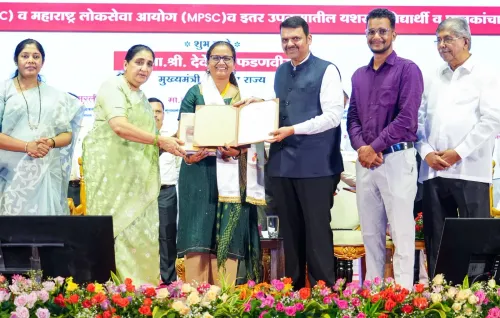
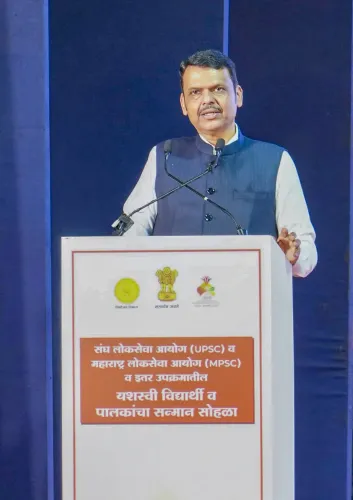
CM Fadnavis: Sarthi trains 2 lakh youth in Maharashtra
Synopsis
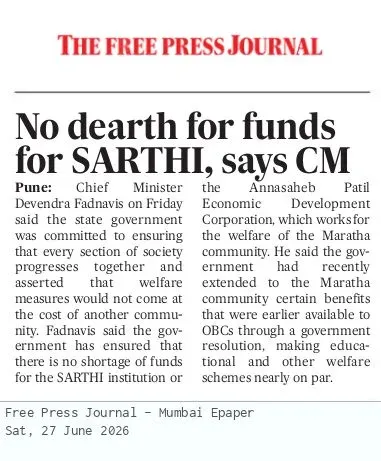
The Chief Minister's Office of Maharashtra announced on 27 June 2026 that the Sarthi scheme has trained 2 lakh youth and rendered 13,000 students employment-ready through special initiatives, highlighting CM Devendra Fadnavis's skilling push in the state.
Key Takeaways
The Chief Minister's Office of Maharashtra posted on 27 June 2026 highlighting achievements of the Sarthi scheme.
2 lakh youth have received training through the Sarthi programme.
13,000 students have been made employment-ready through special initiatives under the scheme.
The announcement credits Chief Minister Devendra Fadnavis for the programme's expansion and outcomes.
Sarthi aligns with the national Skill India mission and has been a flagship welfare initiative of BJP-led governments in Maharashtra .
Future budget allocations in the state legislature and periodic placement reports will determine the scheme's next phase of growth.
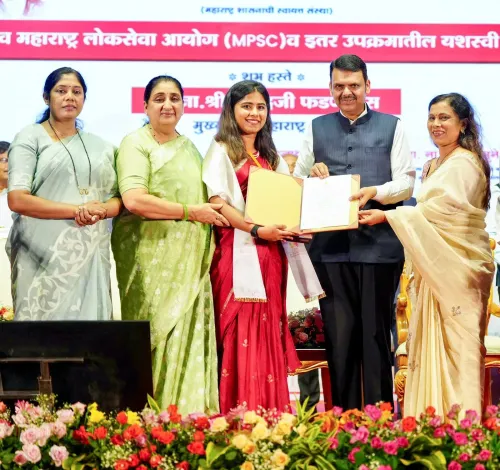
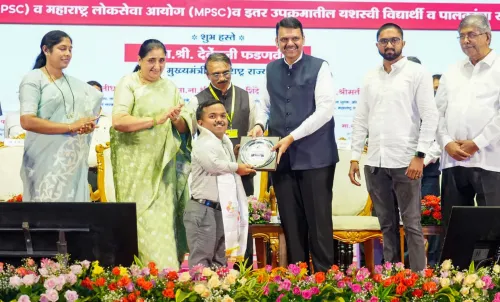
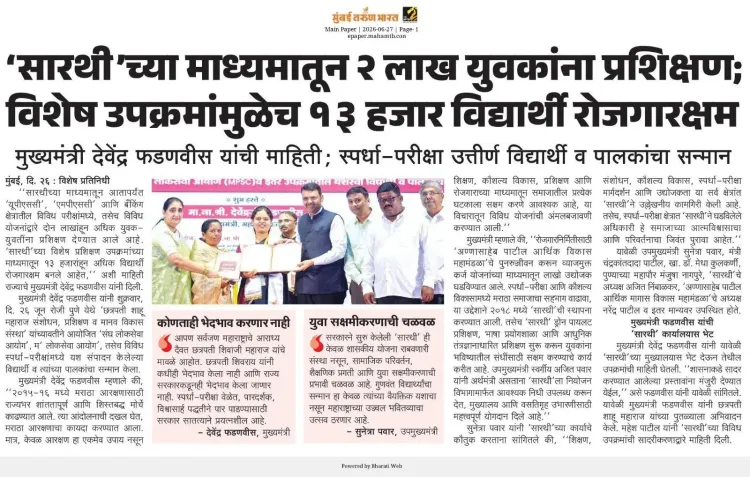
The Chief Minister's Office of Maharashtra shared on Saturday, 27 June 2026 that the state government's Sarthi scheme has trained 2 lakh youth, with special initiatives making 13,000 students employment-ready, crediting Chief Minister Devendra Fadnavis for the programme's reach.
The post, written in Marathi, states: 'सारथीच्या माध्यमातून 2 लाख युवकांना प्रशिक्षण; विशेष उपक्रमांमुळेच 13 हजार विद्यार्थी रोजगारक्षम' — translated as 'Training for 2 lakh youth through Sarthi; 13,000 students made employment-ready through special initiatives.'
Context
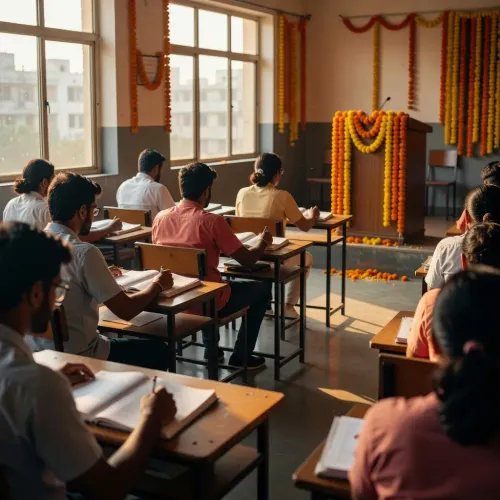
Sarthi (Saarthi) is a Maharashtra government skilling and welfare programme that has been promoted under the Fadnavis administration to enhance employability among the state's youth. The scheme operates through structured vocational training modules and targeted outreach to students from underserved communities.
The announcement underscores the government's focus on quantifiable outcomes — specifically the number of trainees and those assessed as job-ready — as a measure of governance delivery in the employment sector.
Policy Backdrop
Maharashtra has aligned its skilling agenda with the national Skill India mission since 2014, when Devendra Fadnavis first assumed office as Chief Minister. Successive state budgets have earmarked funds for vocational training infrastructure, placement facilitation, and industry linkages.
BJP-led governments in the state have repeatedly spotlighted measurable training outputs — trainee counts, placement rates, and sector-wise certifications — as evidence of effective governance in addressing youth unemployment, a persistent concern in both urban and rural Maharashtra.
Stakeholders and Impact
The primary beneficiaries of Sarthi are young people — particularly students — seeking structured pathways into formal employment. The figure of 13,000 students deemed employment-ready through 'special initiatives' suggests a subset of the broader trainee pool received more intensive or sector-specific preparation.
Employers, vocational training partners, and educational institutions form the secondary stakeholder ring, as the scheme's success depends on industry absorption of certified candidates. Youth from Maharashtra's Scheduled Castes and Other Backward Classes communities have historically been among Sarthi's target groups.
What's Next
Observers will watch for the release of detailed progress reports on Sarthi placements, including sector-wise breakdowns and post-training income data, which would allow independent assessment of the scheme's impact beyond headline numbers.
Any revision to Sarthi's budget allocation in the upcoming Maharashtra state legislative session will be a key signal of the government's commitment to scaling the programme further, particularly as youth unemployment remains a politically sensitive issue ahead of local body elections.
Point of View
000 employment-ready students' alongside the broader '2 lakh trained' figure is a deliberate rhetorical move: it distinguishes training volume from placement-quality outcomes, pre-empting criticism that skilling schemes produce certificates rather than jobs. For Fadnavis, Sarthi serves as a tangible proof-point in the BJP's broader narrative of welfare delivery to OBC and SC youth communities in the state. The real test will come when independent audits or legislative questions probe the quality and sustainability of those 13,000 placements.
NationPress
25 Sept 2026
Frequently Asked Questions
What is the Sarthi scheme in Maharashtra?
Sarthi is a Maharashtra government programme focused on skill development and vocational training for youth, particularly targeting students from underserved communities to enhance their employability and connect them with formal employment opportunities.
How many youth have been trained under Sarthi?
According to the Chief Minister's Office of Maharashtra, 2 lakh youth have been trained under the Sarthi scheme, with 13,000 students made employment-ready through special initiatives.
Who is overseeing the Sarthi scheme in Maharashtra?
The Sarthi scheme is being promoted under the leadership of Chief Minister Devendra Fadnavis , who has championed skill development and vocational training programmes across his tenures as Maharashtra's Chief Minister.
Is Sarthi linked to the national Skill India mission?
Yes, Maharashtra's skilling initiatives including Sarthi broadly align with the national Skill India mission launched in 2014, with the state government integrating its own welfare and training programmes into the larger national framework.
What does 'employment-ready' mean under the Sarthi scheme?
'Employment-ready' under Sarthi refers to students who have completed special initiatives within the programme that go beyond basic training — such as sector-specific certification or placement preparation — making them directly eligible for formal employment.