Would Bharat Ratna for Savarkar Enhance the Award's Prestige?
Synopsis
RSS chief Mohan Bhagwat advocates for awarding the Bharat Ratna to Veer Savarkar, stating it would elevate the award’s significance. With ongoing political debates surrounding Savarkar's legacy, this conversation reveals the intersection of history and honor in contemporary India. Explore Bhagwat's insights and the implications of such recognition.
Key Takeaways
Mohan Bhagwat advocates for Bharat Ratna for Savarkar .
The award's recognition is seen as a potential enhancement.
Political divides exist regarding Savarkar's legacy.
RSS focuses on values over aggressive campaigning.
Emphasis on preserving native languages alongside English proficiency.
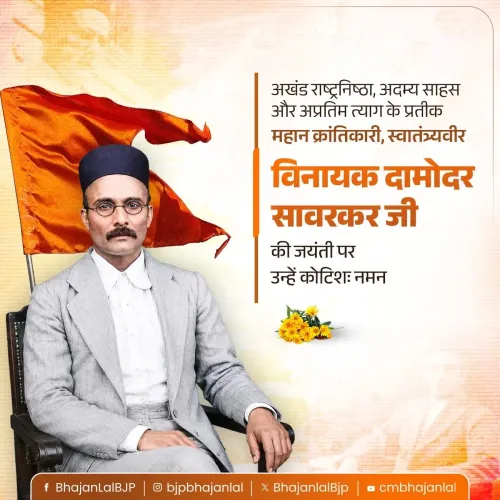
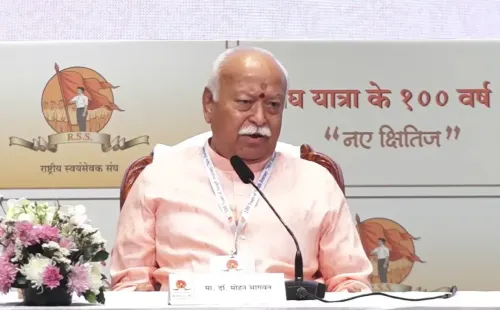
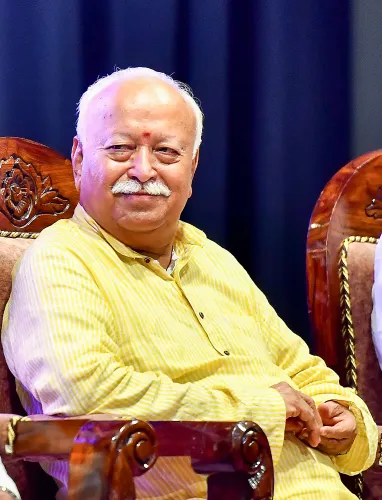
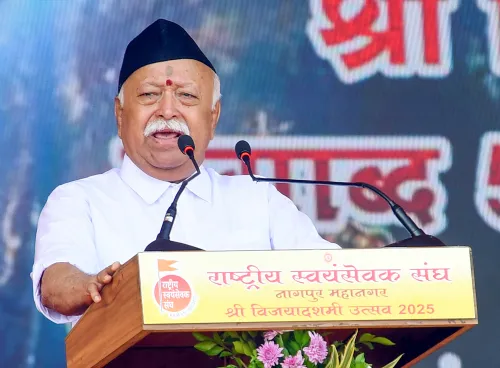
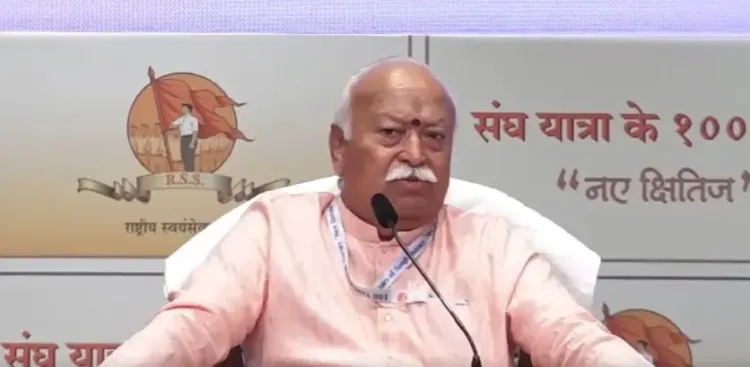
Mumbai, Feb 8 (NationPress) The chief of Rashtriya Swayamsevak Sangh (RSS), Mohan Bhagwat, stated on Sunday that awarding the Bharat Ratna to Vinayak Damodar Savarkar, widely known as Veer Savarkar, would be a significant honour for the award itself. He emphasized that this Hindutva ideologue enjoys vast public admiration.
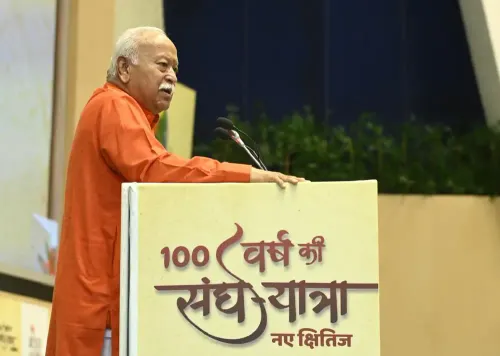
Bhagwat expressed these thoughts during an event titled ‘100 Years of Sangh Journey – New Horizons’ held in Mumbai.
Regarding the perceived “delay” in awarding Savarkar, he commented, “I am not on that committee, but I would inquire about the reasons for the delay if I had the chance. Granting Savarkar the Bharat Ratna would enhance the award’s prestige, and he already commands the affection of the public without any formal recognition.”
The call for Savarkar to receive the Bharat Ratna has been a persistent political topic.
Numerous leaders and organizations have advocated for the nation’s highest civilian honour to be awarded to Savarkar, while the Congress party has vehemently opposed such considerations, labeling him a “traitor” due to his mercy petitions to British authorities during his imprisonment within the freedom struggle.
The Bharatiya Janata Party (BJP) and Shiv Sena have consistently shown support for conferring the Bharat Ratna upon Savarkar, citing his roles as a freedom fighter, writer, and social reformer.
During his speech at the event, Bhagwat also elaborated on the organizational philosophy of the RSS, highlighting that the Sangh prioritizes instilling sanskar or values rather than engaging in aggressive campaigning.
“Overzealous campaigning leads to publicity that can foster arrogance. One must guard against it. Publicity should be like rain: timely and sufficient,” Bhagwat remarked, noting that the RSS has been expanding its outreach efforts recently.
Bhagwat also discussed the use of language within the RSS, asserting that English would not be the primary medium of communication for the organization as it is not an indigenous tongue.
He clarified that while English is utilized when necessary, it is not central to the Sangh’s communication methods.
“We aim to collaborate with Indian individuals. We are open to using English wherever it is necessary,” he stated.
He further emphasized the importance of mastering language skills, encouraging individuals to speak English proficiently.
“People should communicate in English in a manner that captivates native speakers,” Bhagwat added.
Simultaneously, he stressed the need to preserve local languages, stating, “We should excel in English, but this should not come at the expense of our mother tongue.”
Reflecting on a prior discussion in Bengaluru, Bhagwat noted that representatives from various southern states encountered challenges in understanding Hindi during conversations.
He shared that he had addressed their questions in English to facilitate effective communication, showcasing the organization’s practical approach to language use.
Point of View
It is vital to recognize that the discussion surrounding Savarkar and the Bharat Ratna encapsulates a larger narrative about India's historical figures and their legacies. The RSS's call for recognition reflects a segment of the population's sentiments, while opposition highlights the complexities of India's freedom struggle. Navigating these discussions thoughtfully is essential in representing the diverse perspectives within the nation.
NationPress
5 Oct 2026
Frequently Asked Questions
Why is Savarkar significant in Indian history?
Savarkar is recognized as a prominent freedom fighter and ideologue of Hindutva. His contributions to the independence movement and writings have sparked both admiration and controversy.
What is the Bharat Ratna award?
The Bharat Ratna is India’s highest civilian award, recognizing exceptional service and achievements in various fields.
What are the criticisms against Savarkar?
Critics, particularly from the Congress party, label him a 'traitor' for his petitions to the British during his imprisonment, which is a point of significant contention.
How has the political landscape reacted to the Bharat Ratna proposal for Savarkar?
Political reactions are divided, with parties like BJP and Shiv Sena supporting the award, while Congress and its allies oppose it, reflecting broader ideological divides.
What did Bhagwat say about the use of English in RSS?
Bhagwat emphasized that while English is used when necessary, it will not become the primary language for communication within the RSS, as it is not considered indigenous.