Sawan Monday meets Nag Panchami: Devotees throng Shiva temples across Delhi, UP, Punjab
Synopsis
A rare triple confluence — Sawan Monday, Nag Panchami, and Sankranti — turned 17 August into one of the most crowded temple days of the year, with lakhs braving rain in Varanasi and two-hour queues in Amritsar. The overlap of two major Shaivite observances on a single day amplified religious footfall across Delhi, UP, and Punjab simultaneously.
Key Takeaways
The third Sawan Monday fell on 17 August , coinciding with Nag Panchami and, in Amritsar, Sankranti .
Gauri Shankar Temple in Chandni Chowk and the Shiva Temple in Connaught Place saw heavy footfall in Delhi.
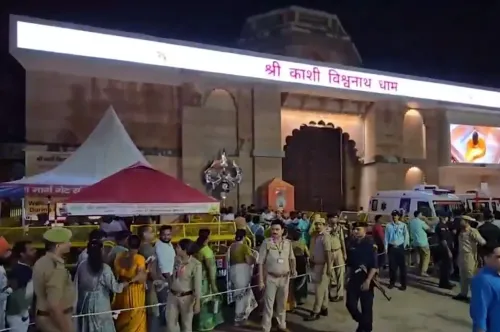
Lakhs of devotees gathered at Shri Kashi Vishwanath Dham in Varanasi despite rain; drone surveillance and police deployed for crowd management.
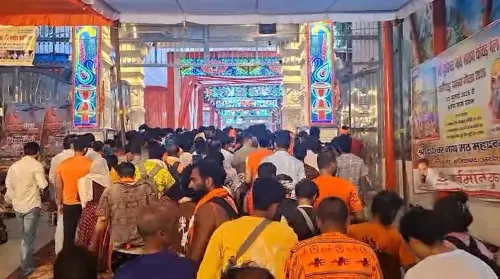
Devotees at Shivala Bagh Bhaiyan Temple , Amritsar , reportedly waited up to two hours for darshan.
Dudheshwar Nath Temple in Ghaziabad also recorded significant footfall, with early-morning Jalabhishek rituals.
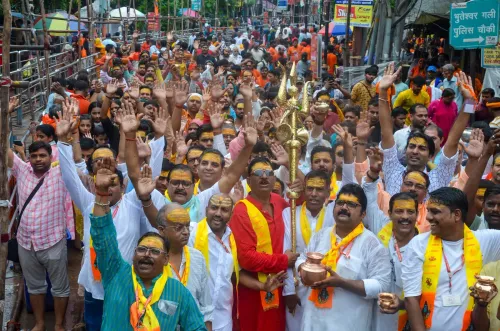
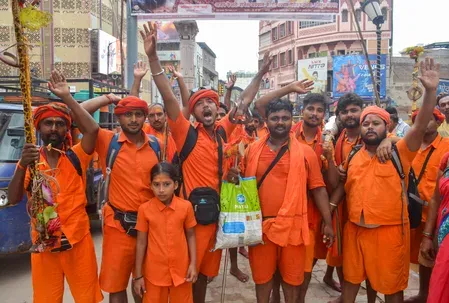
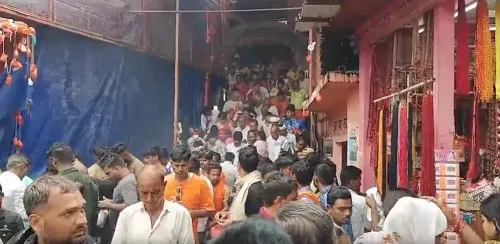
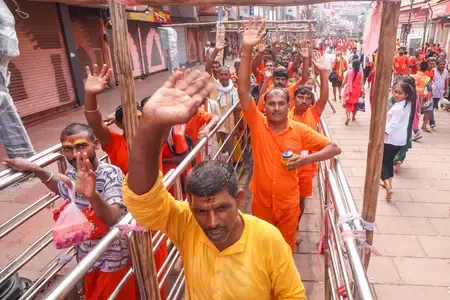
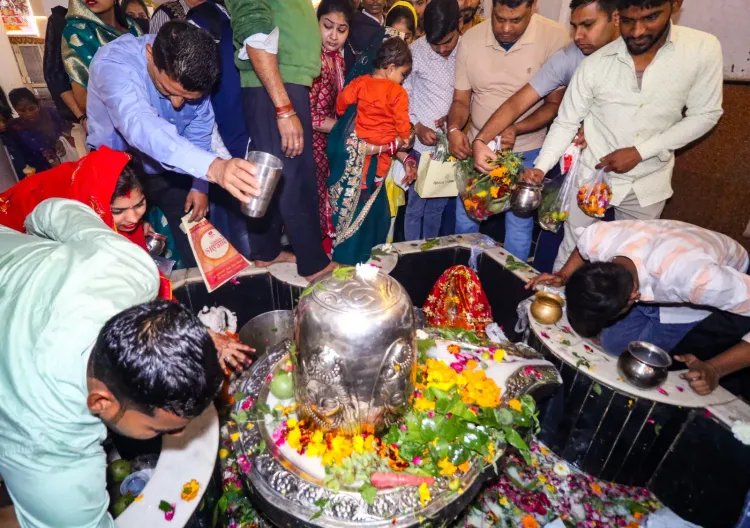
Thousands of devotees gathered at Shiva temples across Delhi, Uttar Pradesh, and Punjab on 17 August as the third Sawan Monday coincided with Nag Panchami, drawing some of the largest temple crowds of the monsoon season. Worshippers arrived before dawn to perform Jalabhishek and seek the blessings of Lord Shiva, with long queues reported at multiple shrines.
Chandni Chowk and Connaught Place See Heavy Footfall
At the ancient Gauri Shankar Temple in Chandni Chowk, a steady stream of devotees marked the dual occasion with prayers and rituals. 'It feels really good to be here. Today is also Nag Panchami, and this is a very ancient temple. We are very happy to have come here and offer prayers,' said one worshipper at the site.
Another devotee noted that the convergence of Nag Panchami with Sawan Monday had amplified the religious significance of the day, adding that she visits every Monday during the Sawan month. A large crowd was also recorded at the Shiva Temple in Connaught Place, where devotees gathered to perform prayers and seek blessings on the third Monday of the month.
Ghaziabad and Varanasi Report Lakh-Strong Gatherings
In Ghaziabad, Uttar Pradesh, worshippers descended on the Dudheshwar Nath Temple from early morning, performing Jalabhishek and offering prayers in large numbers. The temple witnessed significant footfall throughout the day.
Religious fervour peaked at Shri Kashi Vishwanath Dham in Varanasi, where lakhs of devotees braved rain to queue for darshan and offer water to Baba Vishwanath. Authorities deployed extensive security arrangements, including police personnel and drone surveillance, to manage the crowds.
Triple Confluence Draws Crowds in Amritsar
In Amritsar, Punjab, the Shivala Bagh Bhaiyan Temple saw an especially large turnout as Sawan Monday coincided with both Nag Panchami and Sankranti — a rare triple convergence. Devotees reportedly waited up to two hours in queues that formed from early morning. Worshippers observed fasts, offered prayers at the Shivling, and participated in various religious rituals throughout the day.
Significance of the Day
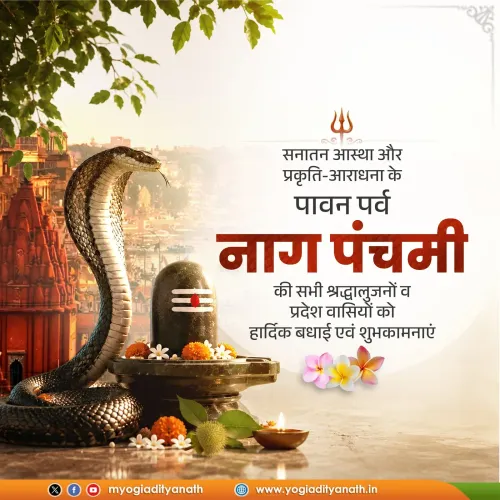
The month of Sawan (also known as Shravan) is considered the most sacred period of the Hindu calendar for devotees of Lord Shiva. Mondays during Sawan — known as Sawan Somvar — are traditionally marked by fasting, Jalabhishek, and temple visits. Nag Panchami, the festival venerating serpents, holds particular importance when it falls on a Sawan Monday, as serpents are closely associated with Lord Shiva's iconography. This year's overlap drew devotees who saw the combination as especially auspicious. The remaining Mondays of the Sawan month are expected to see similar or larger gatherings.
Point of View
But the scale of turnout this year — lakhs in rain-soaked Varanasi, two-hour queues in Amritsar — points to a deepening of public religious participation that administrators and urban planners are still catching up with. Drone surveillance and heavy police deployment at Kashi Vishwanath reflect a post-2021 infrastructure upgrade at major shrines, but mid-tier temples in Delhi and Ghaziabad continue to manage massive crowds with minimal formal systems. As pilgrimage numbers grow, the gap between devotional demand and crowd-safety infrastructure is worth watching.
NationPress
1 Oct 2026
Frequently Asked Questions
Why was 17 August 2025 considered especially auspicious for Shiva devotees?
The day marked the third Sawan Monday of the month, which coincided with Nag Panchami — a festival venerating serpents closely linked to Lord Shiva's iconography. In Amritsar, Sankranti also fell on the same date, making it a rare triple convergence that drew unusually large crowds.
Which temples saw the largest crowds on Sawan Monday and Nag Panchami?
Shri Kashi Vishwanath Dham in Varanasi reported lakh-strong gatherings despite rain, while Shivala Bagh Bhaiyan Temple in Amritsar saw queues of up to two hours. In Delhi, Gauri Shankar Temple in Chandni Chowk and the Shiva Temple in Connaught Place also witnessed heavy footfall.
What is Jalabhishek and why is it performed during Sawan?
Jalabhishek is the ritual of pouring water — often from the Ganga — over the Shivling as an act of devotion to Lord Shiva. It is considered especially meritorious during the Sawan month, which is regarded as the holiest period of the Hindu calendar for Shiva worshippers.
What security arrangements were made at Varanasi's Kashi Vishwanath Dham?
Authorities deployed police personnel and drone surveillance at Shri Kashi Vishwanath Dham to manage the lakh-strong crowd that gathered on 17 August despite rainfall. Extensive crowd-management measures were put in place for the occasion.
What is Nag Panchami and how does it relate to Sawan?
Nag Panchami is a Hindu festival dedicated to the worship of serpents, observed on the fifth day of the bright fortnight in the Sawan month. Its significance is heightened when it coincides with a Sawan Monday, as serpents hold a sacred place in Shaivite tradition — Lord Shiva is depicted wearing a cobra around his neck.