SBI waives ATM fees Sep 28-30 amid nationwide bank strike
Synopsis
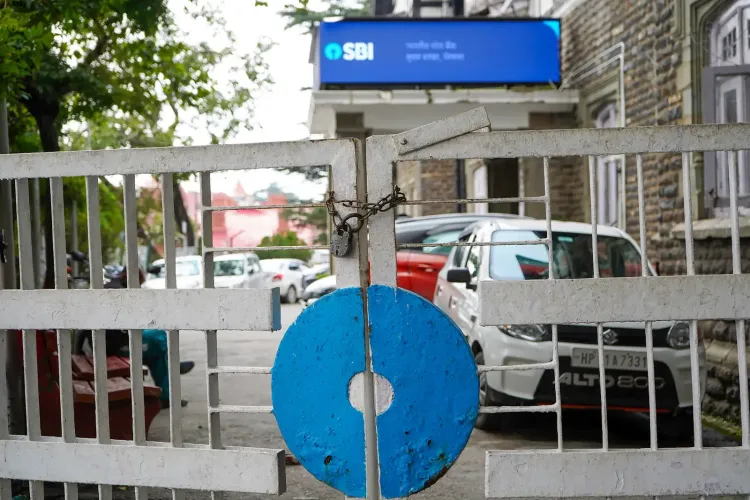
With a five-day banking blackout looming — thanks to a weekend bookending a three-day UFBU strike — SBI has zeroed out ATM charges for 28-30 September and the government has ordered all public sector banks to open on Sunday. The pre-emptive move is a rare same-day policy intervention, and it still hinges on whether unions call off the strike before it begins.
Key Takeaways
SBI has waived all ATM transaction charges at any bank's ATM from 28 to 30 September 2026 during the proposed UFBU nationwide bank strike .
All SBI branches will remain open on Sunday, 27 September ; UPI , IMPS , NEFT , and RTGS will function normally throughout.
The Finance Ministry has directed all public sector banks and Regional Rural Banks to operate normally on Sunday, 27 September .
The RBI has approved full operations for all branches, offices, ATM-linked branches, and Currency Chests on that day.
Without intervention, the strike timing — overlapping with 26-27 September weekend holidays — would have caused five consecutive days of banking disruption.
The government and bank managements have appealed to the UFBU to defer the proposed strike.
The State Bank of India (SBI) on Friday, 25 September 2026, announced it will waive all ATM transaction charges from 28 to 30 September to cushion customers against disruption during the proposed three-day nationwide bank strike called by the United Forum of Bank Unions (UFBU). The move ensures customers can withdraw cash and carry out ATM-based transactions at any bank's ATM without incurring any fee during the strike window.
What SBI Has Announced
In a post on social media platform X, SBI confirmed that its banking services would remain accessible throughout the proposed strike period. The bank stated that the waiver covers transactions at ATMs of all banks — not just SBI machines — offering broader relief to account holders across institutions.
Beyond the ATM fee waiver, SBI said all its branches will remain open on Sunday, 27 September, a day otherwise designated as a holiday. Digital payment channels — including UPI, IMPS, RTGS, and NEFT — will continue to function normally throughout the strike period.
Government Steps In to Limit Disruption
The Finance Ministry has directed all public sector banks and Regional Rural Banks (RRBs) to operate normally on Sunday, 27 September. The Reserve Bank of India (RBI) has granted approval for all bank branches, offices, ATM-linked branches, and Currency Chests to remain fully operational on that day.
In a formal statement, the Finance Ministry said: 'In view of the proposed three-day nationwide bank strike called by the United Forum of Bank Unions (UFBU) from September 28 to 30, coinciding with the preceding weekend holidays of September 26 and 27, the government has taken proactive steps to safeguard the banking needs of citizens.'
The ministry added that the welfare and convenience of bank customers remain the government's foremost priority, and both the government and bank managements have appealed to the unions to defer the proposed strike.
Why the Timing Makes This Strike Unusually Disruptive
The UFBU strike is scheduled to begin on 28 September, a Sunday, and run through 30 September, a Tuesday. Since 26 and 27 September — Saturday and Sunday — are already bank holidays, the combined effect would have meant five consecutive days of banking disruption had no corrective steps been taken. The government's directive to keep banks open on Sunday, 27 September effectively breaks that stretch, limiting the uninterrupted closure window.
This is not the first time the UFBU has called a nationwide strike; the forum, which represents multiple bank employee and officer unions, has historically used strike action to press demands on wages, pension, and staffing norms. The government's pre-emptive response — directing banks to open on a rest day and getting the RBI to green-light branch operations — signals the administration's intent to prevent even a two-day service gap from compounding into a prolonged economic disruption.
What Customers Should Know
Customers need not rush to ATMs or bank branches before the weekend. ATM transactions will carry no charges from 28 to 30 September at ATMs of any bank. Digital transfers via UPI, NEFT, RTGS, and IMPS will be unaffected. Physical branch services, however, may still face partial disruption if a significant share of staff participates in the strike, and customers requiring specialised in-branch services are advised to plan accordingly.
All eyes are now on whether the UFBU will heed the government's appeal to call off or defer the strike before 28 September.
Point of View
But it sidesteps the underlying question: why are bank unions striking at all? The UFBU's grievances on wages, pensions, and staffing have persisted across multiple strike cycles without a durable resolution. Waiving ATM fees and keeping branches open reduces the immediate sting for customers but does nothing to close that negotiating gap. If the strike proceeds as planned, the real test will be participation rates — and whether partial disruption in specialised services exposes how thin the 'business as usual' assurance actually is.
NationPress
25 Sept 2026
Frequently Asked Questions
Will ATM transactions be free during the bank strike from September 28 to 30?
Yes. SBI has waived all ATM transaction charges from 28 to 30 September 2026, covering transactions at ATMs of any bank, not just SBI machines. Customers will not be billed for cash withdrawals or other ATM-based transactions during this period.
Which banks will remain open on Sunday, September 27?
All public sector banks and Regional Rural Banks will function normally on Sunday, 27 September, following a directive from the Finance Ministry. The RBI has separately approved full operations for all branches, offices, ATM-linked branches, and Currency Chests on that day.
Why has the UFBU called a nationwide bank strike from September 28 to 30?
The United Forum of Bank Unions (UFBU) has called a three-day nationwide strike starting 28 September 2026. The specific demands have not been detailed in official statements, but UFBU strikes have historically centred on wage revision, pension improvements, and staffing concerns. Both the government and bank managements have appealed to the unions to defer the action.
Will digital payments like UPI and NEFT work during the bank strike?
Yes. Online and digital payment facilities — including UPI, IMPS, RTGS, and NEFT — will continue to operate as usual throughout the strike period from 28 to 30 September 2026.
How many days of banking disruption could the strike cause in total?
Without government intervention, the UFBU strike from 28-30 September, combined with the preceding weekend holidays on 26 and 27 September, would have meant five consecutive days of disrupted banking. The government's directive to open banks on Sunday, 27 September, has broken that stretch, reducing the effective disruption window.