Rajnath Singh: Press credibility is democracy's greatest asset
Synopsis
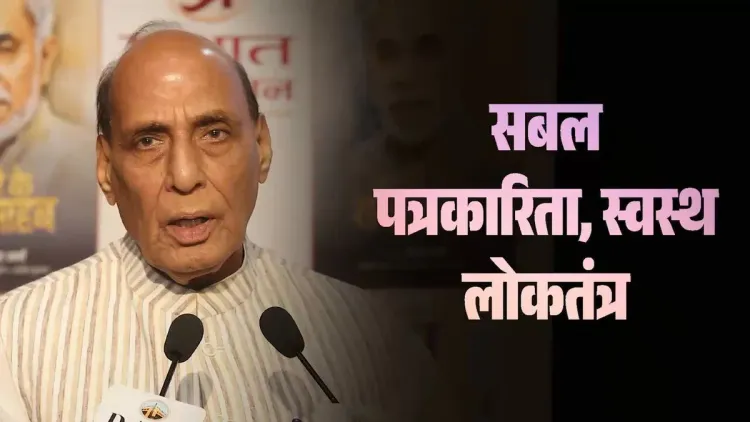
Union Defence Minister Rajnath Singh declared on September 25, 2026, that journalism is democracy's vigilant guardian, naming credibility as the press's greatest strength and linking fearless reporting directly to the health of Indian democracy.
Key Takeaways
Union Defence Minister Rajnath Singh posted a statement on September 25, 2026 , defining journalism as 'the vigilant guardian of democracy.' He identified credibility — 'विश्वसनीयता' — as the press's single greatest strength and capital.
Singh directly linked a fearless, aware, and empowered press to a healthier and stronger democracy.
He described true journalism as being the trustworthy voice of its time and society , not merely an information conduit.
The remarks carry added weight given Singh's background as former Union Home Minister and former Chief Minister of Uttar Pradesh .
A sentinel, not a messenger — that is how Union Defence Minister Rajnath Singh frames the press in a pointed statement posted on X on Friday, September 25, 2026. In a few sharp lines, India's second-most powerful cabinet member laid out what he believes separates true journalism from mere information delivery.
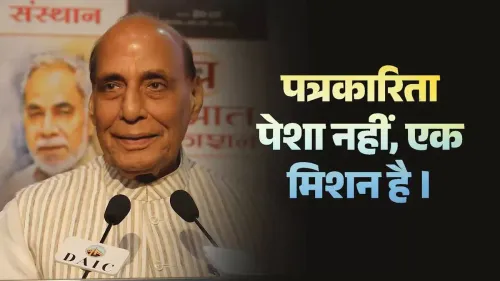
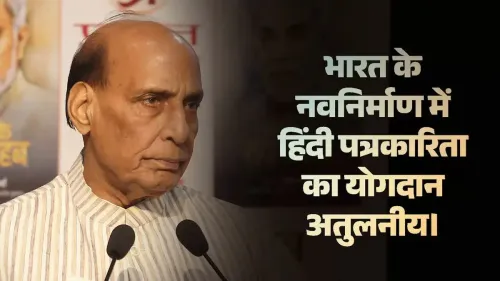
Posting in Hindi, Singh wrote: 'पत्रकारिता केवल सूचना का माध्यम नहीं, लोकतंत्र की सजग प्रहरी है।' — 'Journalism is not merely a medium of information; it is the vigilant guardian of democracy.' He went further, naming 'credibility' as the press's greatest strength and capital, and linking the health of Indian democracy directly to how fearless and empowered its journalists are.
The three qualities Singh demands of journalism
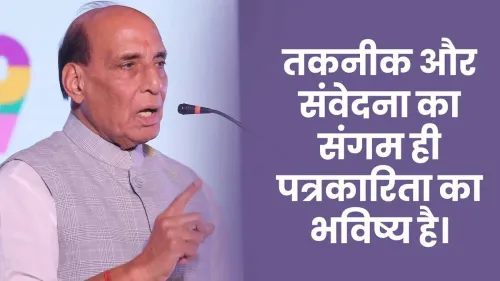
The Defence Minister's formulation was precise. He argued that a journalist who is aware, fearless, and strong directly translates into a democracy that is healthier and more robust — a cause-and-effect chain that places the burden of democratic vitality squarely on the press corps. His phrase 'भरोसेमंद अभिव्यक्ति' — 'trustworthy expression' — positions credibility not as a nice-to-have but as the defining currency of the profession.
A senior BJP voice weighs in on press freedom
Statements affirming the press as a pillar of democracy have a long tradition among Indian ministers across party lines, rooted in the constitutional guarantee of freedom of speech and expression under Article 19. What gives Singh's remarks additional weight is the seniority of the voice: as a former Chief Minister of Uttar Pradesh and former Union Home Minister, Singh has governed both a state and the country's internal-security apparatus, arenas where the relationship between power and the press is rarely uncomplicated.
His framing — that journalism's power flows from trust, not access or proximity to authority — reads as a philosophical statement about the press's independent role, not a government endorsement of any specific media policy or regulation.
For a political class that is routinely scrutinised over press-freedom indices and media regulation debates, a call for a 'fearless and strong' press from within the cabinet is a signal worth reading carefully.
Point of View
Not reach or influence. Coming from a senior BJP minister who has held both the Home Ministry and a major state's chief ministership, the framing implicitly acknowledges that journalism's value is independent of its relationship to those in power. The remarks fit a broader pattern of ruling-party leaders periodically making pro-press statements — yet the explicit call for a 'strong' press also invites scrutiny of whether government policy on media regulation aligns with the rhetoric. Analysts watching India's evolving media landscape will note that the bar Singh sets — aware, fearless, credible — is also the standard by which citizens can hold both the press and its political patrons accountable.
NationPress
25 Sept 2026
Frequently Asked Questions
What did Rajnath Singh say about journalism and democracy?
Singh stated that journalism is not merely a medium of information but the 'vigilant guardian of democracy,' arguing that a fearless and credible press is essential to a healthy democratic system.
When did Rajnath Singh post his statement on journalism?
He posted the statement on Friday, September 25, 2026 , on X (formerly Twitter).
What does Rajnath Singh say is journalism's greatest strength?
Singh named 'credibility' — विश्वसनीयता — as the press's greatest strength and capital, saying trustworthy expression is the hallmark of true journalism.
What qualities does Rajnath Singh say a journalist must have?
He called for journalists to be aware, fearless, and strong , directly linking these qualities to the health and robustness of Indian democracy.
Why is Rajnath Singh's statement on press freedom significant?
As Union Defence Minister and a former Home Minister and Chief Minister of Uttar Pradesh, Singh is one of India's most senior cabinet voices, giving his explicit call for a fearless press considerable political weight.