Rajnath Singh pays tribute to Hindi journalism's freedom legacy
Synopsis
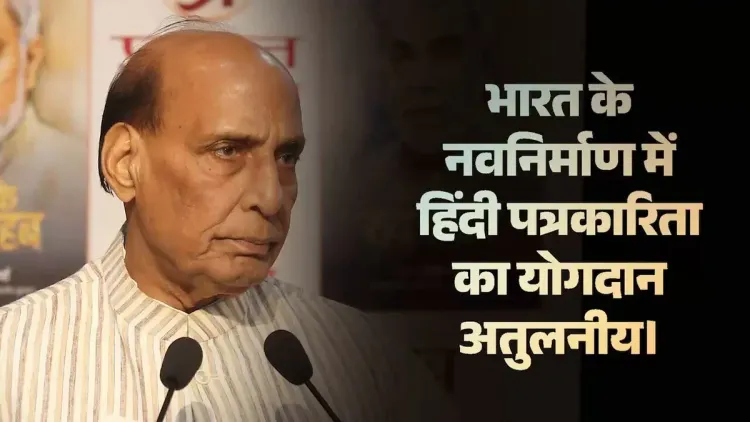
Union Defence Minister Rajnath Singh on 25 September 2026 honoured Hindi journalism's role in India's freedom movement, citing pioneers Bharatendu Harishchandra and Ganesh Shankar Vidyarthi and calling the tradition's contribution to national conscience and post-independence nation-building unmatched.
Key Takeaways
Union Defence Minister Rajnath Singh posted a tribute to Hindi journalism on 25 September 2026 .
He credited Hindi press with 'awakening society, enriching the language, and carrying the idea of freedom to every person.' Two towering figures were specifically named: Bharatendu Harishchandra (19th-century Hindi prose pioneer) and Ganesh Shankar Vidyarthi (independence-era journalist killed in communal violence in 1931 ).
Singh extended the tribute beyond 1947 , recognising Hindi journalism's role in the 'rebuilding of free India' as well as the independence struggle.
The tribute reflects a recurring pattern of official BJP and government recognition of Hindi-language heritage around events such as Hindi Diwas .
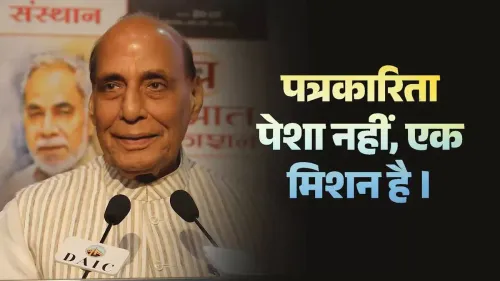
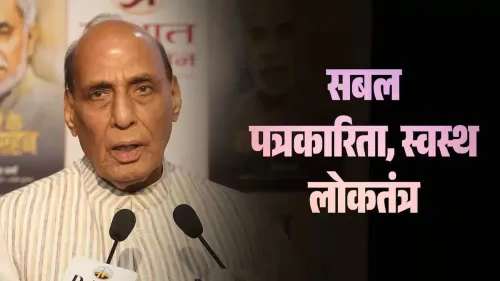
From igniting a nation's conscience to carrying the torch of independence into every home, Hindi journalism's contribution to India's freedom struggle is, as Union Defence Minister Rajnath Singh put it on Friday, 25 September 2026, simply bemisaal — unmatched. In a heartfelt post on X, Singh invoked the towering names of Hindi press history to honour a tradition that shaped modern India.
Singh wrote that Hindi journalism 'awakened society, enriched the language, and carried the idea of freedom to every person.' Tracing the arc from Bharatendu Harishchandra to Ganesh Shankar Vidyarthi, he described the tradition as one that 'gave voice to the nation's conscience' — from the independence struggle right through to the rebuilding of a free India.
Bharatendu to Vidyarthi: the giants Singh invoked
Bharatendu Harishchandra, the nineteenth-century literary pioneer, transformed Hindi prose and planted early nationalist ideas through his publications at a time when the press was both pen and political weapon. A generation later, Ganesh Shankar Vidyarthi edited Hindi newspapers with an uncompromising freedom-fighter's conviction — a commitment he paid for with his life during the communal violence of 1931. Together they represent what Singh called a 'glorious tradition' that gave the national movement its popular voice.
Why Hindi press was a political force, not just a medium
The Hindi-language press of the late nineteenth and early twentieth centuries did something that English-language papers largely could not: it reached the vast, non-anglicised interior of the subcontinent. Ideas of swaraj, social reform, and resistance to colonial rule travelled along train routes and river roads folded inside Hindi newspapers, finding readers — and listeners, in the many households where one literate person read aloud to many — who might never have encountered a colonial-era English broadsheet.
That function, of democratising political consciousness through language, is the core of Singh's tribute. His reference to 'rebuilding free India' extends the arc beyond 1947, crediting Hindi journalism with a role not just in winning independence but in shaping the republic that followed.
A senior BJP voice and the recurring official emphasis on linguistic heritage
Singh — a former Chief Minister of Uttar Pradesh and former Union Home Minister, now among the BJP's most senior cabinet figures — has consistently championed Hindi's place in national public life. His tribute fits a broader pattern of official statements recognising regional-language media as contributors to the independence movement, a theme that resurfaces around Hindi Diwas commemorations and national journalism recognitions. Whether a specific occasion prompted Friday's post is not confirmed, but the sentiment sits squarely within that established tradition of governmental acknowledgement.
India's Hindi press today spans print, digital, and broadcast, serving hundreds of millions of readers and viewers. The lineage Singh saluted — from Bharatendu's ink to Vidyarthi's sacrifice — is the foundation on which that vast ecosystem stands. Remembering it is not nostalgia. It is a reckoning with how language, journalism, and nationhood were forged together.
Point of View
A figure associated with secular nationalism and killed during communal strife, Singh signals an inclusive framing even within a Hindi-pride narrative. The post also quietly stakes out the argument that India's vernacular press, not colonial-language media, was the true engine of mass political awakening — a framing that continues to carry policy implications for language in public institutions today. Watch whether this precedes any formal government announcement on journalism awards or Hindi media policy.
NationPress
25 Sept 2026
Frequently Asked Questions
Why did Rajnath Singh post a tribute to Hindi journalism?
Rajnath Singh posted the tribute on 25 September 2026 to honour the historical role of Hindi-language press in India's independence movement and nation-building, citing its contribution as 'unmatched.' No specific anniversary has been confirmed as the trigger, though such statements are common around Hindi Diwas and national journalism commemorations.
Who was Bharatendu Harishchandra and why is he important to Hindi journalism?
Bharatendu Harishchandra was a nineteenth-century Hindi writer and journalist credited with modernising Hindi prose and infusing early nationalist themes into the press, making him a founding figure of the modern Hindi literary and journalistic tradition.
Who was Ganesh Shankar Vidyarthi?
Ganesh Shankar Vidyarthi was an independence-era Hindi journalist and freedom fighter who edited Hindi newspapers to advance the nationalist cause and was killed during communal violence in 1931, making him a martyr figure in Indian press history.
What is Hindi Diwas and is it related to this post?
Hindi Diwas is observed annually on 14 September to mark the adoption of Hindi as an official language of India in 1949. While Rajnath Singh's post echoes themes common around Hindi Diwas, the post was made on 25 September 2026 and no specific event has been confirmed as its occasion.
What is Rajnath Singh's role and background?
Rajnath Singh is currently India's Union Minister of Defence and a senior BJP leader. He has previously served as Chief Minister of Uttar Pradesh and as Union Home Minister, making him one of the most experienced figures in the current central government.