Pralhad Joshi: 10,000 ATLs Now Reach 1.1 Crore Students
Synopsis
Union Minister Pralhad Joshi highlights that over 10,000 Atal Tinkering Labs now engage 1.1 crore students, sharing a striking anecdote of locked labs and risk-averse teachers — and his instruction to open them in the spirit of PM Modi's innovation mandate.
Key Takeaways
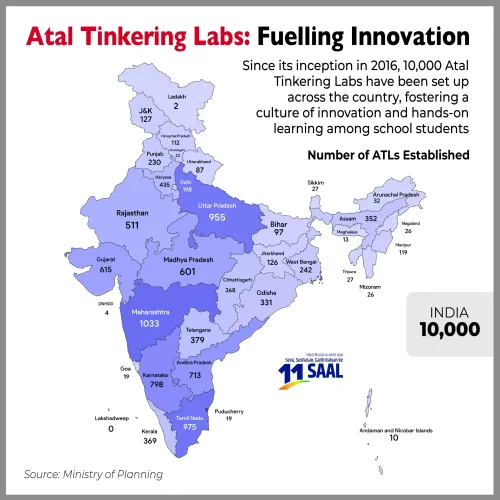
Over 10,000 Atal Tinkering Labs are currently operational across Indian schools, engaging more than 1.1 crore students .
Minister Pralhad Joshi recounted finding some ATLs locked on visits, with teachers fearing students would damage equipment.
Joshi directed administrators to open the labs, citing PM Narendra Modi's emphasis on youth experimentation and innovation.
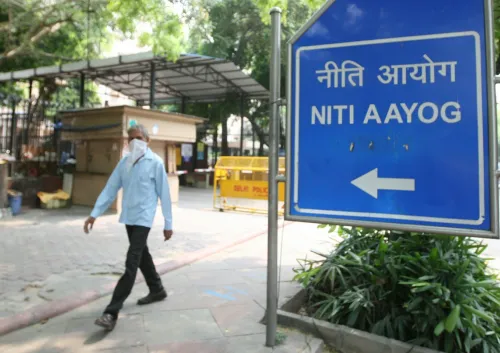
The Atal Innovation Mission was launched by NITI Aayog in 2016 ; the first ATLs opened in 2017 for students from Class 6 to Class 12.
The ATL programme is a key delivery vehicle for the National Education Policy 2020 goals of design thinking and multidisciplinary learning.
The minister's remarks signal that school administrations are expected to prioritise active lab use over equipment preservation.
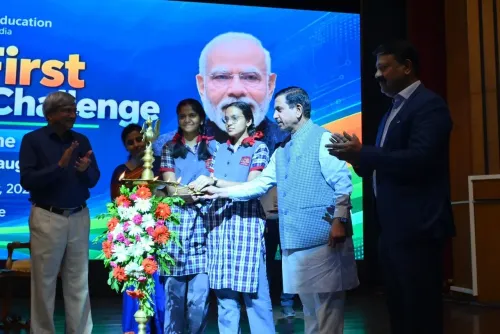
A locked lab and a nervous teacher turned into a defining moment for India's school-innovation drive. Union Consumer Affairs Minister Pralhad Joshi on Friday, 25 September 2026 shared a candid anecdote that cuts to the heart of why hands-on learning is still a cultural battle as much as a policy one — and used it to underscore the scale that Atal Tinkering Labs (ATLs) have now reached.
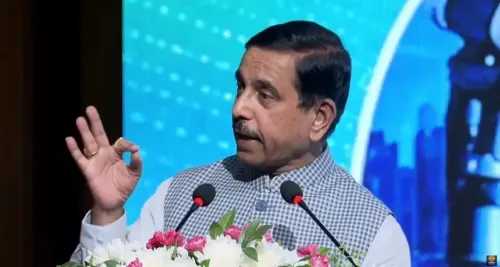
Joshi recalled visiting early ATL setups and finding some of them locked. Teachers explained their caution plainly: 'Sir, the children may break the equipment.' His response was equally plain — 'Let them break it. The Prime Minister wants our young minds to experiment and innovate. Open the labs.' That exchange, brief as it was, captures the friction the programme has had to overcome: well-meaning but risk-averse gatekeeping that turns innovation spaces into display cases.
From 2016 promise to 10,000 labs in classrooms
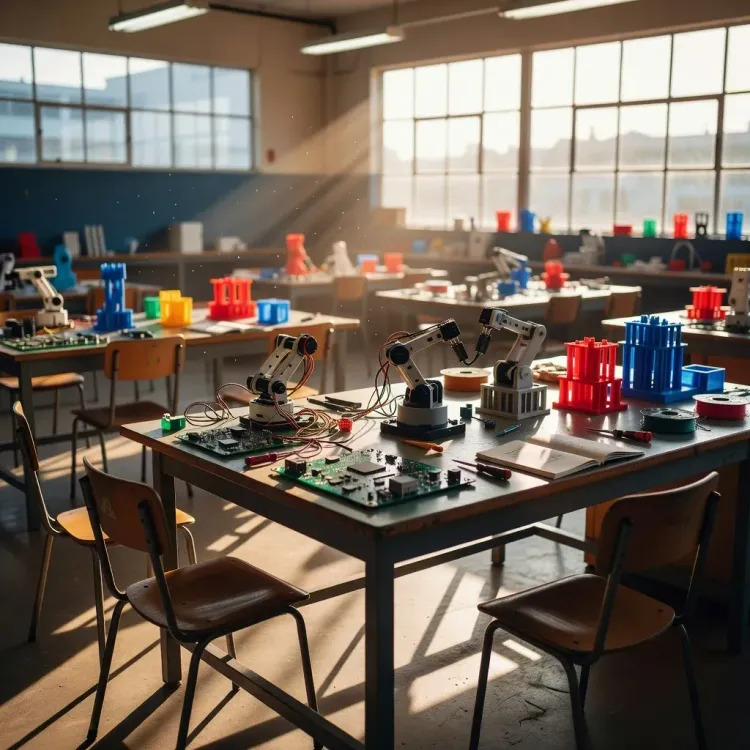
The Atal Innovation Mission (AIM), launched by NITI Aayog in 2016, was built on a single wager — that if you put the right tools in front of students from Class 6 to Class 12, curiosity will do the rest. The first ATLs opened in 2017, seeding schools across India with 3D printers, robotics kits, electronics workbenches, and open-ended project briefs. The minister's post puts the current footprint at over 10,000 labs engaging more than 1.1 crore students — a number that makes ATL one of the largest school-based tinkering networks anywhere in the world.
Prime Minister Narendra Modi has repeatedly framed youth-led experimentation as non-negotiable for India's innovation ambitions, and Joshi's post positions the ATL story squarely within that mandate. The minister's instruction to unlock the labs is not just an anecdote — it is a statement of political intent: failure is a feature of the design, not a bug to be bubble-wrapped away.
The real obstacle: mindset, not money
The locked-lab story does something no policy document can — it names the human bottleneck. Equipment budgets, NITI Aayog frameworks, and ministry circulars can move fast; changing how a teacher weighs the cost of a broken circuit board against the value of a student's curiosity moves slower. Joshi's telling of the episode is a signal to school administrators and state education departments that the Centre expects labs to be used, not preserved.
The broader push aligns with the National Education Policy 2020, which placed coding, design thinking, and multidisciplinary learning at the centre of school reform. ATLs are one of the most concrete delivery vehicles that framework has. Whether impact assessments translate tinkering hours into measurable outcomes — or whether lab activities eventually get woven into board curricula — will determine how enduring the programme's gains are.
What 1.1 crore students experimenting means for India's pipeline
A generation of students who learn to prototype a solution before they learn to fear being wrong is precisely the talent pipeline India's deep-tech and manufacturing ambitions depend on. 1.1 crore is not an abstract statistic — it is the size of the cohort currently being told, at school age, that breaking things in the pursuit of understanding is encouraged. If even a fraction of that cohort carries the habit forward, the compounding effect on India's innovation ecosystem could be significant.
The next test is whether the network keeps growing and whether the labs stay open — literally and figuratively.
Point of View
Without answering, is whether 10,000 labs with open doors translates into measurable learning outcomes — and that will be the metric by which this programme's legacy is eventually judged.
NationPress
25 Sept 2026
Frequently Asked Questions
What are Atal Tinkering Labs and who set them up?
Atal Tinkering Labs are school-based innovation spaces equipped with tools like 3D printers, robotics kits, and electronics workbenches for students from Class 6 to Class 12. They were established under the Atal Innovation Mission, a NITI Aayog programme launched in 2016, with the first labs opening in 2017.
How many Atal Tinkering Labs are there in India in 2026?
According to Minister Pralhad Joshi's post on 25 September 2026, there are over 10,000 Atal Tinkering Labs currently operational, reaching more than 1.1 crore students across India.
What did Pralhad Joshi say about locked Atal Tinkering Labs?
Joshi recalled visiting early ATL setups and finding some locked, with teachers explaining they feared children would break the equipment. He instructed them to open the labs, saying PM Modi's intent was for students to experiment and innovate, and that breaking equipment in that pursuit was acceptable.
What is the Atal Innovation Mission run by NITI Aayog?
The Atal Innovation Mission is a NITI Aayog programme launched in 2016 to build an ecosystem of innovation and entrepreneurship. Its flagship component, the Atal Tinkering Labs, embeds hands-on STEM and design-thinking facilities inside schools to nurture a culture of experimentation from a young age.
How do Atal Tinkering Labs connect to the National Education Policy 2020?
The National Education Policy 2020 placed coding, design thinking, and multidisciplinary learning at the centre of school reform. Atal Tinkering Labs are considered one of the most concrete delivery mechanisms for these goals, providing physical spaces where students can prototype and problem-solve beyond the traditional classroom curriculum.