CM Bhupendra Patel Inaugurates Gateway at Juna Nadisar, Panchmahal
Synopsis
Gujarat Chief Minister Bhupendra Patel unveiled the inscription plaque on a newly built entrance gateway at Juna Nadisar in Panchmahal district on 25 September 2026, framing it as a symbol of rural development and folk cultural pride while reaffirming the state government's commitment to all-round village infrastructure.
Key Takeaways
Gujarat CM Bhupendra Patel inaugurated a newly constructed main entrance gateway at Juna Nadisar , Panchmahal district , on 25 September 2026 .
Patel unveiled the inscription plaque and held a direct dialogue with local residents during the event.
The CM described the project as a 'symbol of rural development and the pride of folk culture' ( gramin vikas ane lokasanskriti na gaurav nu pratik ).
Panchmahal is an eastern Gujarat district with significant rural and tribal communities, making it a recurring focus of state rural development drives.
The Gujarat government has pursued rural infrastructure through Panchayati Raj institutions since the early 2000s .
Further district-level inaugurations and Gujarat rural development budget updates are expected in the coming months.
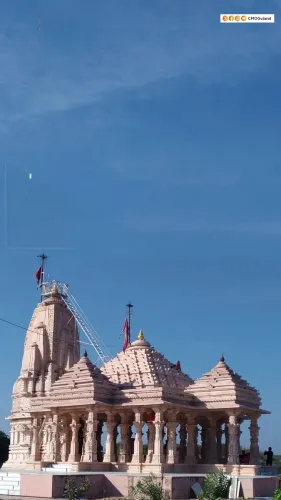
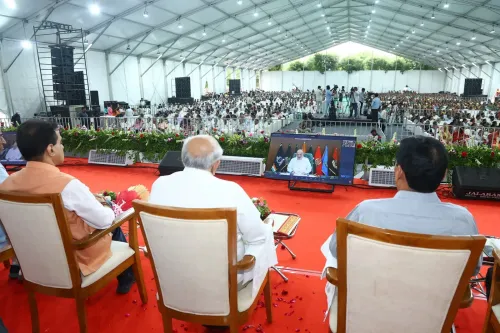
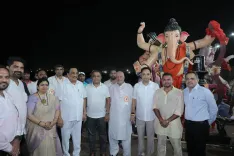
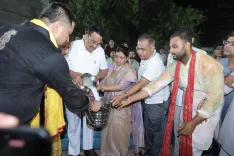
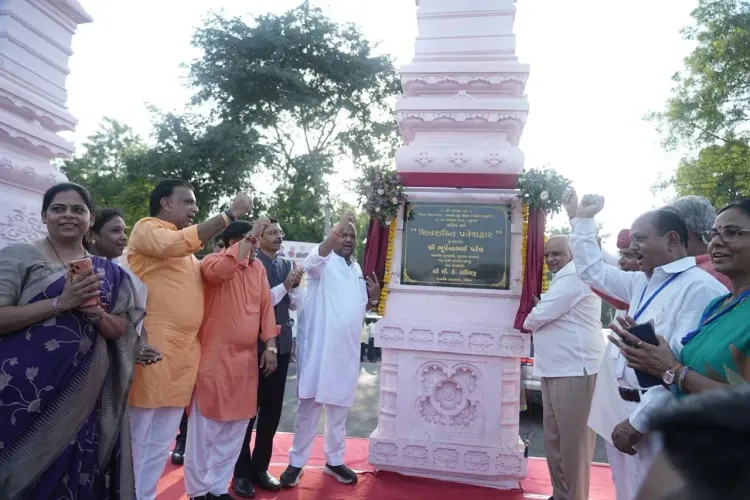
A new entrance gate now stands at Juna Nadisar in Panchmahal district — and for the village community that gathered there on Friday, 25 September 2026, it represents far more than stone and mortar. Gujarat Chief Minister Bhupendra Patel personally unveiled the inscription plaque and formally dedicated the newly constructed main gateway to the public, also engaging in direct dialogue with local residents.
Posting on X in Gujarati, CM Patel described the inauguration as 'gramin vikas ane lokasanskriti na gaurav nu pratik' — 'a symbol of rural development and the pride of folk culture.' The framing was deliberate: this was not just a civic project, but a statement about identity. The state government, he added, remains 'continuously committed to ensuring all-round development of villages alongside strengthening infrastructure facilities.'
Panchmahal's place in Gujarat's rural push
Panchmahal, in eastern Gujarat, is home to significant rural and tribal populations whose connectivity and public infrastructure have historically lagged behind the state's urban centres. The district has been a recurring focus of village-level development drives by successive Gujarat administrations. Symbolic, visible projects like gateway constructions serve a dual purpose — functional demarcation of village space and a tangible signal of government reach into remote communities.
Gujarat's approach to rural infrastructure has deep institutional roots. Since the early 2000s, state governments have channelled investments through Panchayati Raj institutions and village development programmes, aiming to upgrade public amenities at the gram panchayat level. CM Patel's visit to Juna Nadisar fits squarely within this long-running template: a senior leader, an on-the-ground inauguration, and a direct conversation with residents — the kind of political presence that is as much about accountability as it is about ceremony.
Culture woven into concrete
What distinguished today's event from a routine ribbon-cutting was the explicit invocation of lokasanskriti — folk culture. By tying the gateway's inauguration to cultural pride, the Gujarat government signalled that infrastructure projects in rural areas are being designed to reflect local identity, not merely replicate urban civic templates. The entrance gate, as described, carries the dual weight of being both a functional public asset and a cultural landmark for the village.
With district-level inaugurations continuing across Gujarat, the coming months will test whether this momentum translates into broader budget allocations for rural infrastructure — or remains a series of well-photographed moments. For the residents of Juna Nadisar, the gate is already standing. The larger question is what else gets built beside it.
Point of View
Ground-level engagement in rural and tribal districts — keeping the party's organisational presence visible between election cycles. By explicitly linking physical infrastructure to folk culture, the government is trying to emotionally anchor development narratives in local identity rather than just civic utility. Panchmahal's demographic profile — rural, tribal, economically aspirational — makes it a politically significant district that rewards personal attention from senior leaders. The real policy test will be whether these symbolic inaugurations are backed by sustained budget commitments to village-level infrastructure across eastern Gujarat.
NationPress
26 Sept 2026
Frequently Asked Questions
What did Gujarat CM Bhupendra Patel inaugurate at Juna Nadisar?
CM Bhupendra Patel inaugurated a newly constructed main entrance gateway at Juna Nadisar in Panchmahal district, unveiling its inscription plaque and formally dedicating it to the public on 25 September 2026.
Where is Juna Nadisar located?
Juna Nadisar is located in Panchmahal district in eastern Gujarat, a region with significant rural and tribal populations.
What is Panchmahal district known for in Gujarat?
Panchmahal is an eastern Gujarat district known for its rural and tribal communities. It has been a consistent focus of state rural development and village infrastructure programmes.
What did CM Patel say about the gateway inauguration?
CM Patel described the new entrance gate as a 'symbol of rural development and the pride of folk culture,' and reiterated that the state government is continuously working to ensure all-round village development alongside infrastructure strengthening.
What is Gujarat's approach to rural infrastructure development?
Gujarat has pursued rural infrastructure development through Panchayati Raj institutions and village development programmes since the early 2000s, with state governments conducting local-level inaugurations to highlight incremental upgrades in village facilities.