NEP 2020 centres critical thinking, creativity in education: Pralhad Joshi
Synopsis
Education Minister Pralhad Joshi used an IISc stage in Bengaluru to both champion NEP 2020's innovation push — 10,000 Atal Tinkering Labs, 50,000 more promised, ₹1,490 crore in AI centres — and take a pointed swipe at Karnataka's Congress government for walking back the policy, keeping a high-stakes curriculum battle firmly in the public eye.
Key Takeaways
Pralhad Joshi said NEP 2020 centres critical thinking, creativity, and problem-solving at the heart of Indian education, speaking at IISc Bengaluru on 25 September 2026 .
More than 10,000 Atal Tinkering Labs are active, engaging over 1.1 crore students who have produced more than 16 lakh innovation projects .
The government has announced 50,000 additional Atal Tinkering Labs in schools over the next five years.
Joshi alleged the Karnataka Congress government had discontinued NEP 2020 implementation in the state.
Four AI Centres of Excellence have been set up with a total outlay of ₹1,490 crore ; the Smart India Hackathon has seen over 18 lakh student participants .
India showcased 120 deep-tech startups at Bharat Innovates in Nice, France , drawing more than 20 requests for similar events globally.
Union Education Minister Pralhad Joshi on Friday, 25 September 2026, said the National Education Policy (NEP) 2020 places critical thinking, creativity, experimental learning, and problem-solving at the heart of India's education framework, while spotlighting a raft of government initiatives designed to nurture innovation from the school level upwards.
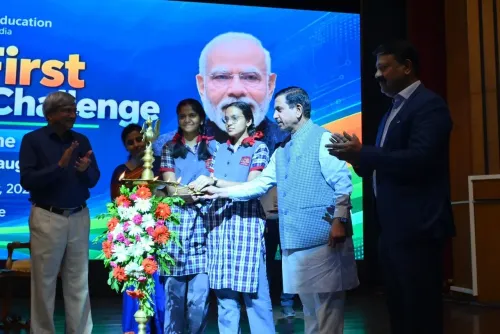
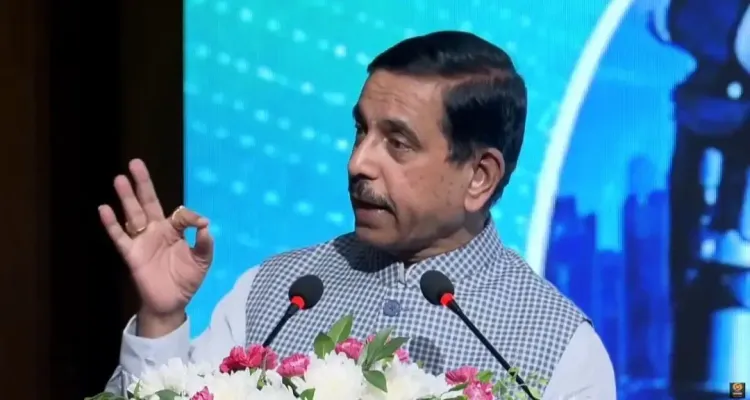
Addressing the Seva First Innovation Challenge at the Indian Institute of Science (IISc) in Bengaluru, Joshi said the NEP's core objective was not simply to produce job-ready graduates, but to build a generation capable of independent thought, experimentation, and real-world problem-solving.
Sharp dig at Karnataka over NEP rollback
Joshi used the occasion to take aim at the Karnataka state government, alleging it had discontinued the implementation of NEP 2020. The state had initially moved to adopt the policy but the ruling Congress government subsequently chose to step back and develop a State Education Policy it says is better aligned with regional realities. Joshi's remarks signal the Centre's intent to keep the NEP debate in the national spotlight ahead of upcoming state-level discussions on curriculum reform.
Atal Tinkering Labs: reach, scale and a candid concern
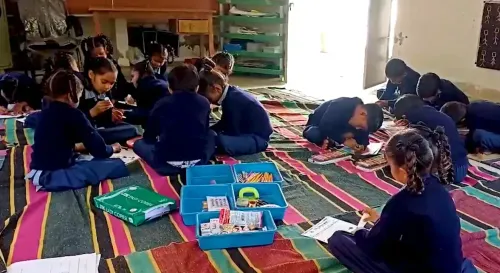
The minister said more than 10,000 Atal Tinkering Labs were currently active across the country, engaging over 1.1 crore students. Students working through these labs have collectively produced more than 16 lakh innovation projects, he noted. However, Joshi did not shy away from flagging a ground-level problem: during his own visits to schools, he had found several labs kept under lock and key because teachers feared students would damage the equipment. He urged that students be given uninhibited access to facilities, arguing that the freedom to experiment — even at the cost of broken components — was integral to the labs' very purpose. The government has announced 50,000 additional Atal Tinkering Labs over the next five years, he added. At the higher-education level, more than 17,300 Institution Innovation Councils have also been set up.
Innovations from the classroom to the world stage
Joshi cited several standout innovations emerging from Indian institutions. These included Homosap, a robotic septic tank cleaner developed at IIT-Madras, and an Electrolarynx designed to restore a voice to people who have lost the ability to speak. He also referenced an induction stove developed at NIT-Warangal for use with copper and aluminium utensils — describing such solutions as modest in appearance but significant in addressing everyday problems faced by ordinary citizens.
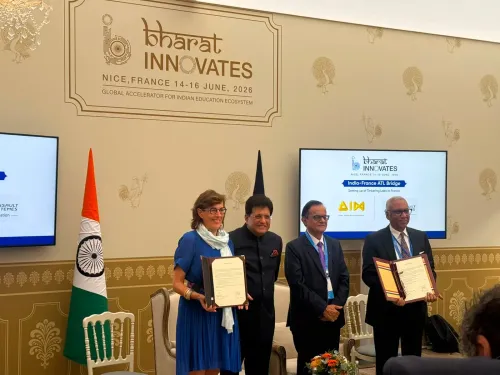
Referring to the Bharat Innovates showcase held in Nice, France, Joshi said India had presented 120 deep-tech startups emerging from higher-education institutions. He recounted that the French Head of State, who had initially scheduled only 20 minutes for the visit, stayed for more than an hour after engaging with the innovations on display. India has since received more than 20 requests to organise similar showcases in countries including Canada, which Joshi attributed to growing international confidence in Indian talent and the country's policy stability.
AI, 5G, 6G and the Viksit Bharat vision
On frontier technology, Joshi said four Centres of Excellence in Artificial Intelligence had been established — in healthcare, sustainable cities, agriculture, and education — with a combined outlay of ₹1,490 crore. The Smart India Hackathon has drawn participation from more than 18 lakh students working on nearly 3,158 real-world problem statements submitted by government departments, industry bodies, and public institutions.
Joshi said 5G technology had been indigenously developed and that 6G would similarly be built using Indian technology. Noting that smartphones assembled in India are currently designed abroad, he said the ambition was to achieve end-to-end design and manufacture within the country. With more than 65% of India's population below the age of 35, he described the country's demographic dividend as its single greatest asset in driving innovation. 'Innovate in India, Make in India — not only for India, for the world also,' Joshi said. The goal of Viksit Bharat by 2047, he concluded, was ultimately a promise made to this generation.
Point of View
Framing a BJP-versus-Congress divide on national education at a time when curriculum policy has become a genuine flashpoint. The Atal Tinkering Lab numbers are impressive at scale, but his own admission that labs are routinely kept locked exposes a persistent last-mile failure: hardware rollout outpacing teacher readiness. The real benchmark for NEP's innovation agenda will not be the count of labs or hackathon participants, but whether the students passing through them are measurably more equipped to solve the problems Joshi so vividly described.
NationPress
25 Sept 2026
Frequently Asked Questions
What did Education Minister Pralhad Joshi say about NEP 2020?
Joshi said NEP 2020 places critical thinking, creativity, experimental learning, and problem-solving at the centre of education, moving beyond the goal of simply preparing students for employment. He was speaking at the Seva First Innovation Challenge at IISc Bengaluru on 25 September 2026.
Why did Joshi criticise the Karnataka government?
Joshi alleged that the Karnataka Congress government had discontinued the implementation of NEP 2020 in the state. Karnataka had initially moved to adopt the policy before deciding to develop its own State Education Policy aligned with regional priorities.
How many Atal Tinkering Labs are there and what is the expansion plan?
More than 10,000 Atal Tinkering Labs are currently operational, engaging over 1.1 crore students who have produced more than 16 lakh innovation projects. The government has announced 50,000 additional labs in schools over the next five years.
What are India's AI Centres of Excellence announced by Joshi?
Four Centres of Excellence in Artificial Intelligence have been established in the domains of healthcare, sustainable cities, agriculture, and education, with a combined government outlay of ₹1,490 crore. The initiative is part of India's broader push to build capacity in frontier technologies.
What is the Bharat Innovates showcase and how was it received globally?
Bharat Innovates was an innovation showcase held in Nice, France, where India presented 120 deep-tech startups emerging from higher-education institutions. The French Head of State, initially scheduled for a 20-minute visit, reportedly stayed for over an hour, and India has since received more than 20 requests to organise similar showcases in other countries.