Giriraj Singh Reviews HURL Projects in Begusarai
Synopsis
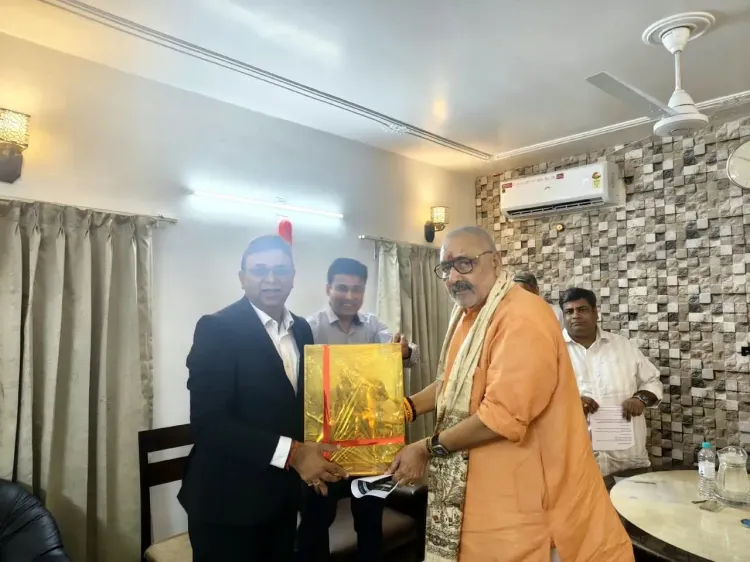
Union Textiles Minister Giriraj Singh met HURL officials in Begusarai on September 25, reviewing project progress at the fertilizer facility and pushing for time-bound execution — a direct stake for the MP from the same constituency.
Key Takeaways
Union Textiles Minister Giriraj Singh held a project review meeting with HURL officials in Begusarai on 25 September 2026 .
Singh sought details on 'current status, progress, and upcoming action plans' of ongoing projects at the facility.
HURL was set up in 2016 as a public sector joint venture to revive closed fertilizer plants, including the Barauni unit in Begusarai.
The revival of Barauni is part of India's push to expand domestic urea production and cut import dependence.
Singh, as Lok Sabha MP from Begusarai, brings direct constituency pressure alongside his seniority as a Union Cabinet minister.
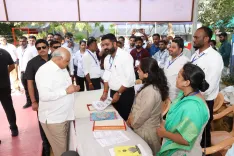
A fertilizer plant that once sat idle for decades is back under the spotlight. Union Textiles Minister Giriraj Singh met officials of Hindustan Urvarak and Rasayan Limited (HURL) in Begusarai on Friday, September 25, 2026, conducting a hands-on review of ongoing projects and their current progress at the facility.
Singh, who represents Begusarai in the Lok Sabha, said he took stock of 'the current status, progress, and upcoming action plans of projects' and held discussions on 'moving work forward in a time-bound and effective manner' — his words carrying the weight of a constituency MP who has a direct stake in the plant's fortunes.
HURL's Barauni plant and Bihar's urea ambitions
HURL was incorporated by the central government in 2016 as a public sector joint venture specifically to breathe life back into three closed fertilizer plants, including the Barauni unit in Begusarai district. The revival is a critical node in India's broader push to expand domestic urea capacity and reduce dependence on imports — a self-reliance priority that has driven investment across eastern states for nearly a decade.
For Bihar's farming communities, the stakes are tangible. A fully operational Barauni plant means a more reliable and potentially cheaper supply of urea, reducing the long distances fertilizer currently travels before it reaches a paddy field in the Gangetic plains. Plant workers, too, have a direct interest in whether projects hit their timelines.
Singh's dual role: minister and MP on the ground
The review is notable for what it signals about Singh's approach to his constituency. As a Union Cabinet minister — currently holding the Textiles portfolio — he does not have direct administrative oversight of HURL, which falls under the Fertilizers Ministry. His presence at the table is that of a senior MP pushing for accountability in a project that reshapes his own backyard. That combination of political weight and local pressure can often move timelines in ways formal oversight alone cannot.
The broader pattern is consistent with the central government's sustained emphasis on reviving legacy industrial infrastructure in eastern India — a region long seen as under-served by manufacturing investment. Every commissioning milestone at a plant like Barauni adds a data point to that larger national narrative.
Point of View
Where legacy public-sector units have historically underperformed. His dual role as Union minister and local MP gives the visit an unusual two-track leverage — political visibility at home combined with the clout to escalate timelines in inter-ministerial conversations. The emphasis on 'time-bound and effective' execution signals impatience with slow progress, which could matter as HURL's Barauni unit commissioning remains a watch-point for Bihar's agricultural economy. How quickly outcomes follow this review will be the real test of whether the meeting was a routine check-in or a genuine inflection point.
NationPress
25 Sept 2026
Frequently Asked Questions
What is HURL and what does it do in Begusarai?
HURL, or Hindustan Urvarak and Rasayan Limited, is a public sector joint venture incorporated in 2016 to revive closed fertilizer plants in India, including the Barauni unit in Begusarai, Bihar, to boost domestic urea production.
Why did Giriraj Singh visit HURL in Begusarai?
Giriraj Singh, as the Lok Sabha MP from Begusarai, met HURL officials on September 25, 2026 to review the progress of ongoing projects and push for time-bound execution of pending works at the facility.
When was HURL set up and why?
HURL was incorporated in 2016 by the central government to revive three closed fertilizer plants, including Barauni in Begusarai, as part of India's effort to expand domestic urea capacity and reduce import dependence.
Which fertilizer plant is located in Begusarai Bihar?
The Barauni Fertilizer Plant, now being revived under HURL, is located in Begusarai district, Bihar. It is one of three legacy units targeted for restoration under the central government's self-reliance programme.
What is the significance of reviving fertilizer plants in eastern India?
Reviving fertilizer units in eastern states like Bihar expands domestic urea supply closer to major agricultural belts, potentially reducing costs and import dependence — a key goal of India's fertilizer self-sufficiency push.